Fried catfish, a beloved Southern staple from the Mississippi Delta region, hits different when you make it at home.
I’m talking about that shatteringly crisp cornmeal crust that gives way to tender, flaky fish so good you’ll forget restaurants exist. This isn’t some complicated chef technique that requires culinary school. It’s straightforward, uses ingredients you probably have, and comes together in about 30 minutes.
The secret? Buttermilk does half the work for you, tenderizing the fish while adding this subtle tang that makes every bite pop. Then you get that golden coating with just enough spice to keep things interesting without setting your mouth on fire.
Ready to turn your kitchen into the best fish shack in town?
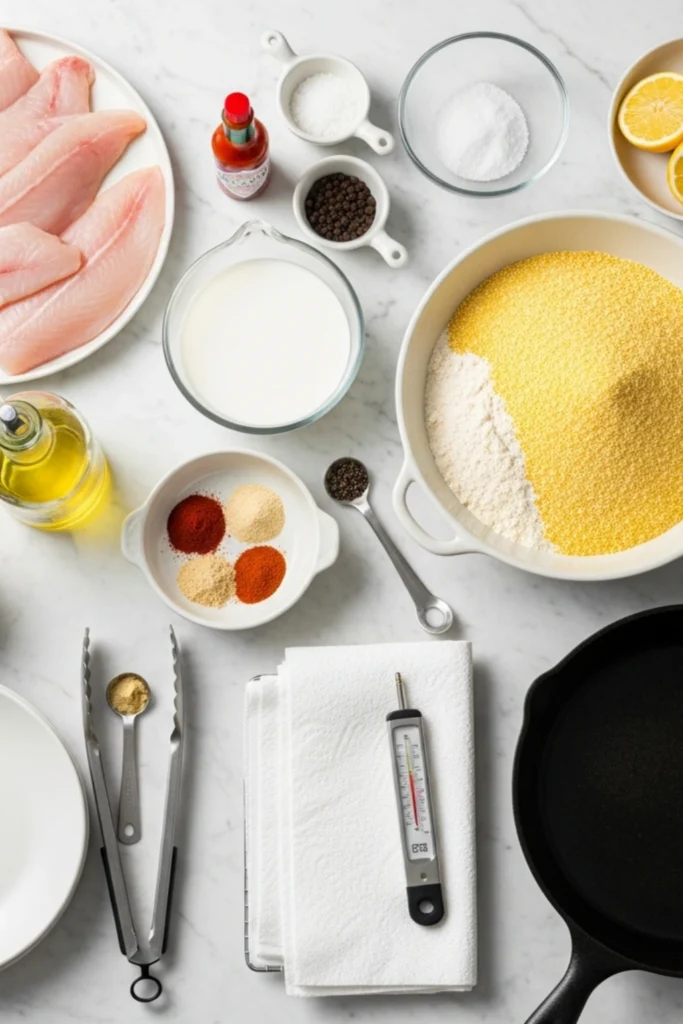
What You’ll Need
For the Fish
| Ingredient | Amount | Purpose |
|---|---|---|
| Catfish fillets | 4 pieces (6 oz each) | Main protein |
| Buttermilk | 2 cups | Tenderizes and flavors |
| Hot sauce | 1 tablespoon | Adds depth |
| Salt | 1 teaspoon | Seasoning |
| Black pepper | ½ teaspoon | Seasoning |
For the Coating
| Ingredient | Amount | Notes |
|---|---|---|
| Yellow cornmeal | 1½ cups | Creates signature crunch |
| All-purpose flour | ½ cup | Helps coating stick |
| Paprika | 2 teaspoons | Color and mild sweetness |
| Garlic powder | 1½ teaspoons | Savory depth |
| Onion powder | 1 teaspoon | Umami boost |
| Cayenne pepper | 1 teaspoon | Adjustable heat |
| Salt | 1½ teaspoons | Essential seasoning |
| Black pepper | 1 teaspoon | Adds bite |
For Frying
- Vegetable or peanut oil (4 cups)
- Fresh lemon wedges for serving
Tools You’ll Need
- Large shallow dish (for buttermilk bath)
- Second shallow dish (for coating)
- Heavy-bottomed skillet or cast iron pan (10-12 inch)
- Cooking thermometer
- Wire cooling rack + baking sheet
- Paper towels
- Long-handled tongs or slotted spatula
Pro Tips
Your oil temperature matters more than anything else. Keep it steady between 350°F and 375°F. Too hot burns the coating before the fish cooks through. Too cool gives you greasy, soggy results that nobody wants.
Pat your fish completely dry before the buttermilk soak. Sounds backwards, right? But surface moisture dilutes the marinade and weakens flavor absorption. Two seconds with a paper towel makes a massive difference.
Give coated fillets 5 minutes to rest before frying. This lets the coating adhere properly so it doesn’t slide off in the oil. I learned this the hard way after watching my first batch of coating float away like sad little rafts.
Never overcrowd your pan. I know you want everything done at once. Fight that urge. Cramming fillets together drops the oil temperature fast, and that’s how you end up with limp, pale coating instead of golden perfection.
Season immediately after frying while the fish is still hot. The coating grabs onto that extra salt and locks in flavor. Wait until it cools and you’ve missed your window.
Substitutions and Variations
No buttermilk? Mix 2 cups whole milk with 2 tablespoons lemon juice or white vinegar. Let it sit 5 minutes until it curdles slightly. Works perfectly.
Want more heat? Double the cayenne or add 1 teaspoon chili powder to the coating. Spike your buttermilk with extra hot sauce too.
Prefer lighter coating? Swap half the cornmeal for additional flour. Less crunch, but still tasty.
Gluten-free version: Use rice flour instead of all-purpose and verify your cornmeal is certified gluten-free.
Different fish options: This coating absolutely crushes it on tilapia, cod, or even jumbo shrimp. Just adjust cooking time based on thickness.
Baked alternative: Coat fish identically, arrange on a greased baking sheet, spray with cooking oil, and bake at 425°F for 15-20 minutes, flipping halfway. Not quite the same crunch, but way lighter.
Make Ahead Tips
Prep your coating mix up to one week ahead. Store it in an airtight container and cross one task off your cooking day list.
Marinate fish in buttermilk up to 24 hours in advance. Longer soaking means more tender, flavorful results. Keep it covered and refrigerated.
Freeze uncooked, coated fillets for later. Lay them on a baking sheet until solid, then transfer to a freezer bag. Good for 3 months. Fry straight from frozen by adding 2-3 extra minutes to cook time.
How to Make Fried Catfish
Step 1: Marinate the Fish
Pour buttermilk into your large shallow dish. Whisk in hot sauce, salt, and pepper until combined.
Pat catfish fillets completely dry with paper towels. Drop them into the buttermilk mixture, making sure each piece gets fully submerged.
Cover and refrigerate for at least 30 minutes. If you’ve got time, let it marinate for 2 hours or overnight. The buttermilk breaks down proteins, tenderizing the fish while adding subtle tang that makes the whole dish sing.
Step 2: Prepare the Coating
Combine cornmeal, flour, paprika, garlic powder, onion powder, cayenne, salt, and black pepper in your second shallow dish.
Mix thoroughly so spices distribute evenly. You don’t want one fillet getting all the flavor while another tastes like plain grain.
Step 3: Coat the Fillets
Pull catfish from buttermilk, letting excess drip back into the dish. You want it wet but not dripping rivers.
Press each fillet firmly into the cornmeal mixture, coating both sides completely. Really press it in there.
Shake off loose bits, then set coated fillets on your wire rack. Let them rest 5 minutes. This step prevents coating disasters later.
Step 4: Heat Your Oil
Pour about 1 inch of oil into your skillet or cast iron pan. Heat over medium-high until it reaches 350°F to 375°F on your thermometer.
No thermometer? Drop a pinch of coating into the oil. Immediate sizzling means you’re ready.
Step 5: Fry the Catfish
Carefully slide 2 fillets into hot oil. Don’t drop them unless you enjoy oil splatters.
Fry 4-5 minutes on the first side without touching them. Edges will start turning golden and crispy.
Flip gently with tongs or slotted spatula. Fry another 3-4 minutes on the second side until deep golden brown and the fish flakes easily with a fork.
Transfer to your wire rack to drain. Hit them with a pinch of salt while piping hot.
Repeat with remaining fillets, monitoring oil temperature and adjusting heat as needed between batches.
Step 6: Serve Hot
Plate your fried catfish immediately while it’s still crackling. Serve with lemon wedges on the side.
That squeeze of fresh citrus cuts through richness and brightens every flavor on the plate.
Leftovers and Storage
Refrigeration: Store cooked catfish in an airtight container up to 3 days. The coating loses crispness, but it still tastes good cold or reheated.
Best reheating method: Skip the microwave completely. It turns coating into sad, soggy cardboard. Instead, reheat in a 375°F oven for 8-10 minutes, or use an air fryer at 375°F for 5-6 minutes. The coating crisps right back up like magic.
Freezing: Cooked catfish freezes for up to 2 months. Cool completely, wrap each piece individually in plastic wrap, then store in a freezer bag. Reheat from frozen in a 375°F oven for 15-18 minutes.
Nutritional Information
| Nutrient | Per Serving |
|---|---|
| Calories | 485 |
| Protein | 38g |
| Carbohydrates | 42g |
| Fat | 18g |
| Fiber | 3g |
| Sodium | 890mg |
Based on 4 servings
Perfect Pairings for Fried Catfish
This Southern classic begs for equally Southern sides.
Traditional accompaniments: Creamy coleslaw, hush puppies, mac and cheese, collard greens, cornbread, or a simple cucumber and tomato salad all work beautifully.
Drink pairings: Sweet tea is the obvious choice, but cold beer or fresh-squeezed lemonade hit the spot too.
Quick weeknight combo: Serve with frozen french fries and bagged coleslaw when you’re short on time. Nobody will judge you for taking shortcuts on the sides when your fish looks this good.
Cooking Efficiency Tips
Active cooking time clocks in around 20 minutes. The rest is just marinating and waiting.
Short on time? Skip the long marinade and let fish sit in buttermilk for just 15 minutes. It won’t be quite as tender, but it’ll still be delicious.
Prep everything the night before and refrigerate. When dinner time hits, you just fry and serve.
Batch cooking works great here. Double the recipe, freeze half uncooked, and you’ve got fried catfish ready to go whenever the craving strikes.
FAQ
Why does my coating keep falling off in the oil?
Two main culprits: oil temperature too low, or skipping the rest period after coating. Make sure your oil hits at least 350°F and let coated fillets sit 5 minutes before frying.
Can I use frozen catfish fillets?
Absolutely. Thaw completely in the refrigerator overnight, then pat extremely dry before starting. Frozen fish holds extra water, so removing that moisture is critical for coating adhesion.
What’s the best oil for frying catfish?
Peanut oil or vegetable oil both excel here. They have high smoke points and neutral flavors that let the fish shine. Avoid olive oil or butter, which burn at these temperatures.
How do I know when the fish is perfectly cooked?
Look for deep golden brown coating and an internal temperature of 145°F. The fish should flake easily when you press a fork into it but still look moist inside.
Can I fry this without a cooking thermometer?
You can, but consistent results get harder. Test oil with a small piece of coating. If it sizzles immediately and floats, you’re in the right temperature range.
Why does my catfish taste overly fishy?
Fresh catfish shouldn’t taste super fishy. If yours does, it might not be fresh enough. The buttermilk soak also helps mellow any strong flavors, so don’t skip the marinade.
Can I make this in an air fryer?
Yes. Coat fish identically, spray both sides with cooking oil, and air fry at 400°F for 12-15 minutes, flipping halfway. It won’t match deep-fried crispiness, but it’s a solid lighter option.
What’s the difference between catfish and other white fish?
Catfish has a slightly sweet, mild flavor and firm texture that holds up beautifully to frying. It’s also typically more affordable than cod or halibut while being equally nutritious.
Wrapping Up
Fried catfish delivers restaurant-quality results without the restaurant prices or the need to change out of your sweatpants.
Crispy, golden, packed with flavor, and ready in less time than it takes to scroll through delivery apps trying to decide what to order.
Give this recipe a shot this week. Drop a comment below when you do and let me know how it turned out. Did you add extra spice? Serve it with something unexpected? I want to hear all about it 💬