A roast pork sandwich, known as a sandwich de pernil in Cuban and Latin American cuisine, is pure comfort on bread.
You know that moment when you bite into a sandwich and everything just… works?
The bread is crusty but soft. The meat falls apart. The flavors hit different.
That’s what a good roast pork sandwich does.
I’m talking about tender, juicy pork that’s been slow-roasted until it practically shreds itself. Paired with crusty bread, tangy pickles, and whatever toppings make your heart sing.
This isn’t your average lunch. It’s the kind of sandwich that makes you stop scrolling and actually pay attention to what you’re eating.
And the crazy part? It’s way easier than you think.
Most people assume roast pork sandwiches are restaurant-only territory. Like you need some fancy equipment or culinary degree to pull it off.
Nope.
You need a pork shoulder, some spices, and a little patience. That’s it.
The oven does most of the work while you’re living your life. Then you get to assemble this beauty and pretend you’re a chef.
I’m walking you through the whole thing. From picking the right cut of meat to getting that perfect crispy crust on top. Plus all the little tricks that turn a basic sandwich into something people ask you to make again.
Ready to make something seriously good?
What You’ll Need for Your Roast Pork Sandwich
For the Pork
| Ingredient | Amount | Notes |
|---|---|---|
| Pork shoulder (pork butt) | 4-5 lbs | Look for good marbling |
| Garlic | 8 cloves, minced | Fresh only |
| Fresh oregano | 2 tablespoons, chopped | Or 1 tbsp dried |
| Ground cumin | 1 tablespoon | Adds warmth |
| Paprika | 1 tablespoon | Sweet or smoked works |
| Salt | 2 teaspoons | Kosher or sea salt |
| Black pepper | 1 teaspoon | Freshly ground |
| Cayenne pepper | 1/2 teaspoon | Optional for heat |
| Olive oil | 1/4 cup | Extra virgin preferred |
| Fresh orange juice | 1/4 cup | About 1 large orange |
| Lime juice | 2 tablespoons | Fresh squeezed |
| White vinegar | 1 tablespoon | Adds tanginess |
For Assembly
- 6-8 crusty rolls (Cuban bread, ciabatta, or French rolls)
- Sliced pickles (dill or bread and butter)
- Yellow mustard
- Swiss cheese slices (optional)
- Sliced red onion (optional)
- Fresh cilantro (optional)
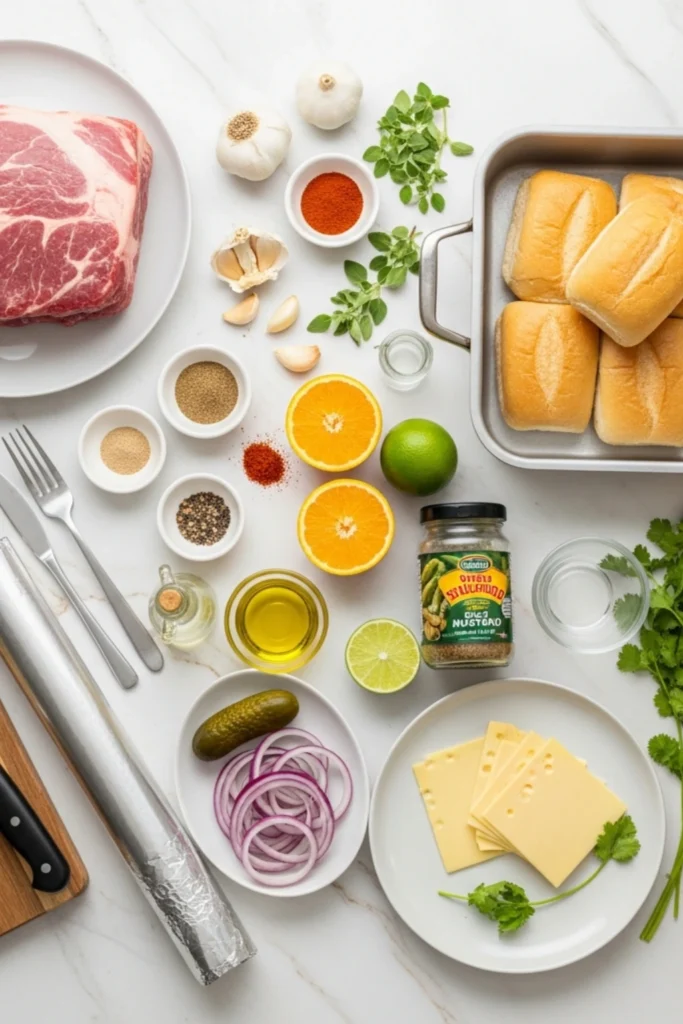
Essential Tools
You don’t need a ton of fancy equipment for this roast pork sandwich recipe.
- Large roasting pan or Dutch oven with lid
- Meat thermometer (this is non-negotiable)
- Sharp knife
- Cutting board
- Small mixing bowl
- Aluminum foil
- Two forks for shredding
Pro Tips for Perfect Roast Pork Sandwiches
Score the fat cap. Before you marinate the pork, use a sharp knife to cut shallow crosshatch marks into the fat layer. This lets the marinade actually penetrate the meat instead of just sitting on top. Game changer for flavor.
Low and slow wins. Don’t rush the roasting process.
The long, slow cook time is what breaks down all that tough collagen and turns it into melt-in-your-mouth tenderness. If you try to speed it up with high heat, you’ll end up with dry, tough meat.
Rest before shredding. I know you’ll be tempted to dig in immediately, but let that pork rest for at least 15 minutes after it comes out of the oven.
The juices redistribute, and you’ll get way more flavor in every bite.
Save those drippings. The liquid at the bottom of your roasting pan is liquid gold.
Skim off the excess fat and drizzle it over your shredded pork. It adds moisture and an extra punch of flavor that you can’t get any other way.
Toast your bread. This seems obvious, but I’m saying it anyway.
A quick toast in the oven or on a griddle makes all the difference. You want that bread to hold up to all the juicy pork without turning into mush.
How to Make the Best Roast Pork Sandwich
Step 1: Make the Marinade
In a small bowl, mix together the minced garlic, oregano, cumin, paprika, salt, black pepper, cayenne (if using), olive oil, orange juice, lime juice, and vinegar.
It’s gonna smell incredible.
The citrus juices help tenderize the meat while adding brightness. The spices bring warmth and depth.
Together? Magic.
Step 2: Prep the Pork
Pat your pork shoulder dry with paper towels.
This matters more than you’d think. Moisture on the surface prevents browning.
Score the fat cap in a crosshatch pattern, cutting about 1/4 inch deep. You’re creating little pockets for all that marinade to sink into.
Place the pork in your roasting pan.
Step 3: Marinate
Rub the marinade all over the pork. And I mean ALL over.
Get it into those score marks. Flip it over and coat the bottom. Don’t hold back.
Cover the pan tightly with plastic wrap or foil and stick it in the fridge for at least 4 hours. Overnight is even better if you’ve got the time.
The longer it sits, the more flavor it absorbs.
Step 4: Bring to Room Temperature
About an hour before you’re ready to cook, take the pork out of the fridge.
Let it sit on the counter, still covered.
Cold meat going into a hot oven cooks unevenly. Room temp meat? Cooks perfectly.
Step 5: Roast Low and Slow
Preheat your oven to 300°F.
Pour 1 cup of water into the bottom of the roasting pan (around the pork, not on top of it). Cover the pan tightly with foil or a lid.
Slide it into the oven and set a timer for 3 hours.
Then just… wait.
I know it’s hard. The smell will be torturing you. But trust the process.
Step 6: Crank Up the Heat
After 3 hours, remove the foil or lid.
Check the internal temperature with your meat thermometer. You’re looking for 190-195°F. If it’s not there yet, give it another 30 minutes with the cover back on.
Once it hits temp, crank your oven up to 425°F.
Leave the pork uncovered and let it roast for another 20-30 minutes.
This is when the magic happens. The fat cap crisps up into this golden, crunchy layer that’s basically candy.
Step 7: Rest and Shred
Pull the pork out when the top is beautifully browned and crispy.
Let it rest for 15-20 minutes. Don’t skip this.
Then use two forks to shred the meat. It should fall apart with almost zero effort. If it doesn’t, it needed more time in the oven.
Mix some of those pan drippings into your shredded pork. Taste it. Adjust the seasoning if needed.
Step 8: Assemble Your Roast Pork Sandwiches
Slice your rolls and give them a quick toast.
Spread mustard on both sides of the bread. Load up the bottom half with a generous pile of shredded pork.
Add pickles. Add onions if you want some bite. Add Swiss cheese if you’re feeling it (the heat from the pork will melt it slightly).
Top with the other half of the roll and press down gently.
That’s it.
You just made something restaurant-quality in your own kitchen.
Substitutions and Variations
| Original | Substitute | Notes |
|---|---|---|
| Pork shoulder | Pork loin | Leaner, cook to 145°F and slice |
| Cumin/paprika | Cajun seasoning | Different flavor profile |
| Orange juice | Pineapple juice | Adds sweetness |
| Cuban bread | Ciabatta or sourdough | Any crusty bread works |
| Yellow mustard | Dijon mustard | Sharper flavor |
Make it a Cuban: Add ham, Swiss cheese, and pickles. Press the whole sandwich in a panini press or on a griddle with a heavy pan on top. Now you’ve got a proper Cuban sandwich.
BBQ style: Skip the mustard and pickles. Add coleslaw and your favorite BBQ sauce instead. Totally different vibe, equally delicious.
Spicy version: Double the cayenne, add red pepper flakes to the marinade, or top with sliced jalapeños.
Make Ahead Tips
The pork can be marinated up to 24 hours in advance. Actually, that’s better.
You can also roast it a day ahead. Let it cool completely, then store it in an airtight container in the fridge. When you’re ready to eat, reheat it in a covered pan with a splash of broth or water to keep it moist.
The shredded pork freezes beautifully too.
Portion it out into freezer bags with some of the drippings. It’ll keep for up to 3 months. Thaw overnight in the fridge and reheat gently.
Leftovers and Storage
Store leftover pork in an airtight container in the fridge for up to 4 days.
To reheat, add it to a pan with a little bit of broth or water. Cover and heat over medium-low until warmed through. This keeps it from drying out.
You can also microwave it, but add a damp paper towel over the top to trap moisture.
Leftover pork is honestly a gift.
Toss it into tacos. Mix it into fried rice. Add it to a breakfast burrito with scrambled eggs and cheese. Pile it onto nachos. The options are endless.
Assembled sandwiches don’t store well. The bread gets soggy. Keep the components separate and build fresh sandwiches when you’re ready to eat.
Nutritional Breakdown
| Nutrient | Per Sandwich |
|---|---|
| Calories | 580 |
| Protein | 42g |
| Carbohydrates | 38g |
| Fat | 28g |
| Saturated Fat | 9g |
| Fiber | 2g |
| Sugar | 4g |
| Sodium | 920mg |
Note: Values are approximate and vary based on specific ingredients and portions.
What to Serve With Your Roast Pork Sandwich
These sandwiches are rich and hearty, so you’ll want sides that balance them out.
Fresh options:
- Simple green salad with tangy vinaigrette
- Pickled vegetables
- Corn salad with lime and cilantro
Heartier sides:
- Crispy sweet potato fries 🍟
- Black beans and rice
- Plantain chips
- Yuca fries
For drinks, a cold beer is perfect. Or a Mexican Coke if you’re keeping it non-alcoholic. The sweetness and bubbles cleanse your palate between bites.
According to Serious Eats, slow-roasted pork shoulder is one of the most forgiving cuts of meat, making this roast pork sandwich recipe perfect for beginners and experienced cooks alike.
Common Questions About Roast Pork Sandwiches
Can I make this in a slow cooker?
Yep. Follow the same marinade steps, then cook on low for 8-10 hours or high for 4-5 hours. You won’t get the crispy top unless you finish it under the broiler for a few minutes.
What if I don’t have a meat thermometer?
Get one. They’re cheap and take the guesswork out of cooking meat. But if you absolutely can’t, the pork should be fork-tender and falling apart when it’s done.
Can I use bone-in pork shoulder?
Absolutely. It’ll take a bit longer to cook (add 30-60 minutes), but the bone adds extra flavor. Just pull it out before shredding.
My pork is tough. What happened?
It didn’t cook long enough. Pork shoulder needs time to break down. If it’s tough, put it back in the oven (covered) for another 30-60 minutes.
Can I add more heat to my roast pork sandwich?
For sure. Double the cayenne, add some red pepper flakes to the marinade, or slice up some jalapeños to put on the sandwich.
How do I know when the pork is done?
The internal temp should hit 190-195°F. At that point, it’ll shred easily. If you’re still meeting resistance when you try to pull it apart, it needs more time.
Can I prep the marinade in advance?
Yes! Mix all the marinade ingredients and store in the fridge for up to 3 days before using.
Wrapping Up
There’s a reason roast pork sandwiches have been around forever.
They’re comforting. Satisfying. The kind of food that makes you slow down and actually enjoy eating.
And once you nail this roast pork sandwich recipe, you’ll have it in your back pocket for whenever you need to feed a crowd or just want something really, really good.
Everyone thinks you worked way harder than you actually did. 😏
So go ahead. Make the pork. Build the sandwich. Take a bite and feel like a genius.
Then come back and tell me how it went. Did you add anything extra? Did your kitchen smell as good as mine did? Drop a comment below.