Your grocery store probably has okra right now and you’re walking right past it.
I get it. Okra looks weird. That fuzzy exterior doesn’t exactly scream “eat me.” And if you’ve only ever had slimy okra, you’re probably never going back.
But when fried okra gets fried right, it becomes this perfectly crunchy, addictive side dish that you’ll be making all summer long. No slime. Just crispy, golden pieces that disappear faster than fries at a cookout.
This is how the South has been doing it for generations. Simple ingredients, hot oil, and a coating that actually stays put.
If you’ve been avoiding okra your whole life, this recipe might just change your mind.
What You’ll Need
Fresh Okra
- 1 pound fresh okra pods, washed and dried
For the Coating
- 1 cup cornmeal (yellow or white)
- ½ cup all-purpose flour
- 1 teaspoon salt
- 1 teaspoon garlic powder
- ½ teaspoon black pepper
- ½ teaspoon paprika
- ¼ teaspoon cayenne pepper (optional, for heat)
Wet Ingredients
- 1 large egg
- ½ cup buttermilk
For Frying
- Vegetable oil or peanut oil (about 2 cups, enough for 1-inch depth in your skillet)
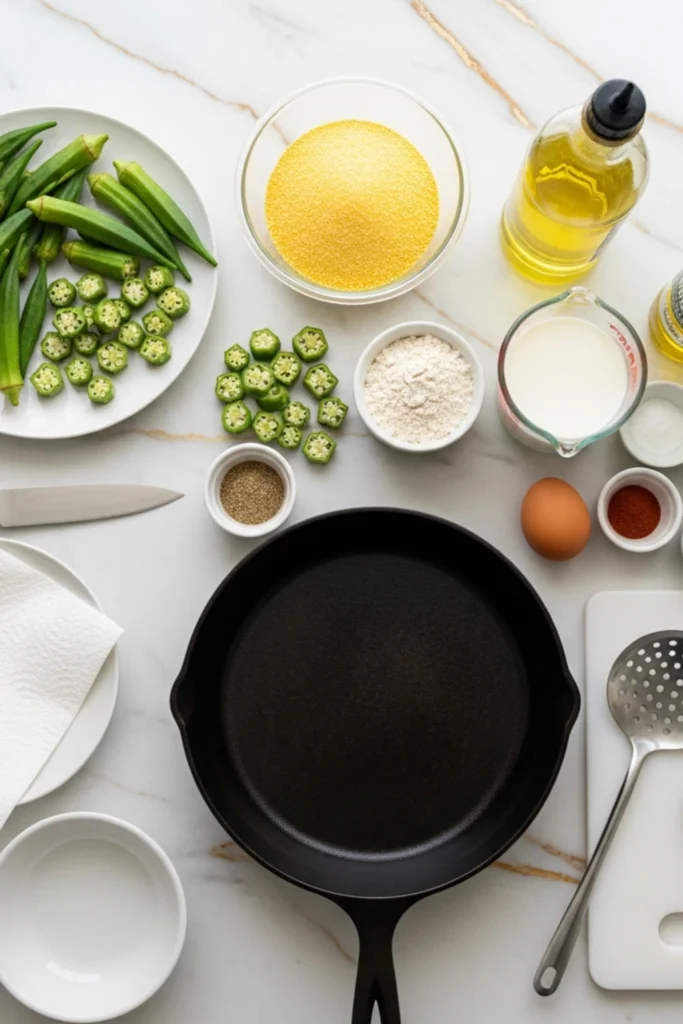
Tools You’ll Need
- Large cast-iron skillet (or heavy-bottomed pan)
- Sharp knife and cutting board
- Two shallow bowls or pie plates
- Paper towel-lined plate for draining
- Slotted spoon or spider strainer
- Kitchen thermometer (helpful but not required)
Pro Tips
Pick the right okra. Look for pods that are 2-4 inches long. The smaller ones are more tender. If they bend instead of snap, they’re too old and will be tough.
Dry everything completely. Wet okra means soggy coating. After washing, spread the pods on a kitchen towel for 10-15 minutes. Pat them dry before cutting. This one step makes the biggest difference.
Cut into coins, not chunks. Slice the okra into ½-inch rounds. They cook evenly and get crispier than bigger pieces. Plus they’re easier to eat.
Don’t crowd the pan. Okra needs space to get crispy. If you pile it all in at once, you’ll end up steaming it instead of frying it. Work in batches even if it takes longer.
Keep the oil between 350-375°F. Too cool and you get greasy okra. Too hot and it burns before cooking through. If you don’t have a thermometer, drop a tiny bit of coating in. It should sizzle immediately but not smoke.
How to Make Fried Okra
Prep the okra. Cut off the stem ends and slice the pods into ½-inch rounds. Toss any pieces that look slimy or discolored. Lay them out on paper towels while you set up your coating station.
Set up your breading station. In one shallow bowl, whisk together the egg and buttermilk. In another bowl, mix the cornmeal, flour, salt, garlic powder, black pepper, paprika, and cayenne if you’re using it.
Heat the oil. Pour oil into your skillet until it’s about 1 inch deep. Heat over medium-high heat until it reaches 350-375°F. If you don’t have a thermometer, the oil should shimmer but not smoke.
Coat the okra. Working in batches, toss a handful of okra pieces in the buttermilk mixture. Let the excess drip off. Transfer to the cornmeal mixture and toss until every piece is coated. Shake off any excess.
Fry in batches. Carefully add coated okra to the hot oil in a single layer. Don’t overcrowd. Fry for 2-3 minutes without moving them. Then flip and fry another 2-3 minutes until golden brown and crispy.
Drain and season. Use a slotted spoon to transfer the fried okra to your paper towel-lined plate. Sprinkle with a tiny bit of salt while still hot. Let the oil come back to temperature before starting the next batch.
Serve immediately. Fried okra is best eaten hot and fresh. The coating starts to soften as it sits, so don’t make this ahead if you can help it.
Substitutions and Variations
No buttermilk? Mix ½ cup regular milk with 1 tablespoon lemon juice or white vinegar. Let it sit for 5 minutes. You can also use plain yogurt thinned with a splash of water.
Make it gluten-free. Swap the all-purpose flour for rice flour or a gluten-free flour blend. Use 100% cornmeal if you want, but adding some flour helps the coating stick better.
Air fryer version. Coat the okra the same way. Spray with cooking oil and air fry at 400°F for 10-12 minutes, shaking the basket halfway through. It won’t be quite as crispy as deep-fried, but it’s still good.
Extra crispy coating. Add ¼ cup panko breadcrumbs to your cornmeal mixture. The breadcrumbs add extra crunch.
Spice it up. Double the cayenne or add ½ teaspoon of hot sauce to the buttermilk mixture. Some people like adding a pinch of Old Bay seasoning to the coating too.
Southern-style with bacon. Fry 3-4 strips of bacon first. Use the bacon grease instead of vegetable oil for frying. Crumble the bacon over the finished okra. Your cardiologist might not approve, but your taste buds will.
Why Fried Okra Gets Slimy (And How to Prevent It)
Here’s something most recipes won’t tell you: okra contains mucilage, a natural thickening agent that activates when exposed to moisture and heat.
That’s why the South figured out frying works best. The high heat creates a barrier before the slime has time to develop.
The Secret: Keep okra dry until the moment it hits hot oil. No pre-salting. No soaking. No moisture anywhere near those pods until they’re coated and ready to fry.
This approach has been passed down through Southern kitchens for good reason. It works every single time.
The Best Okra for Frying
| Okra Quality | What to Look For | What to Avoid |
|---|---|---|
| Size | 2-4 inches long, firm pods | Pods longer than 4 inches (tough and fibrous) |
| Texture | Snaps cleanly when bent | Bends without breaking (old and woody) |
| Color | Bright green, no brown spots | Dull color, black spots, bruising |
| Feel | Fuzzy exterior, firm to touch | Slimy surface, soft spots |
| Freshness | Buy within 3-4 days of harvest | Pre-cut or damaged pods |
Fresh okra makes all the difference. Farmers markets usually have the best selection during summer months.
According to the National Center for Home Food Preservation, okra should be processed quickly after harvest for peak flavor and texture.
Serving Suggestions
Fried okra pairs with basically any Southern meal. Think fried chicken, pulled pork, ribs, cornbread, mac and cheese, or coleslaw.
But here are some less obvious pairings that work great:
- Breakfast: Serve alongside scrambled eggs and grits
- Appetizer: Offer with ranch dressing or remoulade for dipping
- Salad topper: Add to mixed greens for crunch instead of croutons
- Sandwich addition: Pile on a po’boy or pulled pork sandwich
- Taco filling: Use in place of traditional protein for a veggie taco
The crispy coating makes fried okra surprisingly versatile. Don’t box yourself into just dinner sides.
Nutritional Information (Per Serving)
| Nutrient | Amount |
|---|---|
| Calories | 185 |
| Total Fat | 9g |
| Saturated Fat | 1.5g |
| Cholesterol | 35mg |
| Sodium | 420mg |
| Carbohydrates | 22g |
| Fiber | 3g |
| Protein | 5g |
| Vitamin C | 15% DV |
| Vitamin K | 35% DV |
Based on 4 servings, using vegetable oil for frying
Okra naturally contains vitamins C, K, and folate, plus it’s high in fiber. The frying adds calories, but you’re still getting nutritional benefits from the vegetable itself.
Make Ahead Tips
Fried okra doesn’t love being made ahead, but you can prep components:
Night before: Slice the okra and store in a paper towel-lined container in the fridge. Keep it dry.
Morning of: Mix your dry coating and store in an airtight container. Whisk together the egg and buttermilk, cover, and refrigerate.
Just before serving: Fry the okra. There’s no shortcut here. It takes 20 minutes and needs to happen right before you eat.
Some people freeze coated (but unfried) okra on a baking sheet, then transfer to freezer bags. You can fry from frozen, adding an extra minute to the cooking time. The texture won’t be quite as good, but it’s an option for meal prep.
Leftovers and Storage
Fried okra doesn’t reheat great, but you can try.
Store leftovers in an airtight container in the fridge for up to 2 days. Don’t stack them or they’ll get soggy faster.
To reheat: Spread on a baking sheet and warm in a 375°F oven for 8-10 minutes. The coating won’t be as crispy as when fresh, but it’s better than the microwave.
Pro move: If you have an air fryer, reheat at 350°F for 4-5 minutes. This works better than the oven.
Honestly, fried okra is one of those things you should just plan to eat all at once. It takes 20 minutes to make and disappears in about 5.
Frequently Asked Questions
How do I keep fried okra from being slimy?
The slime comes out when okra gets wet and sits. Keep everything dry. Don’t soak the okra. Don’t salt it ahead of time. Cut it, coat it, fry it. The high heat seals the outside before the inside gets slimy.
Can I use frozen okra?
You can, but fresh is way better. If you’re using frozen, thaw it completely and pat it bone dry with paper towels. Frozen okra has more moisture, so getting it dry is even more critical.
What oil is best for frying okra?
Vegetable oil, peanut oil, or canola oil all work. You want something with a high smoke point. Don’t use olive oil or butter.
Why isn’t my coating sticking?
Either your okra was too wet or you didn’t let the excess buttermilk drip off enough. Make sure you’re shaking off extra liquid before tossing in the cornmeal mixture.
Can I bake this instead of frying?
You can try. Coat the okra the same way, spread on a baking sheet, spray with cooking oil, and bake at 425°F for 20-25 minutes, flipping halfway. It won’t be as crispy, but it’s a lighter option.
What should I serve with fried okra?
This goes with basically any Southern meal. Fried chicken, pulled pork, ribs, cornbread, mac and cheese, coleslaw. It’s also great as a snack with ranch dressing or remoulade sauce for dipping.
How long does fried okra last?
Best eaten immediately. It’ll keep in the fridge for 2 days but loses most of its crunch. Reheat in the oven or air fryer, never the microwave.
Is fried okra healthy?
It’s still okra, so you’re getting fiber, vitamins, and minerals. The frying adds calories and fat, but as far as fried foods go, it’s not the worst option. Plus you’re eating a vegetable, so there’s that. 🥒
Wrapping Up
If you’ve never had good fried okra, you’re missing out on one of the South’s best-kept secrets.
It’s crispy. It’s flavorful. And once you nail the technique, it’s actually pretty foolproof.
Make this for your next cookout and watch how fast it disappears. People who claim they hate okra will be coming back for seconds.
Give it a shot this weekend. And when you do, drop a comment below and let me know how it turned out or if you tried any of the variations. Did you go spicy? Did you add bacon? I want to hear about it. 🌶️