Rhode Island clam chowder is New England’s best-kept secret, and most people have never heard of it.
You know the cream-heavy Boston version. You’ve probably tried Manhattan’s tomato base. But this crystal-clear broth style from Rhode Island? It’s the purest way to taste fresh clams without all the extra stuff getting in the way.
I stumbled across this during a summer trip to Block Island, and after one spoonful, I couldn’t figure out why anyone bothers with the thick, heavy versions. The broth is light and clean. The clams actually taste like the ocean. And you don’t feel like you need a nap after eating it.
So if you want something different from the usual chowder routine, this is it.
What Makes Rhode Island Clam Chowder Different?
Most people don’t realize there are three distinct styles of clam chowder in America.
| Style | Base | Texture | Origin |
|---|---|---|---|
| New England | Heavy cream | Thick, creamy | Boston, MA |
| Manhattan | Tomato broth | Chunky, acidic | New York, NY |
| Rhode Island | Clear broth | Light, clean | Newport, RI |
Rhode Island clam chowder keeps things minimal. No dairy. No tomatoes. Just clam juice, water, and whatever the ocean gave you that morning.
The result? You can actually taste the clams.
What You’ll Need
For the base:
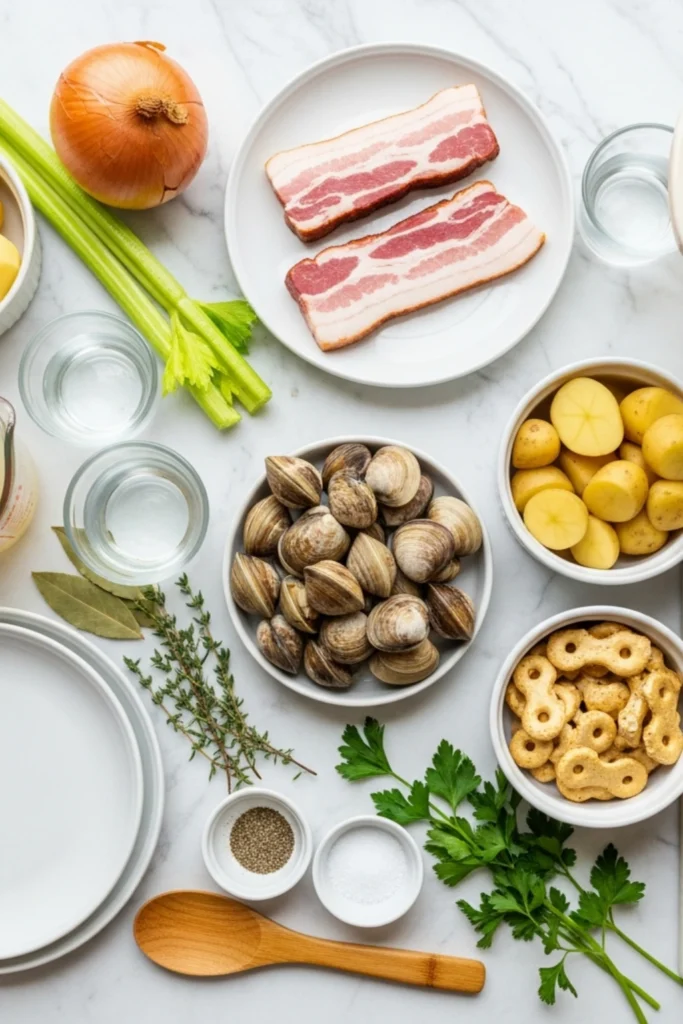
- 3 dozen fresh littleneck clams (or 3 cans chopped clams with juice)
- 4 slices thick-cut bacon, diced small
- 1 large yellow onion, finely chopped
- 2 celery ribs, diced
- 3 medium Yukon Gold potatoes, peeled and cubed (½-inch pieces)
For the broth:
- 2 cups bottled clam juice
- 2 cups water
- 2 bay leaves
- 1 teaspoon fresh thyme (or ½ teaspoon dried)
- ¼ teaspoon black pepper
- ¼ teaspoon kosher salt (start light, clam juice is salty)
To finish:
- 2 tablespoons fresh parsley, chopped
- Oyster crackers for serving
- Hot sauce (optional, but locals swear by it)
Tools You’ll Need
- Large stockpot or Dutch oven (6+ quarts)
- Sharp chef’s knife
- Cutting board
- Wooden spoon
- Fine-mesh strainer
- Ladle
- Slotted spoon
Pro Tips
Buy fresh clams if you can find them. The difference between fresh and canned is huge here since there’s nothing to hide behind. Fresh clams should smell like clean ocean water, not fishy. If they’re tightly closed (or close when tapped), they’re alive and good to use.
Save every drop of clam liquid. When you steam fresh clams, that liquid is packed with flavor. Strain it carefully through cheesecloth or a coffee filter to catch any sand, then use it as part of your broth base.
Don’t rush the bacon. You want it crispy enough to add texture but not so burnt that it tastes bitter. Medium heat is your friend here. And whatever you do, keep that bacon fat in the pot for cooking your vegetables.
Keep the broth clear. No flour. No cornstarch. No cream. If you want it slightly thicker, mash a few potato cubes against the side of the pot once they’re tender, then stir them back in.
Taste before adding salt. Between the clam juice, bacon, and natural saltiness of the clams, you might not need any extra at all. I always wait until the very end to season.
Substitutions and Variations
No fresh clams? Grab 3 cans (6.5 oz each) of chopped clams. Drain them but save every drop of that juice for your broth. You’ll lose some of that sweet ocean flavor, but it still works.
Want it smokier? Add a pinch of smoked paprika when you’re cooking the onions and celery. Just don’t go overboard or it’ll taste like a campfire.
Need more protein? Toss in some diced salt pork along with the bacon. Very traditional in coastal New England cooking.
Dairy-free by default. Good news if you’re avoiding dairy: this recipe doesn’t have any. Just double-check your bacon ingredients to make sure there’s no hidden milk powder.
Swap the potatoes. Red potatoes work great. So do russets if that’s what you have. Just keep the pieces small so they cook evenly.
Add some heat. A few shakes of hot sauce or a pinch of red pepper flakes in your bowl makes this even better. Locals in Rhode Island always have hot sauce on the table.
Make Ahead Tips
Prep your vegetables the night before. Chop the onions, celery, and potatoes, then store them in separate containers in the fridge so everything’s ready to go.
If you’re using fresh clams, you can steam them ahead of time. Remove the meat, chop it up, and refrigerate it for up to 24 hours. Just keep that clam juice too.
The Rhode Island clam chowder recipe actually tastes better the next day after the flavors have melded together. Reheat it gently on the stove over low heat and don’t let it boil, or your clams will turn rubbery.
How to Make Rhode Island Clam Chowder
Step 1: Prep Your Clams (If Using Fresh)
Scrub the clams under cold running water to get rid of any sand or grit stuck to the shells.
Toss any clams that are cracked or stay open when you tap them. Those are dead and not safe to eat.
Put the cleaned clams in a large pot with 1 cup of water. Cover with a lid and steam over medium-high heat for 8-10 minutes until they all pop open.
Pull out the clams with a slotted spoon and set them aside to cool. Strain the cooking liquid through a fine-mesh strainer lined with cheesecloth or a coffee filter to catch any sand. Save this liquid.
Once the clams are cool enough to handle, remove the meat from the shells and chop it into bite-sized pieces. Discard the shells.
Pro tip: Any clams that didn’t open after 10 minutes of steaming should be thrown away. They’re not safe to eat.
Step 2: Cook the Bacon
Heat your stockpot or Dutch oven over medium heat. Add the diced bacon and cook, stirring occasionally, until it’s crispy and has released most of its fat. This takes about 6-8 minutes.
Use a slotted spoon to transfer the bacon to a paper towel-lined plate. Leave about 2 tablespoons of bacon fat in the pot.
If you have more than 2 tablespoons, pour some off. If you have less, add a little butter to make up the difference.
Step 3: Build Your Flavor Base
Add the chopped onion and celery to the bacon fat. Cook over medium heat, stirring occasionally, until the vegetables soften and the onion turns translucent. About 5 minutes.
You’re not trying to brown them. Just soften them up and get them fragrant.
Step 4: Add Potatoes and Liquid
Toss in your cubed potatoes and stir them around to coat them in the bacon fat and vegetables for about 1 minute.
Pour in the clam juice (either from steaming the clams or from a bottle), water, bay leaves, thyme, and black pepper. Give everything a good stir.
Crank up the heat and bring it to a boil, then reduce the heat to medium-low. Let it simmer uncovered for 15-20 minutes until the potatoes are fork-tender.
Step 5: Add the Clams and Bacon
Once your potatoes are cooked through, add the chopped clam meat and the crispy bacon back into the pot.
Stir gently and let everything heat through for 3-5 minutes. Don’t cook the clams too long or they’ll get tough and rubbery.
Step 6: Season and Serve
Fish out the bay leaves and toss them.
Taste your Rhode Island clam chowder recipe and add salt only if it needs it. Start with a pinch and go from there.
Stir in the fresh parsley right before serving.
Ladle into bowls and serve with oyster crackers on the side. Some people add a pat of butter on top that melts into the broth. I’m one of those people.
What to Serve With Rhode Island Clam Chowder
Oyster crackers are non-negotiable. They’re the classic pairing and add a nice crunch.
Crusty bread for dipping into that broth. Sourdough or a good French baguette works perfectly.
Simple green salad with a light vinaigrette keeps things balanced since the chowder is already pretty rich from the bacon.
Corn on the cob if you’re going full New England summer vibes.
Coleslaw adds a crunchy, tangy contrast that cuts through the richness.
Leftovers and Storage
Store leftovers in an airtight container in the fridge for up to 3 days.
The potatoes will absorb some liquid as it sits, so add a splash of water or extra clam juice when reheating.
Reheat gently on the stovetop over low heat. Don’t microwave on high or you’ll end up with rubbery clams.
You can freeze this chowder, but the potatoes get a little mushy after thawing. If you’re planning to freeze it, slightly undercook the potatoes the first time.
Frozen Rhode Island clam chowder keeps for up to 3 months. Thaw overnight in the fridge and reheat on the stove.
Nutritional Information
| Per Serving (1.5 cups) | Amount |
|---|---|
| Calories | 245 |
| Protein | 18g |
| Carbohydrates | 22g |
| Fat | 9g |
| Fiber | 2g |
| Sodium | 680mg |
| Cholesterol | 45mg |
Based on 6 servings. Values are approximate.
FAQ
What’s the difference between Rhode Island clam chowder and New England clam chowder?
New England uses heavy cream or milk for a thick, white chowder. Rhode Island clam chowder uses a clear broth made from clam juice and water. It’s lighter and lets the clam flavor shine through without any dairy.
Can I use canned clams instead of fresh?
Yes. Use 3 cans (6.5 oz each) of chopped clams with their juice. It won’t be quite as sweet as fresh clams, but it still makes a good chowder in a pinch.
Why is my chowder cloudy instead of clear?
If you added flour, cream, or cornstarch, that’ll make it cloudy. Rhode Island clam chowder should have a clear broth. Some cloudiness from the clam juice itself is normal and fine.
How do I know if fresh clams are still good?
Fresh clams should smell like the ocean, not fishy or sour. Before cooking, they should be tightly closed or close up when you tap them. Any that stay open are dead and should be tossed.
Can I add corn or other vegetables to this recipe?
You can, but it’s not traditional. Rhode Island clam chowder is all about simplicity and letting the clams be the star. If you want more vegetables, add extra celery or potatoes instead.
Why are my clams rubbery?
You overcooked them. Clams only need a few minutes to heat through once they’re already steamed and chopped. Add them at the very end and don’t let the chowder boil after they go in.
Can I make Rhode Island clam chowder in a slow cooker?
I wouldn’t. Clams cook fast and will get rubbery if they sit in a slow cooker for hours. This is a stovetop recipe that only takes about 45 minutes total.
Is this chowder supposed to be thin?
Yes! It’s not meant to be thick and creamy like New England chowder. The broth should be light and clear, almost soup-like. That’s exactly what makes it special.
Wrapping Up
Rhode Island clam chowder doesn’t get nearly enough love.
It’s cleaner, lighter, and lets those clams actually taste like clams instead of drowning them in cream or tomatoes.
And once you try it, you might find yourself skipping the heavy stuff altogether. It’s simple. It’s delicious. And it comes together faster than you’d think for something this flavorful.
So grab some clams, get that bacon going, and give this coastal classic a try.
Then come back and tell me what you thought. Did it beat the cream version? Did you add hot sauce? I want to hear about it. 💙