Brunswick stew is a Southern United States classic that’s been warming bellies since the 1800s. This thick, meaty stew combines tender shredded pork and chicken with sweet corn, lima beans, and a rich tomato base that’ll make you understand why Georgians and Virginians have been fighting over who invented it for over a century.
I stumbled into my first bowl at a roadside BBQ shack in North Carolina where they ladled it over white rice like it was no big deal.
One bite and I got it.
The smoky pulled meats swimming in that tangy-sweet broth, studded with butter beans and corn kernels, created something that tasted like a hug from someone’s grandmother. You know the kind of food that makes you close your eyes and just savor it? That’s Brunswick stew.
What shocked me most was how simple it actually is to make. No fancy culinary degree required. Just good meat, vegetables, and patience while it simmers into pure comfort food magic.
The recipe doubles easily for meal prep, freezes like a dream, and somehow tastes even better the next day when all those flavors have had time to get cozy with each other.
Here’s everything you need to make a pot of authentic Brunswick stew that’ll have your family asking for seconds before they’ve finished their first bowl.
What You’ll Need
Meat & Base
| Ingredient | Amount | Notes |
|---|---|---|
| Boneless chicken thighs | 1 lb | Dark meat stays tender during long cooking |
| Pork shoulder (Boston butt) | 1 lb | Cut into 2-inch chunks |
| Low-sodium chicken broth | 6 cups | Homemade works great too |
| Yellow onion | 1 large (1½ cups diced) | Sweet onions add extra flavor |
| Garlic cloves | 4, minced | Fresh only, no jarred stuff |
| Vegetable oil | 2 tablespoons | For browning meat |
Vegetables & Flavor
| Ingredient | Amount | Purpose |
|---|---|---|
| Crushed tomatoes | 28 oz can | Creates the rich base |
| Diced tomatoes | 14.5 oz can | Adds texture and acidity |
| Frozen lima beans | 2 cups | Traditional butter beans work too |
| Frozen corn kernels | 2 cups | Fresh corn off the cob is incredible |
| Ketchup | ½ cup | Yes, really. Trust the process |
| Apple cider vinegar | 3 tablespoons | Balances the sweetness |
| Worcestershire sauce | 2 tablespoons | Adds umami depth |
| Brown sugar | 2 tablespoons | Rounds out the tang |
| Hot sauce | 1 tablespoon | Adjust to your heat preference |
Seasonings
- 1 teaspoon smoked paprika
- ½ teaspoon cayenne pepper (optional)
- 2 bay leaves
- Salt and black pepper to taste
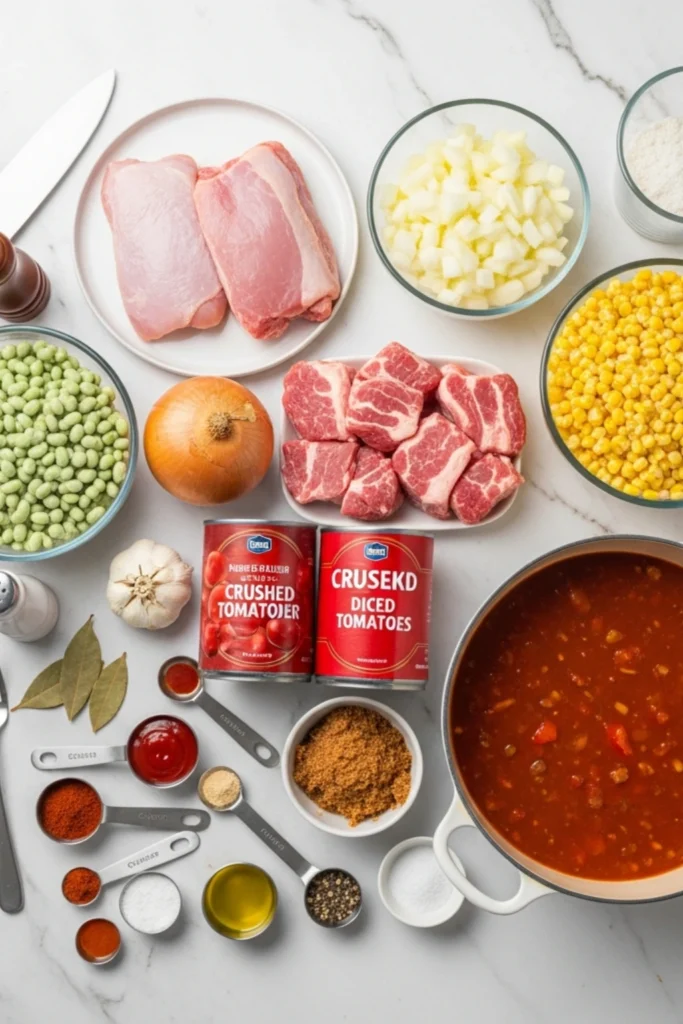
Tools You’ll Need
Essential equipment:
- 6-quart Dutch oven or heavy-bottomed pot
- Sharp chef’s knife
- Cutting board
- Wooden spoon for stirring
- Two forks for shredding meat
- Measuring cups and spoons
- Ladle
No fancy gadgets required. Just solid basics that you probably already own.
Pro Tips
Brown your meat like you mean it. Those caramelized bits stuck to the bottom of your pot aren’t mess, they’re concentrated flavor waiting to be unleashed. Take the full 3-4 minutes per side and don’t rush this step.
Use bone-in meat if you have extra time. The recipe calls for boneless cuts because I know you’re busy, but bone-in chicken thighs and a bone-in pork shoulder will create a richer, more flavorful broth. Just fish out the bones before shredding.
Adjust thickness to your preference. Traditional Brunswick stew is thick enough to almost stand a spoon in it. Some folks like it soupier. Too thick? Add more broth. Too thin? Simmer uncovered for 30 more minutes or mash some lima beans against the pot to release their starches.
Taste as you go. This stew is forgiving and wants you to make it yours. Too sweet? More vinegar. Too tangy? Another spoonful of brown sugar. Not enough kick? Extra hot sauce never hurt anyone.
Let it rest before serving. I know it smells incredible and you’re starving, but giving the stew 15-20 minutes off the heat lets everything settle and thicken perfectly. Use that time to make cornbread.
How to Make Brunswick Stew
Step 1: Brown the Meat (10 minutes)
Heat vegetable oil in your Dutch oven over medium-high heat until it shimmers.
Season chicken thighs and pork chunks generously with salt and pepper. Work in batches so you don’t crowd the pan (crowding makes meat steam instead of brown, and we want that golden crust).
Cook 3-4 minutes per side until deeply golden. The meat won’t be cooked through yet. That’s fine.
Remove to a plate and resist the urge to wipe out the pot. Those browned bits are pure gold.
Step 2: Build Your Flavor Foundation (6 minutes)
Lower heat to medium and toss diced onion into the same pot.
Stir occasionally and let it soften for 5 minutes. It’ll pick up all those tasty brown bits from the bottom.
Add minced garlic and cook 1 more minute until fragrant. Your kitchen now smells like a Southern grandmother’s house.
Step 3: Add Liquids and Tomatoes (5 minutes)
Pour in chicken broth and scrape up every last bit stuck to the bottom with your wooden spoon. This technique (deglazing) is where major flavor lives.
Add these next:
- Crushed tomatoes
- Diced tomatoes with their juices
- Ketchup
- Apple cider vinegar
- Worcestershire sauce
- Brown sugar
- Hot sauce
- Smoked paprika
- Cayenne (if using)
- Bay leaves
Stir until everything’s combined and you’ve got this gorgeous reddish-brown liquid bubbling away.
Step 4: Return Meat and Simmer (2 hours)
Nestle the browned chicken and pork back into the pot along with any accumulated juices from the plate.
Meat should be mostly submerged. If it’s not, add more broth.
Bring to a boil, then immediately drop to low heat. You want gentle bubbles breaking the surface, not a rolling boil that’ll toughen your meat.
Cover and simmer for 2 hours, stirring every 30 minutes.
During this time, the pork fat renders into the broth making it silky and rich. The meat becomes so tender it practically falls apart when you look at it. This slow simmer is where the magic happens.
Step 5: Shred and Add Vegetables (10 minutes)
Remove chicken and pork to a cutting board.
Use two forks to shred into bite-sized pieces. If the meat doesn’t pull apart easily, it needs more time.
Return shredded meat to the pot and stir in lima beans and corn.
Step 6: Final Simmer (30-45 minutes)
Continue simmering uncovered so the stew can thicken.
Stir occasionally to prevent sticking.
The Brunswick stew will reduce and concentrate in flavor. If it gets thicker than you like, add more broth. Too thin? Keep simmering or mash some beans against the pot.
Taste and adjust: This is your last chance to balance the flavors. Add more salt, vinegar, brown sugar, or hot sauce until it tastes perfect to you.
Step 7: Rest and Serve
Fish out the bay leaves (super important, nobody wants to bite those).
Turn off heat and let the stew sit for 15-20 minutes. It’ll thicken slightly and the flavors will settle into each other beautifully.
Ladle into bowls and serve hot with your favorite sides.
Substitutions and Variations
Different Meats
| Instead of | Use This |
|---|---|
| Pork shoulder | Pulled beef, smoked turkey, or leftover rotisserie chicken |
| Chicken thighs | Chicken breasts (but they’ll be drier), turkey thighs, or more pork |
| Both meats | Go all-in on one type, or mix in leftover brisket |
Fun fact: Original Brunswick stew recipes from the 1800s called for squirrel or rabbit. Feel free to keep it modern with grocery store options. 😅
Vegetable Swaps
Lima beans → Butter beans, cannellini beans, great northern beans, or navy beans
Corn → Fresh corn cut from the cob (way better texture), or drained canned corn
Crushed tomatoes → Tomato sauce thinned with water, or tomato paste (use half the amount)
Onion → White onions, sweet Vidalia onions, or red onions
Regional Variations
Carolina Style: Add 2 tablespoons yellow mustard and cut ketchup to ¼ cup for tangier flavor
Georgia Style: Skip ketchup completely and use all crushed tomatoes for a more tomato-forward taste
Virginia Style: Add diced potatoes in the last hour of cooking
Spicy Version: Double the cayenne and toss in diced jalapeños or serrano peppers
Smoky BBQ Twist: Use your favorite BBQ sauce instead of ketchup, or add 1 teaspoon liquid smoke
Dietary Modifications
Lower sodium: Use no-salt-added broth and tomatoes, then season with salt to your preference
Gluten-free: Check your Worcestershire sauce label since some brands contain gluten
Keto-friendly: Skip corn and lima beans, add extra meat and low-carb vegetables like okra or cauliflower
Whole30 compliant: Replace ketchup and brown sugar with tomato paste and compliant BBQ sauce
Make Ahead Tips
Brunswick stew is one of those magical dishes that actually improves after sitting in the fridge overnight.
Make it up to 3 days ahead and store in airtight containers in the refrigerator. The flavors continue developing and getting better with each passing day.
To reheat: Warm gently on the stovetop over medium-low heat, stirring occasionally. Add a splash of broth to thin if needed since it thickens considerably when cold.
Freezing for later: Make the stew through step 4, let it cool completely, then freeze before adding vegetables. Why? Corn and lima beans get mushy when frozen and reheated.
When ready to finish, thaw overnight in the fridge, bring to a simmer, add fresh vegetables, and continue from step 7.
This method gives you that “just made” texture every time.
Serving Suggestions
Brunswick stew is hearty enough to eat solo, but these classic pairings take it to the next level:
Perfect matches:
- Cornbread – The quintessential pairing for soaking up every drop
- Saltine crackers – Traditional Southern style
- Coleslaw – Cool crunch contrasts perfectly with warm stew
- Hush puppies – Fried cornmeal fritters are a match made in heaven
- White rice – How I first had it in North Carolina
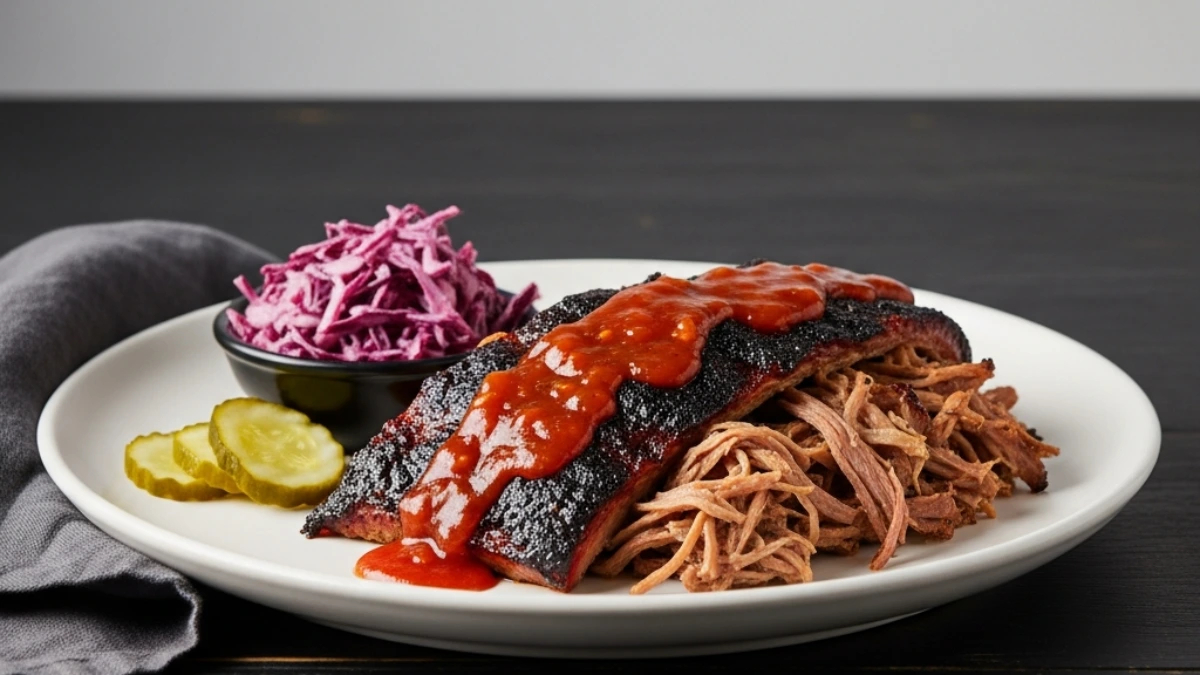
Bold move: In the South, Brunswick stew is sometimes served alongside BBQ as a side dish. If you want to go full Southern feast, pair it with pulled pork sandwiches, smoked ribs, or BBQ chicken.
Light option: A simple green salad with vinaigrette cuts through the richness nicely.
Leftovers and Storage
Refrigerator: Store in airtight containers for up to 4 days. The stew gets thicker and more flavorful each day.
Freezer: Portion into individual containers and freeze for up to 3 months. Perfect for grabbing easy lunches.
Reheating from frozen: Thaw overnight in the fridge, then warm on the stovetop or microwave. Add broth if it’s too thick.
Creative Ways to Use Leftovers
Your leftover Brunswick stew is more versatile than you think:
- Loaded baked potatoes – Split a potato and ladle stew over the top
- Nachos – Use it like chili on tortilla chips with cheese
- Shepherd’s pie – Top with mashed potatoes and bake
- Empanada filling – Stuff into pastry dough and fry
- Over grits – A Southern breakfast that’ll fuel your whole day
I’ve even stirred leftover Brunswick stew into mac and cheese. No regrets. 🧀
Nutritional Information
Per serving (based on 8 servings):
| Nutrient | Amount |
|---|---|
| Calories | 380 |
| Protein | 32g |
| Carbohydrates | 28g |
| Fat | 16g |
| Fiber | 6g |
| Sodium | 890mg |
| Sugar | 12g |
Numbers are approximate and vary based on specific ingredients and modifications.
FAQ
Can I make Brunswick stew in a slow cooker?
Yes! Brown the meat and sauté onions/garlic in a skillet first (this step creates crucial flavor), then transfer everything to your slow cooker. Cook on low for 6-7 hours or high for 3-4 hours. Add corn and lima beans during the last hour of cooking so they don’t turn to mush.
What’s the difference between Brunswick stew and chili?
Brunswick stew uses shredded meat (often multiple types), corn, lima beans, and has a sweet-tangy tomato base. Chili typically uses ground beef, kidney beans, and has a spicier, cumin-forward flavor. Brunswick stew is also thicker, almost like gravy consistency rather than soup.
Do I have to use both pork and chicken?
Not at all! Traditional recipes used whatever meat was available. You can go all chicken, all pork, or mix in beef or turkey. The combination of two meats creates more complex flavor, but one type works perfectly.
Can I use an Instant Pot or pressure cooker?
Absolutely. Brown meat using the sauté function, then add all ingredients except corn and lima beans. Cook on high pressure for 25 minutes with natural release for 10 minutes. Shred meat, add vegetables, and simmer on sauté mode for 10-15 minutes until veggies are tender.
My Brunswick stew is too thin. How do I fix it?
Simmer uncovered to reduce and thicken the liquid. You can also mash some lima beans against the side of the pot, which releases their starches and naturally thickens the stew. Another option: mix 2 tablespoons cornstarch with 2 tablespoons cold water, stir it in, then simmer 5 minutes.
Is Brunswick stew supposed to be sweet?
It has balanced sweet-tangy flavor. The brown sugar and ketchup add sweetness while vinegar and Worcestershire provide tang. Overall taste should be savory with subtle sweet notes, not candy-sweet. Adjust to your personal preference.
Can I add other vegetables?
Sure! Some versions include diced potatoes, okra, or green beans. Just remember that traditional Brunswick stew focuses on corn, lima beans, tomatoes, and onions. Adding too many vegetables changes the character of the dish. When in doubt, stick with the classics.
Why do Georgia and Virginia both claim to have invented Brunswick stew?
Brunswick County, Virginia says they created it in 1828. Brunswick, Georgia claims they invented it in 1898. Both states are passionate about their claim. The truth? Nobody knows for sure, and honestly, we all win because we get to eat this incredible stew regardless of its origins.
The History Behind Brunswick Stew
The exact origin of Brunswick stew remains one of the great debates in Southern food history, with both Virginia and Georgia staking their claim to this beloved dish.
Brunswick County, Virginia maintains they created the stew in 1828 when Dr. Creed Haskins asked his camp cook, Jimmy Matthews, to make a squirrel stew. The result became a local legend.
Brunswick, Georgia tells a different story, claiming their version emerged in 1898 during a political rally where 25 gallons were prepared.
What we know for certain: Brunswick stew has been feeding Southerners for well over a century, evolving from whatever wild game was available (squirrel, rabbit, opossum) to the chicken and pork versions we enjoy today.
According to Southern Living, the stew was originally a way for communities to come together, with large pots simmering over outdoor fires for church gatherings, political rallies, and family reunions.
That communal spirit lives on every time you make a big batch and share it with people you care about.
Wrapping Up
There’s something deeply satisfying about ladling out bowls of Brunswick stew you made from scratch.
Maybe it’s the slow simmer that fills your house with incredible aromas for hours. Maybe it’s watching simple ingredients transform into something so much richer than their individual parts. Or maybe it’s knowing you’ve got comfort food ready to feed your family for days.
This Brunswick stew recipe has survived centuries because it’s honest food made with care. No fancy techniques or hard-to-find ingredients. Just quality meat, fresh vegetables, and time.
Make a double batch this weekend. Serve it with buttery cornbread. Freeze some for busy weeknights. Share it with neighbors who could use a warm meal.
This is the kind of recipe that becomes part of your regular rotation once you taste how good homemade Brunswick stew can be.
Have you made Brunswick stew before? What’s your favorite meat combination? Drop a comment below and let me know how yours turned out! 🥘