Bison steak, also known as buffalo steak in North American ranching regions, intimidates most home cooks.
You’re worried about turning expensive meat into boot leather. I get it.
But cooking bison steak is actually simpler than beef once you know the one rule that changes everything: never cook it past medium-rare.
That’s it. That’s the secret that separates tender, juicy bison from the hockey pucks people complain about online.
I learned this the hard way after ruining my first three attempts. Now I cook bison steak at least twice a month, and it comes out perfect every time.
Why Bison Steak Deserves Your Attention
| Nutrition | Bison (8 oz) | Beef (8 oz) |
|---|---|---|
| Calories | 310 | 450 |
| Protein | 52g | 48g |
| Fat | 10g | 26g |
| Iron | 35% DV | 20% DV |
| Omega-3s | Higher | Lower |
Bison packs more protein and less fat than chicken breast. It’s naturally grass-fed since ranchers don’t grain-finish buffalo like cattle.
The flavor sits somewhere between beef and venison. Rich, slightly sweet, definitely not gamey.
Native American tribes across the Great Plains survived on bison for thousands of years. That deep burgundy color tells you everything about the nutrient density.
What You’ll Need
For the Bison Steak:
- 2 bison ribeye or strip steaks (8-10 oz each, 1 inch thick)
- 2 tablespoons avocado oil
- 1 ½ teaspoons coarse sea salt
- 1 teaspoon freshly cracked black pepper
- 3 garlic cloves (smashed)
- 3 fresh thyme sprigs
- 2 tablespoons grass-fed butter
For Finishing:
- Flaky sea salt
- Fresh rosemary (optional)
- Lemon wedges (optional)
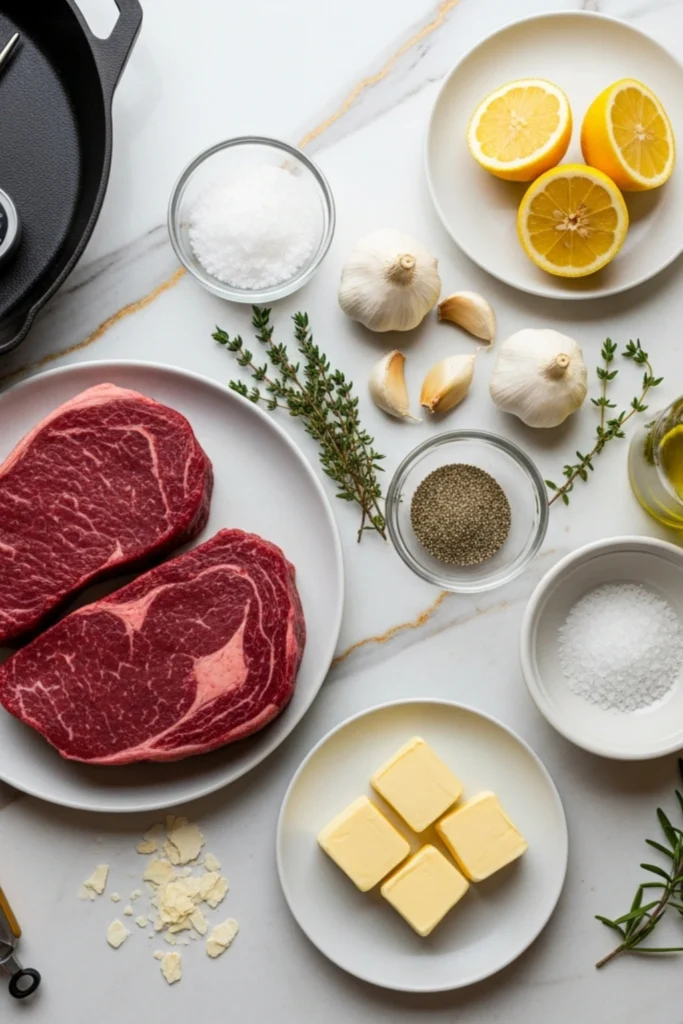
Tools Required
- Cast iron skillet or heavy stainless steel pan
- Meat thermometer (non-negotiable for bison)
- Tongs
- Paper towels
- Timer
Pro Tips for Perfect Bison Steak
Temperature rules everything. Bison has 25% less fat than beef. That means it cooks faster and dries out quicker. Pull your bison steak at 125°F for medium-rare, 130°F maximum for medium. Anything beyond that and you’ve wasted good meat.
Double rest method. Take your bison steak out of the fridge 30-45 minutes before cooking. Cold meat hitting a hot pan cooks unevenly. Then rest it again for 5-7 minutes after cooking so the juices redistribute instead of bleeding onto your cutting board.
One flip only. Fight the urge to flip multiple times. Let the first side develop a proper crust for 3-4 minutes, flip once, finish cooking. Multiple flips prevent browning and mess with your timing.
Butter basting transforms everything. In the last minute, tilt your pan and spoon that melted butter mixed with garlic and thyme over your bison steak repeatedly. This adds moisture to the surface and creates flavor layers that make people think you took cooking classes.
Thicker is more forgiving. A 1 to 1.5-inch thick bison steak gives you better control. Thin steaks cook so fast with bison that overcooking happens in seconds.
Substitutions and Variations
No bison available? Use elk, venison, or grass-fed beef. Adjust cooking time since beef has more fat and handles higher temperatures better.
Skip the dairy? Replace butter with ghee or extra avocado oil. You’ll lose some richness but the bison steak stays delicious.
Different herbs? Rosemary, sage, or oregano work great instead of thyme. Make a quick chimichurri or compound butter for serving.
Air fryer method: Preheat to 400°F, cook 8-10 minutes, flip halfway. Still use your thermometer.
Cast iron substitute? Heavy stainless steel works. Avoid non-stick since you need high heat for proper searing.
Make Ahead Tips
Season your bison steaks up to 24 hours in advance and store uncovered in the fridge. This dry-brining develops better crust formation.
Portion and freeze individual bison steaks for up to 6 months. Thaw in the fridge overnight before cooking. Never microwave to thaw.
How to Cook Bison Steak (Step-by-Step)
Step 1: Bring Steaks to Room Temperature
Remove bison steaks from the fridge 30-45 minutes before cooking.
Pat completely dry with paper towels. Moisture prevents crust formation.
Season both sides generously with salt and pepper.
Step 2: Heat Your Pan Properly
Place cast iron skillet over medium-high heat for 3-4 minutes.
Test readiness: a water drop should sizzle and evaporate immediately.
Add avocado oil and swirl to coat. Wait 30 seconds until the oil shimmers.
Step 3: Sear the First Side
Lay bison steak in the pan away from you to avoid oil splatter.
Don’t touch it. Don’t move it. Don’t flip it yet.
Cook 3-4 minutes until a dark brown crust forms.
Step 4: Flip and Add Aromatics
Flip the bison steak once. Only once.
Immediately add butter, smashed garlic, and thyme to the pan.
Tilt the pan slightly. Use a spoon to baste continuously for 2-3 minutes.
Step 5: Check Temperature and Rest
Insert thermometer into the thickest part of the bison steak.
Pull at 125°F for medium-rare. It’ll rise to 130°F while resting.
Transfer to a plate. Rest for 5-7 minutes. This step isn’t optional.
Step 6: Slice and Serve
Slice against the grain into ½-inch pieces.
Finish with flaky sea salt.
Spoon pan juices over the top.
Why Your Bison Steak Gets Tough
The #1 mistake: Overcooking. Bison steak has minimal fat, which means minimal moisture buffer. Cook it past medium and the proteins squeeze out every drop of juice.
The second mistake is cooking straight from the fridge. The outside chars while the inside stays cold, forcing you to overcook the exterior to warm the center.
Third mistake: cutting immediately. Hot meat releases all its juices onto your cutting board instead of staying inside where they belong.
Follow the temperature guidelines above and you’ll avoid all three problems.
Best Side Dishes for Bison Steak
Keep sides simple. Bison steak has distinct flavor that shouldn’t compete with heavy sauces or complicated preparations.
Roasted vegetables work beautifully:
- Asparagus with olive oil and lemon
- Brussels sprouts with balsamic
- Root vegetables with fresh herbs
Salads cut through richness:
- Arugula with lemon vinaigrette
- Mixed greens with goat cheese
- Spinach with strawberries
Starches add substance:
- Roasted fingerling potatoes
- Wild rice pilaf
- Mashed sweet potatoes
- Cauliflower mash
Leftovers and Storage
Store cooked bison steak in an airtight container for 3-4 days in the fridge.
Reheating method: Use a skillet over low heat, not the microwave. You’re warming it, not cooking it further.
Leftover bison makes incredible:
- Steak salads (slice thin, serve cold)
- Breakfast hash with eggs
- Grain bowls with roasted vegetables
- Tacos with fresh salsa
Freeze cooked bison steak for up to 2 months. Thaw overnight in the fridge before gentle reheating.
Where to Buy Quality Bison
Most high-end grocery stores carry bison now. Check Whole Foods, Sprouts, or Costco.
Online ranches ship directly and quality is usually excellent. Many bison ranches across Montana, Wyoming, and South Dakota offer nationwide shipping.
Local farmers markets often have vendors selling bison from nearby ranches. This lets you ask questions about raising practices.
Expect to pay $15-25 per pound for good bison steak depending on the cut. You’re getting exceptional nutrition and supporting sustainable ranching.
Nutritional Breakdown
Per 8 oz serving of bison steak:
- Calories: 310
- Protein: 52g
- Fat: 10g
- Saturated Fat: 4g
- Carbohydrates: 0g
- Iron: 35% DV
- Vitamin B12: 60% DV
- Zinc: 40% DV
- Omega-3 fatty acids: 180mg
Bison is one of the leanest red meats available. Lower in calories and fat than salmon, higher in protein than chicken breast.
FAQ About Cooking Bison Steak
Is bison steak healthy?
Very. It’s leaner than chicken, higher in protein than beef, loaded with iron and B vitamins. Bison is grass-fed by default since they aren’t grain-finished like cattle.
Does bison taste gamey?
Not like venison or wild game. Bison steak tastes similar to beef but slightly sweeter and richer. Most first-timers are surprised by how mild it is.
Can I cook bison steak well-done?
Technically yes, but you shouldn’t. The low fat content means well-done bison turns tough and dry. If you must, use slow-cooking methods like braising instead of pan-searing.
What’s the best cut of bison for beginners?
Ribeye or strip steak. They have slightly more marbling than other cuts, giving you forgiveness. Tenderloin is amazing but expensive.
Do I need to marinate bison?
No. Bison steak is naturally tender when cooked properly. Simple salt and pepper lets the meat shine. If you want to marinate, keep it short (2-4 hours) and avoid acidic marinades that make texture mushy.
Why is my bison steak tough?
Three reasons: you overcooked it, cooked it from cold, or didn’t rest it properly. Use a thermometer, bring to room temp first, and rest 5-7 minutes. Those steps solve 95% of tough bison problems.
Can I sous vide bison steak?
Absolutely. Set your sous vide to 129°F for medium-rare, cook 1-2 hours, then sear in a screaming hot pan for 30 seconds per side. This method is nearly foolproof.
Is bison more sustainable than beef?
Generally yes. Bison naturally roam and graze, requiring less intensive farming. They’re native to North America, making them well-adapted to climate and land conditions.
Wrapping Up
You just learned how to cook bison steak that rivals any steakhouse.
The key: don’t overcook it, use a thermometer, and let it rest. Those three things guarantee success every time.
Bison steak isn’t scary once you respect what makes it different from beef. Less fat means more attention to temperature, but also cleaner protein and richer flavor.
Try this recipe this week and drop a comment below about how it turned out. I want to hear if you nailed it first try or if you have questions. And if you’re already a bison cooking pro, share your favorite seasoning combo or side pairing.