Most people think restaurant-quality fish is out of reach at home.
This recipe will prove that wrong fast.
Pan seared halibut is one of those dishes that looks like you spent an hour in the kitchen but actually comes together in about 20 minutes. The crust is golden. The inside is silky and flaky. And the lemon butter sauce on top? It clings to every bite.
Halibut is a cold-water flatfish from the Pacific Northwest and North Atlantic, and it’s genuinely one of the mildest, most forgiving fish you can cook. Even if you’ve burned fish before, this one’s hard to mess up when you follow a few key rules.
And I’ll walk you through all of them.
What You’ll Need
For the Halibut
- 4 halibut fillets (6 oz each, about 1 inch thick)
- 2 tablespoons olive oil
- 1 teaspoon kosher salt
- 1/2 teaspoon black pepper
- 1/2 teaspoon garlic powder
- 1/2 teaspoon smoked paprika
For the Lemon Butter Sauce
- 3 tablespoons unsalted butter
- 3 garlic cloves, minced
- Juice of 1 large lemon (about 3 tablespoons)
- Zest of 1 lemon
- 2 tablespoons fresh parsley, chopped
- 1/4 teaspoon red pepper flakes (optional)
- Salt to taste
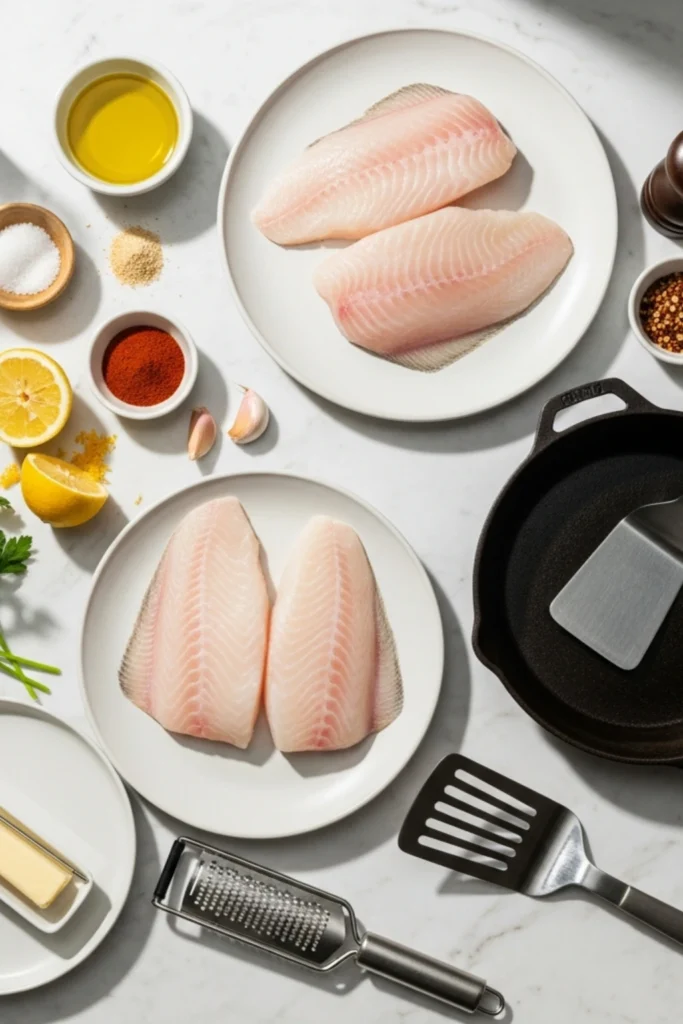
Tools You’ll Need
- Cast iron skillet or stainless steel pan (do not use non-stick for a proper sear)
- Fish spatula
- Paper towels
- Small saucepan or extra pan for the butter sauce
- Tongs
- Meat thermometer (optional but really useful)
- Cutting board
- Sharp knife
- Zester or microplane
Pro Tips
Okay, this is where it gets good. These are the things nobody tells you before you make fish at home for the first time.
1. Dry the fish completely before it hits the pan. Moisture = steam, and steam is the enemy of a good crust. Pat those fillets down hard with paper towels and let them sit on a wire rack for 10 minutes uncovered before cooking.
2. Your pan must be hot before the fish goes in. Like, actually hot. Flick a few drops of water into the pan. If they dance and evaporate immediately, you’re ready. If the fish goes into a lukewarm pan, it’ll stick and tear.
3. Press gently when it first hits the pan. Halibut tends to curl up in the first 30 seconds of cooking. Press lightly with your spatula for about 15 seconds to keep it flat and get an even sear.
4. Flip it once. Just once. Moving the fish around constantly is a mistake. Let it release naturally. If it’s sticking, it’s not ready to flip yet.
5. Pull it at 130°F internal and let it carry over to 135°F. Halibut dries out fast when overcooked. Use a thermometer, seriously. The difference between 135°F and 145°F is the difference between silky and dry.
How to Make Pan Seared Halibut
Step 1: Prep the Fish
Pull your halibut fillets out of the fridge 15 minutes before cooking. This takes the chill off and helps them cook more evenly.
Pat every surface completely dry with paper towels. This step matters more than most people think.
Season both sides with salt, pepper, garlic powder, and smoked paprika. Don’t rush this.
Step 2: Heat the Pan
Place your cast iron or stainless steel skillet over medium-high heat and let it warm up for about 2 minutes.
Add the olive oil. Let it shimmer, almost to the point where you see the faintest wisp of smoke.
Step 3: Sear the Halibut
Place fillets presentation-side down (the side you want to show). Press gently for 15 seconds.
Cook for 3 to 4 minutes without touching. Let the crust build.
Flip once with a fish spatula. Cook another 2 to 3 minutes on the second side until the fish reaches 130 to 135°F internally.
Transfer to a plate and tent loosely with foil.
Step 4: Make the Lemon Butter Sauce
In the same pan over medium-low heat, add the butter. Let it melt.
Add the minced garlic. Cook for about 1 minute, stirring frequently, until fragrant but not brown.
Add lemon juice, lemon zest, and red pepper flakes if using. Stir and let it bubble for 30 seconds.
Remove from heat and stir in fresh parsley.
Step 5: Plate and Serve
Spoon that lemon butter sauce over the halibut generously. Serve immediately.
Halibut is best eaten right away, so have your sides ready before the fish goes into the pan.
Substitutions and Variations
Not everyone has access to fresh halibut year-round, and that’s completely fine.
| Swap | Works Well? | Notes |
|---|---|---|
| Cod | Yes | Very similar texture, slightly more delicate |
| Sea bass | Yes | Richer flavor, a little fattier |
| Mahi-mahi | Yes | Firmer, great for grilling too |
| Tilapia | Works | Thinner fillets, reduce cook time |
| Avocado oil instead of olive oil | Yes | Higher smoke point, great for high heat |
| Ghee instead of butter | Yes | Slightly nuttier flavor |
| Capers in the sauce | Yes | Adds a briny pop that’s really good |
| Lime instead of lemon | Yes | Different brightness, still delicious |
Dairy-free option: Swap butter for a good quality vegan butter or a drizzle of high-quality olive oil in the sauce.
Low-sodium option: Cut the salt and use herbs aggressively. Fresh dill, thyme, and parsley do a lot of work here.
Make Ahead Tips
Halibut is at its absolute peak right when it’s cooked, so there aren’t many make-ahead options for the fish itself.
That said, you can prep these things ahead of time:
- Season the fillets up to 4 hours ahead and keep them covered in the fridge. Pull them out 15 minutes before cooking.
- Make the lemon butter sauce up to 2 days ahead and store in the fridge. Reheat gently on the stovetop before serving.
- Prep all your sides first. Halibut waits for no one once it’s done.
Meal Pairing Suggestions
Halibut is mild enough to pair with almost anything. Here’s what works really well:
- Garlic mashed potatoes (the butter sauce soaks right in)
- Roasted asparagus or broccolini with olive oil and salt
- Cauliflower rice for a lower-carb plate
- Herbed couscous or rice pilaf
- A simple green salad with lemon vinaigrette
For a full Pacific Northwest vibe, serve it with roasted potatoes and a simple cucumber dill salad on the side.
Nutritional Info (Per Serving, Approximate)
| Nutrient | Amount |
|---|---|
| Calories | 310 |
| Protein | 42g |
| Fat | 14g |
| Carbohydrates | 2g |
| Omega-3 Fatty Acids | ~1g |
| Sodium | 480mg |
Halibut is genuinely one of the most nutritious proteins you can eat. It’s packed with omega-3s, magnesium, potassium, and selenium. And at 42 grams of protein per serving, it earns its place in any high-protein meal plan.
Leftovers and Storage
Storage: Store leftover halibut in an airtight container in the fridge for up to 2 days. Fish doesn’t keep as long as chicken or beef, so plan accordingly.
Reheating: The microwave will dry it out fast. Instead, add a splash of water or broth to an oven-safe dish, cover tightly with foil, and warm at 275°F for about 10 to 12 minutes.
Repurposing leftovers:
- Flake it over a green salad with lemon vinaigrette
- Tuck it into fish tacos with slaw and avocado
- Stir into a chowder base with potatoes and cream
- Mix with cream cheese for a quick fish dip
FAQ
Can I use frozen halibut? Yes. Thaw it in the fridge overnight and pat it very dry before cooking. Frozen fish holds more water, so the dry step is even more important.
Why is my halibut falling apart? It flipped too early. Let the fish release naturally from the pan. If it’s sticking, give it another 30 to 60 seconds.
Can I make this in an air fryer? Yes. Season the fillets, spray with olive oil, and air fry at 400°F for 8 to 10 minutes. You won’t get the same pan crust, but the result is still really good.
What does halibut taste like? It’s one of the mildest fish out there. If you’re nervous about “fishy” tasting fish, halibut is a great place to start. Clean, slightly sweet, and it takes on whatever seasoning you add.
Is halibut healthy? Halibut is an excellent source of lean protein and omega-3 fatty acids. It’s also naturally gluten-free and low in saturated fat.
Can I bake this instead of pan searing? Yes. Bake at 400°F for 12 to 15 minutes. You won’t get the golden crust, but it’s still delicious. Drizzle the butter sauce over it halfway through baking.
Do I need to remove the skin? Most halibut fillets come skinless. If yours has skin, you can sear it skin-side down first and it’ll crisp up nicely.
Wrapping Up
If a 20-minute weeknight dinner that tastes like something from a nice restaurant sounds good, this is it.
Halibut doesn’t ask much from you. Dry it well, get your pan hot, flip it once, and finish with a proper lemon butter sauce. That’s the whole secret.
Once you make this, I’d love to know how it turned out for you. Did you try any substitutions? Serve it with something unexpected that worked really well?
Drop a comment below and let me know. And if you have any questions at all, ask away. I’ll get back to you!