This homemade apple cider recipe brings the classic warmth of traditional New England-style spiced cider straight into your kitchen.
And here’s the thing most people don’t realize: you don’t need a cider press, fancy equipment, or even a trip to an orchard. Just apples, spices, and a big pot.
The smell alone is worth making it. 🍂
Key Takeaway: This stovetop apple cider simmers fresh apples and whole spices into a deeply rich, naturally sweet drink that store-bought versions can never replicate.
What You’ll Need
| Ingredient | Amount | Notes |
|---|---|---|
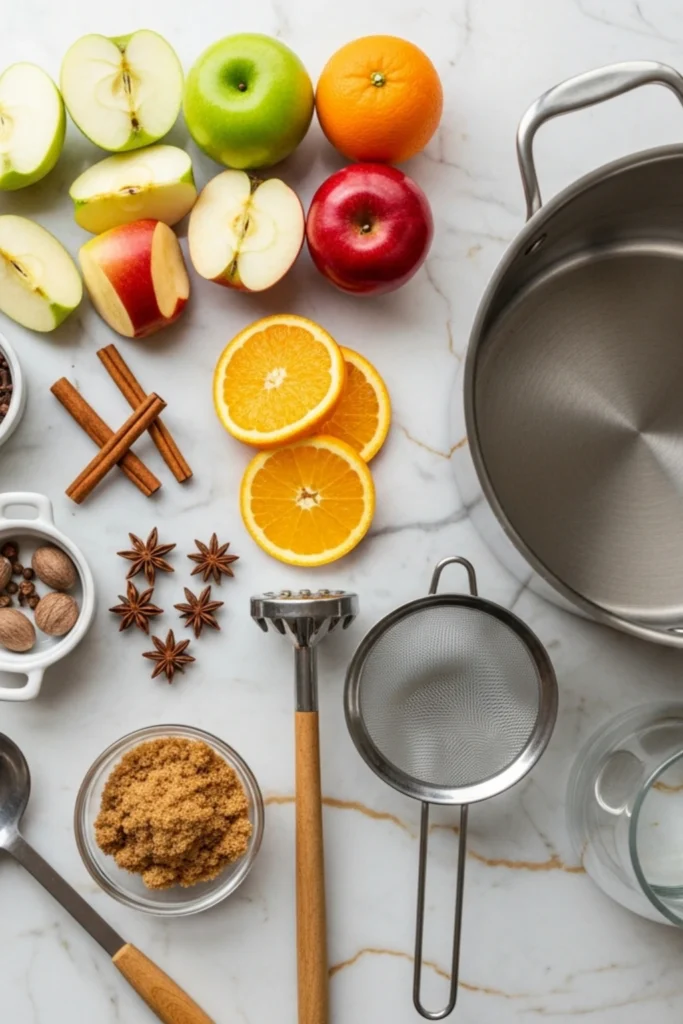
| Mixed apples (Fuji + Granny Smith) | 10 medium | No peeling required |
| Orange | 1 large | Sliced into rounds |
| Cinnamon sticks | 3 | Whole, not ground |
| Whole cloves | 1 tablespoon | |
| Whole allspice berries | 1 tablespoon | |
| Ground nutmeg | 1 teaspoon | |
| Star anise | 4 pieces | |
| Brown sugar | 3–4 tablespoons | Add to taste after straining |
| Water | 8–10 cups | Enough to cover by 1 inch |
Tools You’ll Need
- Large stockpot (8-quart minimum)
- Potato masher or wooden spoon
- Fine mesh strainer or cheesecloth
- Ladle
- Large bowl or pitcher
- Airtight glass jars or bottles for storage
Pro Tips
These make the difference between good cider and great cider:
- Skip peeling the apples entirely. The skins add gorgeous color and a deeper apple flavor that you’d lose otherwise.
- Use at least two apple varieties. All-sweet apples make flat cider. All-tart apples can taste harsh. A 60/40 sweet-to-tart ratio is the sweet spot.
- Simmer low and slow. High heat makes cider cloudy and slightly bitter. Keep it at medium-low the whole time.
- Mash hard before straining. Press those softened apples down aggressively. That’s where most of the deep flavor hides.
- Taste before sweetening. Apples vary wildly by season. Some batches need no sugar at all.
Substitutions and Variations
Apple swaps:
- Honeycrisp, Gala, Pink Lady, or Braeburn all work beautifully
- Avoid Red Delicious — mealy texture, weak flavor when cooked
Sweetener options:
| Sweetener | Flavor Profile |
|---|---|
| Brown sugar | Classic, mild caramel notes |
| Maple syrup | Deeper, more complex |
| Honey | Floral, slightly lighter |
| No sweetener | Let the apples speak for themselves |
Fun variations to try:
- Spiked cider: Stir in bourbon or dark rum right before serving
- Cold cider: Cool completely, refrigerate, serve over ice with an orange slice
- Slow cooker version: Cook on low for 6–8 hours, then mash and strain
Make Ahead Tips
This cider is genuinely better the next day.
The spices keep infusing overnight and the whole thing deepens in a way that freshly made cider just doesn’t match.
Make a big batch Sunday evening and reheat throughout the week on the stovetop over low heat. It’s one of those recipes that rewards patience.
How to Make Homemade Apple Cider
Step 1: Prep the Apples and Orange
Quarter your apples — no peeling, no coring needed. Slice the orange into rounds. Add everything to your stockpot.
Step 2: Add the Spices
Drop in the cinnamon sticks, whole cloves, allspice berries, ground nutmeg, and star anise.
No cheesecloth pouch needed. Everything gets strained out at the end.
Step 3: Add Water
Pour in 8–10 cups of water, enough to cover everything by about an inch.
Step 4: Bring to a Boil, Then Simmer
Heat on medium-high until boiling. Reduce to medium-low, cover the pot, and simmer for at least 2 hours.
Your kitchen is going to smell incredible right around the 45-minute mark. 🙌
Step 5: Mash the Apples
Once the apples are completely soft and falling apart, use your potato masher to press them down firmly.
Don’t be gentle here. The harder you mash, the more flavor you extract.
Step 6: Strain Everything
Set your fine mesh strainer over a large bowl or pitcher. Ladle the cider through in batches, pressing down hard on the solids each time.
Discard the solids and you’re left with pure, rich cider.
Step 7: Sweeten and Taste
Start with 2 tablespoons of brown sugar, stir to dissolve, and taste. Add more in small increments until it’s exactly where you want it.
Step 8: Serve or Store
Serve hot immediately or let cool completely before transferring to storage jars.
Nutritional Breakdown
Per 8 oz serving, unsweetened:
| Nutrient | Amount |
|---|---|
| Calories | ~80 kcal |
| Carbohydrates | ~20g |
| Natural Sugar | ~16g |
| Fiber | 0g (strained) |
| Vitamin C | ~10% DV |
| Potassium | ~175mg |
Dietary notes:
- Naturally vegan and gluten-free
- Paleo-friendly when sweetened with maple syrup or honey
- No refined sugar needed if your apples are sweet enough on their own
Meal pairing ideas:
- Baked brie and crackers
- Apple pie or cinnamon rolls
- Sharp cheddar cheese board
- Roasted pork tenderloin
- Any cozy fall dessert you already love
Leftovers and Storage
| Storage Method | Duration | Notes |
|---|---|---|
| Refrigerator | 7–10 days | Airtight glass jar |
| Freezer | Up to 3 months | Freeze in ice cube trays for easy use |
One thing worth knowing: Homemade cider ferments faster than store-bought since there are no preservatives. If it smells faintly tangy or slightly alcoholic after several days, it’s beginning to ferment naturally — which is exactly how hard cider is made.
Consume within the first week for the non-alcoholic version. According to The USDA’s food safety guidelines, unpasteurized juices and ciders should be consumed within a few days of pressing.
Reheat on the stovetop over low heat. Never microwave in a sealed container.
FAQ
Can I use apple juice instead of fresh apples? You could, but you’d lose most of what makes this homemade apple cider recipe worth making. Fresh apples give you a completely different depth that no bottled juice can replicate.
What’s the actual difference between apple cider and apple juice? Apple cider is unfiltered, giving it that cloudy, rich, complex flavor. Apple juice is filtered, sweeter, and much lighter. What you’re making here is traditional cider.
Can I make this homemade apple cider in a slow cooker? Yes. Add everything to the slow cooker, cook on low for 6–8 hours, then mash and strain. Even more hands-off and the flavor is excellent.
How do I know when the apples are ready to mash? Press a piece of apple against the pot wall with a spoon. If it completely falls apart with zero resistance, you’re ready. Usually right around the 2-hour mark.
Can I double this recipe? Absolutely — just make sure your pot is large enough. A 12-quart stockpot handles a doubled batch comfortably.
Is this safe for kids? Of course, just skip any add-ins like bourbon 😄
Wrapping Up
There’s a reason homemade apple cider has been simmering on stoves across New England and family kitchens all over the US for generations.
It’s warm, it’s comforting, and it tastes like someone put real care into making it — because you did.
Ten apples, a handful of whole spices, and two hours of mostly hands-off simmering. That’s genuinely all it takes.
Give this recipe a go this fall and drop a comment below telling me how yours turned out! Did you try the bourbon version? Make it in the slow cooker? Add a different spice? I’d love to hear about it.