Frogmore Stew — the legendary Lowcountry Boil from South Carolina’s Sea Islands — is one of those meals that makes an entire table of people stop talking and just eat.
Four main ingredients. One giant pot. Zero complicated techniques. And somehow, the result tastes like an entire coastal vacation packed into a single bite.
“It brought the family together, sitting around that pot and eating together.” — Lavern Meggett, daughter of Gullah Geechee culinary matriarch Emily Meggett
If you’ve never made it before, this post walks you through everything — the history, the method, the tips that make or break the dish, and exactly how to pull it off for a crowd.
What Is Frogmore Stew?
Frogmore Stew (also called a Lowcountry Boil, Beaufort Stew, or Beaufort Boil) is a one-pot seafood boil built around four core ingredients: shrimp, smoked sausage, corn, and new potatoes, cooked in a bold, seasoned broth.
🦐 And no — there are no frogs in it. Not even one.
The dish is deeply tied to the Gullah Geechee cultural tradition, a community of Central and West African descendants who shaped the food culture of coastal South Carolina and Georgia. Enslaved plantation workers typically had only meager access to cookery, usually a few pots to feed many mouths — shrimp sourced from surrounding marshes, sausage from meat trimmings, corn and potatoes in abundance at the peak of summer. The Gullah Geechee culinary tradition is a major conservator of what enslaved West and Central Africans refused to let go of despite all oppression.
The name “Frogmore” was formally attached to the dish in the 1960s. Lowcountry legend dates the name back to when shrimper and National Guard veteran Richard Gay used leftover ingredients to serve up an ad-hoc variation of his family’s traditional seafood boil. Gay’s recipe gained national prominence when it appeared on the cover of Gourmet Magazine in the 1980s.
That’s the backstory. Now let’s make it.
What You’ll Need
The Ingredients (Serves 6–8)
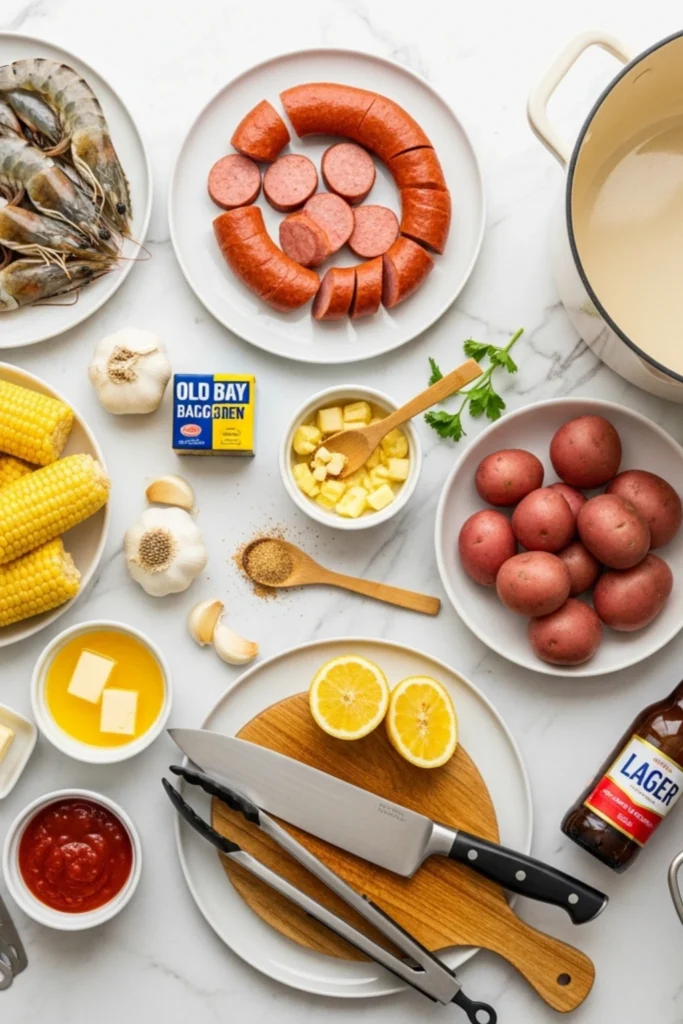
The Main Four:
| Ingredient | Amount | Notes |
|---|---|---|
| Large shrimp, shell-on | 2 lbs | Fresh or thawed; never pre-cooked |
| Smoked kielbasa or andouille | 1 lb | Sliced into 1-inch rounds |
| Ears of corn | 4 | Husked, cut into thirds |
| Baby red potatoes | 1.5 lbs | Or small Yukon Golds |
The Broth:
- 4 quarts water
- 1 bottle (12 oz) lager beer (or extra water)
- 3 tablespoons Old Bay seasoning — this is non-negotiable
- 1 tablespoon kosher salt
- 1 lemon, halved (plus extra wedges for serving)
- 6 garlic cloves, smashed
For Serving:
- Melted butter
- Extra Old Bay for sprinkling
- Hot sauce (Crystal or Tabasco)
- Cocktail sauce
- Fresh parsley, roughly chopped
Tools Required
- Large stockpot (12-quart minimum — bigger is always better for this)
- Large colander or straining basket
- Kitchen tongs
- Sharp knife and cutting board
- Measuring spoons
- Newspaper or butcher paper to line your table (trust this step)
- Small ramekins for dipping sauces
Pro Tips From the Kitchen 👨🍳
These are the things that genuinely change how this dish turns out.
- Cook in stages. Potatoes take 15 minutes. Shrimp take 3. If you add everything at the same time, you’ll get rubbery shrimp sitting next to half-raw potatoes. Don’t do that.
- Shell-on shrimp only. The shells protect the shrimp from getting tough in the boiling water and add serious flavor to every bite. Peeling them at the table is half the experience.
- Season the water boldly. This broth needs to taste almost like the sea. Taste it before adding any ingredients — if it doesn’t make you pause, add more Old Bay.
- Don’t walk away when the shrimp go in. Shrimp go from perfect to overcooked in under 60 seconds. Watch for the color change from grey to pink, and the shape change from a loose C to… still a C. When they curl into a tight O shape, you’ve gone too far.
- The dump IS the event. Don’t plate this. Line the table with newspaper, pour cold drinks, and pour the whole drained pot right onto the table. It sounds messy. It is. Everyone will absolutely love it.
How to Make Frogmore Stew
Step 1: Build the Broth
Fill your stockpot with 4 quarts of water and the beer. Add the Old Bay, salt, smashed garlic cloves, and the halved lemon — squeeze in the juice and drop the whole halves in too.
Bring everything to a rolling boil over high heat. Taste it. It should taste bold and briny.
Step 2: Cook the Potatoes First
Add the baby red potatoes. Cook for 15 minutes, or until just barely fork-tender. You want them close but not fully soft — they’ll keep cooking alongside everything else.
Step 3: Add the Sausage
Slide in the sliced sausage. Cook for 5 more minutes. The sausage fat renders into the broth and this is where the depth of flavor really starts building.
Step 4: Add the Corn
Add the corn pieces. Cook for another 5 minutes. The corn only needs a few minutes since the water is already at full boil and the pieces are small.
Step 5: Shrimp Go In Last
Add the shrimp and stir gently. Cook for 3 to 4 minutes maximum, watching closely. The moment they turn pink and opaque, shut off the heat.
Step 6: Drain and Dump
Drain the entire pot through a large colander, discarding all the liquid. Let everything steam for 30 seconds. Then dump the whole batch onto a newspaper-lined table or into a large serving bowl.
Sprinkle extra Old Bay over the top. Set out the butter, hot sauce, lemon wedges, and cocktail sauce. Let everyone go.
Cooking Time at a Glance
| Step | Time |
|---|---|
| Bring broth to boil | ~15 min |
| Potatoes | 15 min |
| Sausage | 5 min |
| Corn | 5 min |
| Shrimp | 3–4 min |
| Total active time | ~50 min |
Substitutions and Variations
Protein options:
- Snow crab legs or blue crabs alongside (or instead of) the shrimp
- Clams or mussels for a briny, oceanic twist
- Smoked turkey sausage for a lighter option
- Chorizo if you want more heat than kielbasa gives
Extra vegetables to add:
- Green beans (toss in during the last 5 minutes)
- Artichoke halves (add with the potatoes)
- Onion quarters in the broth for extra sweetness
Beer-free version: Swap the beer for water or low-sodium chicken broth. The flavor still comes primarily from the Old Bay.
Crank up the heat: Add 1–2 teaspoons of cayenne pepper or a few dried whole chiles to the broth.
Dietary Information
| Nutrient | Per Serving (Approx.) |
|---|---|
| Calories | ~420 |
| Protein | ~38g |
| Carbohydrates | ~28g |
| Fat | ~14g |
| Sodium | ~1,200mg |
Dairy-free: Skip the melted butter. Serve with olive oil and fresh lemon instead.
Gluten-free: Skip the beer and use water. Old Bay seasoning is naturally gluten-free.
Lower sodium: Reduce Old Bay to 1.5 tablespoons and supplement with a salt-free Cajun-style seasoning blend.
Make-Ahead Tips
🕐 Making this for a group? Prep ahead to keep things running smoothly.
- Potatoes: Boil separately up to one day ahead, refrigerate, then add to the pot just to warm through.
- Sausage: Pre-slice and refrigerate until needed.
- The broth: Season the water a few hours ahead. Just bring it back to a full boil before adding the potatoes.
- Shrimp: Always buy day-of. Seafood doesn’t wait.
Meal Pairings
This is already a full, complete meal. If you want to round it out:
| Pairing | Why It Works |
|---|---|
| Creamy or vinegar-based coleslaw | Cuts through the richness perfectly |
| Crusty sourdough bread | For soaking up the butter and seasoning |
| Hush puppies | Full Southern comfort food commitment |
| Sweet tea or cold lager | The classic Lowcountry drink pairing |
| Banana pudding | If you want to go all the way with the theme |
Leftovers and Storage
Leftovers are honestly just as good the next day — if you have any.
Storage: Cool completely, then refrigerate in airtight containers. Keeps for up to 2 days.
Reheating:
- Stovetop (best method): Add a splash of water or broth to a pan over medium heat. Toss everything in for about 5 minutes until warmed through.
- Microwave: Works fine for potatoes, corn, and sausage. For shrimp, use 50% power in 30-second bursts only.
- Cold shrimp tip: Leftover shrimp are genuinely delicious eaten cold with extra cocktail sauce. Skip reheating them entirely.
Freezing: Not recommended. Shrimp and potatoes lose their texture after freezing and thawing.
FAQ
Can I scale this down for 2–3 people?
Yes — halve all the ingredient quantities. The cooking times stay exactly the same.
What if I can’t find Old Bay?
Check the spice aisle — it’s in most grocery stores. In a pinch, combine: 2 tablespoons celery salt + 1 teaspoon paprika + ½ teaspoon black pepper + ¼ teaspoon cayenne. Not identical, but it works.
Fresh vs. frozen shrimp — which is better?
Fresh is ideal. High-quality frozen shrimp thawed overnight in the fridge works nearly as well. Avoid pre-cooked shrimp — they’ll turn rubbery the moment they hit the boiling water.
Do I need a 12-quart pot?
For 6–8 people, yes. You need that volume for the water and everything in it. For a smaller batch (2–3 people), a 6-quart pot will do.
Can I make this outside?
Absolutely — and it’s even better that way. A propane burner set up outdoors is the traditional Lowcountry method. Keeps the steam and smell out of your kitchen, and adds to the whole atmosphere.
My shrimp went rubbery. What happened?
Overcooked. Pull them the instant they turn pink and curl into a loose C. If you’re unsure, sacrifice one and cut it in half — the inside should be white and opaque throughout, not translucent.
What does “Lowcountry” actually mean?
The Lowcountry refers to the coastal plain region of South Carolina and Georgia, defined by its tidal marshes, barrier islands, and the deeply rooted Gullah Geechee food culture. Frogmore Stew is one of the most iconic dishes from this region. Learn more about Gullah Geechee culinary heritage at the Smithsonian National Museum of African American History and Culture.
Wrapping Up
Frogmore Stew is the kind of meal that makes you look like a total legend with almost no actual effort.
You season a pot of water, add things in the right order, drain it, dump it. And then everyone’s talking louder than they planned, reaching over each other for the last ear of corn, dipping everything into butter like it’s their job.
It’s a meal that turns a regular night into something people talk about afterward.
Make it once — really commit to it, newspaper on the table and all — and you’ll understand exactly why people in South Carolina have been gathering around this pot for generations.
Then come back here and drop a comment below. Tell me how it went, what you threw in, and who fought over the last piece of sausage.