Kuchen recipe fans, this one’s for you. Kuchen — the beloved traditional German cake originating from Germany’s rich café culture — is the kind of dessert that stops conversations mid-sentence.
One bite of that buttery shortcrust, silky custard, and jammy fruit topping and people get quiet. That’s how you know it’s good.
The great news is you don’t need a bakery background or a grandmother’s secret to nail it. This version is approachable, totally customizable, and honestly one of the prettiest cakes you’ll ever pull out of your own oven. 🎉
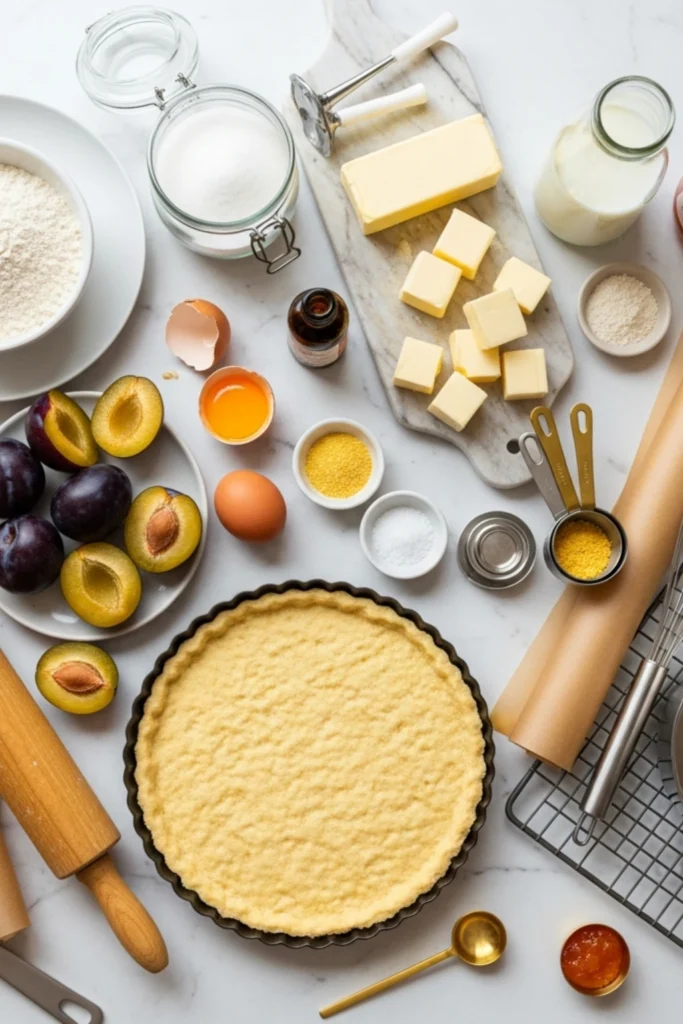
What You’ll Need
For the Shortcrust Base
| Ingredient | Amount |
|---|---|
| All-purpose flour | 2 cups (250g) |
| Unsalted butter (cold, cubed) | ½ cup (115g) |
| Granulated sugar | ¼ cup (50g) |
| Large egg | 1 |
| Vanilla extract | 1 tsp |
| Salt | ¼ tsp |
| Cold water | 2–3 tbsp (as needed) |
For the Custard Filling
| Ingredient | Amount |
|---|---|
| Whole milk | 2 cups (480ml) |
| Large eggs | 3 |
| Granulated sugar | ½ cup (100g) |
| Cornstarch | 3 tbsp |
| Vanilla extract | 1 tsp |
For the Fruit Topping
| Ingredient | Amount |
|---|---|
| Fresh or canned fruit (plums, apricots, cherries, or peaches) | 2 cups |
| Apricot jam (optional, for glazing) | 2 tbsp |
Tools You’ll Need
- 9-inch (23cm) round or rectangular tart/cake pan with removable bottom
- 2 mixing bowls
- Whisk
- Medium saucepan
- Rolling pin
- Fork (for docking the dough)
- Plastic wrap
- Parchment paper
- Baking weights or dried beans
- Cooling rack
Pro Tips
Here are the things that actually change the outcome — especially if this is your first time making a Kuchen recipe. 👇
“The difference between a good Kuchen and a great one usually comes down to three things: cold butter, a blind-baked crust, and patience while the custard cooks.”
- Keep the butter cold. Warm butter makes a greasy, dense crust instead of a crumbly, flaky one. If the dough starts feeling soft, refrigerate it for 10 minutes before rolling.
- Blind bake the crust. Pre-baking keeps the base crisp under the custard filling. Line the raw dough with parchment, fill with baking weights, and bake for 12–15 minutes first.
- Stir the custard constantly. Walk away for even 30 seconds and it’ll start to scorch. Keep the whisk moving over medium heat the whole time.
- Chill before slicing. This easy Kuchen recipe cuts cleanly only when cold. Give it at least 2 hours in the fridge after cooling to room temperature.
- Toss juicy fruit with cornstarch. Peaches and plums release a lot of liquid. A light dusting of cornstarch on the fruit before arranging it prevents a watery topping.
How to Make Kuchen
Step 1 — Make the Shortcrust Dough
In a large mixing bowl, combine the flour, sugar, and salt.
Add the cold, cubed butter and use your fingertips to rub it into the flour until the mixture looks like coarse breadcrumbs. Leave some pea-sized chunks — that’s what gives you flakiness.
Add the egg and vanilla extract and mix until the dough comes together. Add cold water one tablespoon at a time if it’s too dry.
Shape into a disk, wrap in plastic wrap, and refrigerate for at least 30 minutes.
Step 2 — Blind Bake the Crust
Preheat your oven to 375°F (190°C).
Roll the chilled dough to about ⅛-inch thickness on a lightly floured surface. Transfer it to your tart pan and press gently into the sides. Trim any excess.
Prick the base all over with a fork. Line with parchment and fill with baking weights or dried beans.
Bake for 12–15 minutes until the edges are lightly golden. Remove the weights and parchment, then bake for another 5 minutes. Set aside.
Step 3 — Make the Custard Filling
Whisk together the eggs, sugar, and cornstarch in a medium saucepan until smooth. Gradually whisk in the milk and vanilla extract.
Place over medium heat and stir constantly until the mixture thickens enough to coat the back of a spoon — about 8–10 minutes.
Remove from heat immediately.
Step 4 — Assemble
Pour the warm custard into the pre-baked crust and smooth the top with a spatula.
Arrange your fruit on top. Overlapping slices of plum or apricot look bakery-level stunning and couldn’t be easier.
Step 5 — Bake
Reduce oven to 350°F (175°C) and bake for 30–35 minutes until the custard is just set with a very slight jiggle in the center.
Cool on a wire rack for 30 minutes, then refrigerate for at least 2 hours before slicing.
Step 6 — Glaze (Optional)
Warm 2 tablespoons of apricot jam with a tiny splash of water in a small saucepan. Brush lightly over the fruit for that glossy, professional finish.
Substitutions and Variations
This homemade Kuchen recipe is incredibly adaptable. Here’s how to make it work for almost any diet or preference:
| Swap | Use Instead |
|---|---|
| All-purpose flour | 1:1 gluten-free baking blend |
| Unsalted butter | Vegan/plant-based butter |
| Whole milk | Full-fat oat milk or coconut milk |
| Granulated sugar | Coconut sugar or maple syrup |
| Fruit topping | Streusel (½ cup flour + ¼ cup butter + ¼ cup sugar) |
| Apricot glaze | Powdered sugar dusting or vanilla glaze |
Fruit variation ideas:
- Classic: Plums, sour cherries, or apricots
- Summer: Peaches or mixed berries
- Fall: Apples with cinnamon stirred into the custard
- Tropical: Mango or pineapple with coconut milk custard
Make-Ahead Tips
One of the best things about this easy Kuchen recipe is how well it plays with a prep-ahead schedule.
- Shortcrust dough: Make up to 3 days ahead, wrap tightly in plastic wrap, refrigerate.
- Custard filling: Make up to 24 hours ahead. Press plastic wrap directly against the surface to prevent a skin from forming.
- Fully assembled Kuchen: Keeps well in the fridge for up to 3 days — and actually tastes even better on day two.
Nutritional Breakdown
| Nutrient | Per Slice (Serves 10) |
|---|---|
| Calories | ~280 kcal |
| Carbohydrates | 36g |
| Protein | 6g |
| Total Fat | 12g |
| Saturated Fat | 7g |
| Sugar | 18g |
| Fiber | 1g |
Values are approximate and vary based on the fruit used.
Dietary notes:
- Lower sugar: Reduce sugar in both crust and custard by 25% and finish with unsweetened fruit.
- Higher protein: Add 1 tablespoon of collagen peptides to the custard filling — it blends in completely.
- Gluten-free Kuchen: A 1:1 GF flour blend works beautifully in the shortcrust.
Meal Pairing Suggestions
In Germany, Kuchen is traditionally served during Kaffee und Kuchen — the beloved afternoon coffee-and-cake ritual that happens around 3–4pm. Think of it as Germany’s version of British tea time, except the cake is the whole point.
It pairs perfectly with:
- Strong dark roast or filter coffee ☕
- Earl grey or chamomile tea
- Barely-sweetened whipped cream
- A scoop of vanilla bean ice cream (if you’re serving it as dessert)
Leftovers and Storage
| Storage Method | Duration | Notes |
|---|---|---|
| Refrigerator (covered) | Up to 3 days | Crust softens slightly but flavor deepens |
| Freezer (individually wrapped) | Up to 1 month | Thaw overnight in the fridge |
| Room temperature | 2 hours max | Don’t leave out longer |
Reheating: Kuchen is meant to be served cold or at room temperature. If you prefer it slightly warm, place a slice in a 300°F oven for 8–10 minutes.
FAQ
What does Kuchen taste like? The classic Kuchen recipe delivers a buttery, crumbly crust with a rich vanilla custard and a jammy or fresh fruit finish. It’s not aggressively sweet — which makes it dangerously easy to eat a second slice.
What fruit works best for Kuchen? Traditional German Kuchen most often uses plums, apricots, or sour cherries. Peaches and apples are close seconds. Berries work but release more liquid — use them sparingly or mix with firmer fruit.
Can I use a store-bought pie crust? You can. The texture won’t be as buttery or crumbly as a homemade shortcrust, but it’s a solid time-saving option on busy days.
My custard turned lumpy. What do I do? Strain it through a fine mesh sieve immediately. That fixes it almost every time. It usually happens when the heat is too high or the stirring stops too soon.
Can I make Kuchen without a tart pan? A standard 9-inch cake pan works fine. Line it with parchment paper for easier removal. The edges won’t be as defined but the flavor is identical.
Is Kuchen the same as German coffee cake? Not exactly. What Americans call “German coffee cake” is typically a streusel-topped breakfast cake. Authentic Kuchen is a broader category — and this custard-and-fruit version is one of the most traditional forms. According to The Food Network’s global baking guide, custard-based fruit tarts like this are among the most popular in central European baking traditions.
How do I know when the custard is set? Give the pan a gentle shake. The edges should be completely firm. Only the very center should have a barely-there jiggle — similar to cheesecake. It firms up fully as it cools in the fridge.
Can I make individual Kuchen tarts? Absolutely. Use a muffin tin or mini tart pans and reduce the bake time to about 18–22 minutes. Great for entertaining. 🍰
Wrapping Up
This Kuchen recipe is proof that the most impressive desserts often have the simplest ingredients.
A buttery crust. A silky custard. Whatever fruit looks best at the market that day.
Make it on a weekend, slice it on a Tuesday, and watch people act like you’ve been baking for years. That’s the power of a really good German Kuchen.
Give it a try and then come back and leave a comment below. Tell me what fruit you used, any swaps you made, or if you have questions — I read every single one and love hearing how it turns out for you.