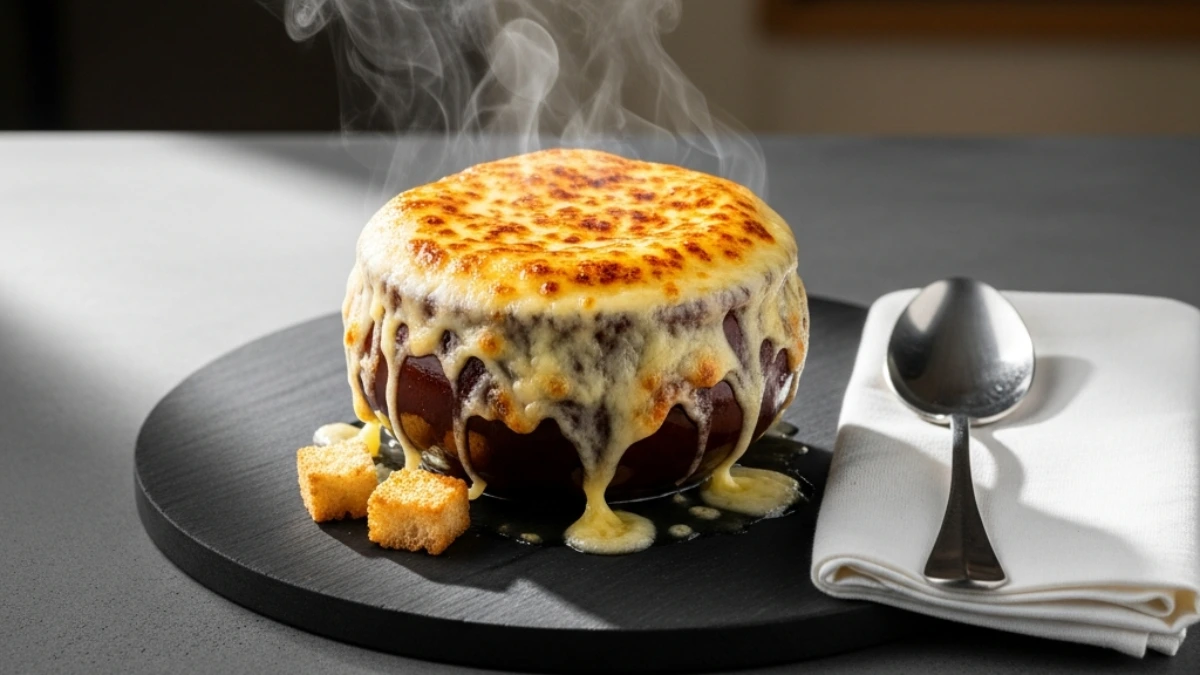
Pan-seared salmon — one of the most beloved seafood recipes across North America — delivers restaurant-quality results right in your own kitchen. This easy salmon recipe comes together in just 20 minutes with a golden, crispy skin and a lemon garlic butter sauce that makes the whole thing feel a little luxurious.
And no, you don’t need any fancy equipment or chef training.
What you do need is the right technique. Because salmon is one of those things that’s incredibly simple to make well once you know the tricks — and incredibly easy to ruin when you don’t.
Stick around. The one step most home cooks skip is coming up, and it changes everything about the final result.
What You’ll Need
🐟 For the Salmon
| Ingredient | Amount |
|---|---|
| Salmon fillets, skin-on (wild-caught preferred) | 4 fillets, 6 oz each |
| Sea salt | 1 tsp |
| Black pepper | ½ tsp |
| Garlic powder | ½ tsp |
| Smoked paprika | ½ tsp |
| Olive oil | 2 tbsp |
🧄 For the Lemon Garlic Butter Sauce
| Ingredient | Amount |
|---|---|
| Unsalted butter | 3 tbsp |
| Garlic cloves, minced | 4 cloves |
| Fresh lemon juice | 3 tbsp (about 1 large lemon) |
| Lemon zest | Zest of 1 lemon |
| Red pepper flakes (optional) | ¼ tsp |
| Fresh parsley, chopped | 2 tbsp |
| Salt and pepper | To taste |
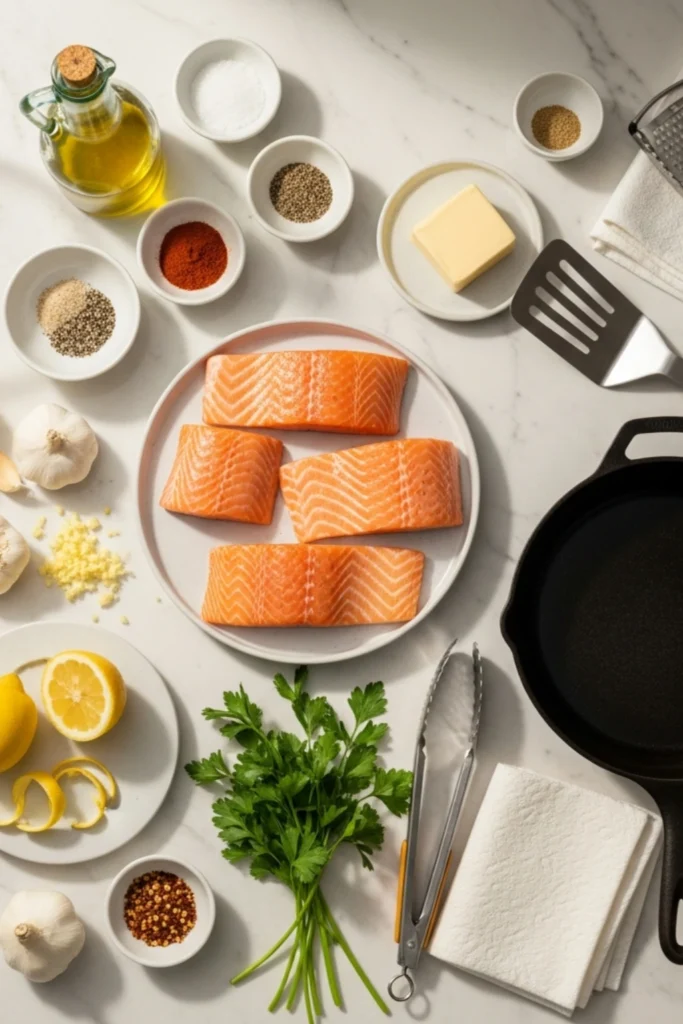
Tools You’ll Need
- Cast iron skillet or heavy stainless steel pan (essential for a proper sear)
- Fish spatula (a regular spatula tears the skin)
- Paper towels
- Small mixing bowl
- Zester or microplane
- Tongs or a spoon for basting
Pro Tips
These are the things that separate a great pan-seared salmon from a mediocre one.
1. Dry the salmon completely. Pat every surface with paper towels before seasoning. Moisture kills the sear. For an even better crust, leave the seasoned fillets uncovered in the fridge for 30 minutes beforehand.
2. Get the pan genuinely, ripping hot. Add oil and wait until it shimmers with a faint wisp of smoke. Too cool and the fish steams instead of sears. This step feels intimidating, but it’s where the magic actually happens.
3. Don’t touch it once it’s in the pan. Press the fillet down gently for the first 10 seconds, then leave it alone. Salmon releases naturally from the pan when it’s ready to flip. If you have to force it, it needs more time.
4. Cook 70% of the time skin-side down. You’ll literally see the flesh cooking from the bottom up, turning from translucent to opaque. Flip only once, and only when that line reaches about ¾ of the way up the fillet.
5. Pull it slightly before it looks done. Salmon continues cooking off the heat. A tiny blush of pink in the very center of the thickest part is perfect. Wait for it to disappear completely and you’ll have dry fish.
Substitutions and Variations
No need to run to three grocery stores. Here’s what swaps work well:
| Original Ingredient | Easy Swap |
|---|---|
| Salmon fillets | Trout, arctic char, or halibut |
| Unsalted butter | Ghee or dairy-free butter |
| Fresh lemon | 2 tbsp bottled lemon juice |
| Fresh parsley | Fresh dill, chives, or basil |
| Smoked paprika | Regular paprika or cumin |
| Olive oil | Avocado oil (higher smoke point) |
Want more heat? Double the red pepper flakes or add a small pinch of cayenne to the spice rub.
Want more herbs? Add a few sprigs of fresh thyme or rosemary directly to the butter sauce while it cooks.
Making it for a crowd? The recipe doubles easily. Just make sure your fillets aren’t crowded in the pan — that steams them rather than sears them.
Make Ahead Tips
Salmon is best cooked fresh, but a few things can be prepped in advance:
- Season the fillets up to 24 hours ahead and store uncovered in the fridge. The dry surface actually improves the crust.
- Mince the garlic and zest the lemon the night before. Store in small covered containers.
- Make the butter sauce separately and refrigerate for up to 3 days. Reheat gently and pour over freshly cooked salmon at serving time.
Nutritional Breakdown
Salmon is one of the most nutrient-dense proteins you can eat. A single serving delivers a significant hit of omega-3s, B12, and selenium — nutrients most people don’t get nearly enough of.
| Nutrient | Per Serving (approx.) |
|---|---|
| Calories | ~420 kcal |
| Protein | 38g |
| Fat | 28g |
| Carbohydrates | 3g |
| Omega-3 Fatty Acids | ~2.5g |
| Sodium | ~480mg |
Estimates based on standard ingredients. Values may vary.
According to the American Heart Association, eating fatty fish like salmon at least twice a week is recommended for cardiovascular health.
Diet-Friendly Notes
- Keto/Low-Carb: Already fully compliant. Serve with cauliflower rice or roasted asparagus.
- Dairy-Free: Swap butter for dairy-free butter or a good drizzle of olive oil.
- Paleo: Use ghee instead of butter. Everything else qualifies.
- Whole30: Replace butter with ghee or coconut oil. Rest of the recipe is compliant.
Meal Pairing Suggestions
This easy salmon recipe pairs beautifully with:
- Garlic roasted asparagus — throw it in the oven when you start the salmon and it finishes at the same time
- Lemon herb rice or cauliflower rice — soaks up the butter sauce perfectly
- Arugula salad with lemon vinaigrette — the acidity cuts through the richness
- Creamy mashed potatoes — for a more hearty, comfort-food take
- Steamed broccolini with a pinch of red pepper flakes
How to Make Pan-Seared Salmon With Lemon Garlic Butter
Step 1: Bring the Salmon to Room Temperature
Pull the fillets from the fridge 20 minutes before cooking.
Cold salmon dropped into a hot pan cooks unevenly — the outside gets overdone before the center comes up to temp. This one small habit makes a real difference.
Step 2: Dry and Season
Pat every surface of each fillet completely dry with paper towels.
Mix the salt, pepper, garlic powder, and smoked paprika in a small bowl. Season the salmon on all sides, pressing lightly so the spices stick.
Step 3: Heat the Pan
Place your cast iron or stainless pan over medium-high heat.
Add the olive oil. Let it heat until it shimmers, then let it go just a bit longer. You want it hot — genuinely hot.
Step 4: Sear Skin-Side Down
Place the fillets skin-side down in the pan. Press each one gently with the fish spatula for 10 seconds to ensure full contact.
Now put the spatula down and leave them completely alone.
Cook for 5 to 6 minutes. Watch the flesh turn from translucent to opaque, working its way up from the bottom. When the opaque line reaches about ¾ of the way up the fillet, it’s time.
Step 5: Flip Once
Flip each fillet carefully using the fish spatula.
Cook for just 1 to 2 minutes on the flesh side to finish. Remove the salmon and set it on a plate while you make the sauce.
Step 6: Make the Lemon Garlic Butter Sauce
Lower the heat to medium. Add butter directly to the same pan — don’t wipe it out. Those browned bits are pure flavor.
Once the butter melts, add the minced garlic. Stir constantly for about 45 seconds until fragrant but not browned.
Add the lemon juice and zest. Stir together. Add red pepper flakes if using. Taste and adjust salt and pepper.
Step 7: Serve
Pour the sauce over the plated salmon fillets.
Finish with fresh parsley. Serve immediately.
That’s it. Twenty minutes, one pan, done. 🍋
Leftovers and Storage
Refrigerator: Store in an airtight container for up to 2 days. The texture softens by day two but still tastes good.
Reheating: Low heat in a covered pan with a splash of water for 2 to 3 minutes. Avoid the microwave — it turns the texture rubbery and the smell becomes aggressive. Your coworkers will not thank you.
Freezing: Cooked salmon doesn’t freeze particularly well, but raw salmon freezes beautifully for up to 3 months. Thaw overnight in the fridge and pat extremely dry before cooking.
Leftover Ideas 💡
- Flake over a grain bowl with avocado and a soft-boiled egg
- Toss into pasta with olive oil, capers, and cherry tomatoes
- Build salmon tacos with a quick slaw and sriracha mayo
- Serve cold over a big salad for a next-day lunch
FAQ
Do I need skin-on salmon? Not required, but skin-on gives you a better sear and protects the flesh from overcooking. Skinless works — just reduce the initial cook time by about a minute.
Can I use frozen salmon? Yes, but thaw it completely in the fridge overnight first. Never cook salmon straight from frozen in a pan — it steams instead of sears and the texture suffers. Pat it extra dry since frozen fish releases more moisture.
How do I know when it’s done? The flesh should be opaque most of the way through with just a hint of pink in the very thickest part. Internal temperature should read 125-130°F (52-54°C) for medium or 145°F (63°C) for fully cooked. A fork inserted in the thickest part should flake easily.
My salmon stuck to the pan. What happened? Two likely causes: the pan wasn’t hot enough when the fish went in, or you tried to flip it too soon. Let it cook until it releases on its own. If it resists, it needs more time. Forcing it pulls the skin off.
Can I make this salmon recipe in the oven? Bake at 400°F (200°C) for 12 to 15 minutes. Good result, but no crispy skin. For the best of both: sear skin-side down in the pan for 3 minutes, then transfer the entire pan to a 400°F oven for 6 to 8 minutes.
What’s the best type of salmon to buy? Wild-caught sockeye or king salmon for the most flavor and omega-3 content. Atlantic (farmed) is milder and more widely available. Fresh from a fishmonger beats frozen warehouse options almost every time.
Can I use a nonstick pan? You can, but the sear won’t be as defined. Cast iron or stainless steel conducts heat better and gives you a proper golden crust. Nonstick will still taste great — just different.
Wrapping Up
Pan-seared salmon is one of those recipes that earns its place in regular rotation fast.
Twenty minutes. One pan. Ingredients you probably already have.
And it still feels special enough for a dinner party, a date night, or just a Tuesday when you actually want something worth eating.
The crispy skin, the butter sauce, the brightness from the lemon — it comes together in a way that feels almost too easy for how good it tastes.
Make it this week and drop a comment below letting me know how it went. Tried a variation? Made a swap? Have a question about a step?
Leave it below — I read every single one.