You’ve probably seen it on a table at a luau and thought… what even is that purple stuff?
That’s poi. And it’s one of the oldest foods in Hawaiian history. 😄
Made from taro root, poi (or “poi” as Native Hawaiians call it) has been a staple food in Hawaii for over a thousand years. It’s earthy, slightly tangy, and has a thick paste-like texture that’s honestly unlike anything else you’ve tried.
And here’s the wild part: it gets more flavorful as it ferments. Day-old poi tastes different from three-day-old poi. Hawaiians actually have names for each stage.
If you’ve been curious about making poi at home, this recipe walks you through everything — no trip to Oahu required.
What You’ll Need
Ingredients:
- 2 lbs fresh taro root (corms), peeled and cubed
- 1 to 1½ cups cold water (adjust for texture)
- ½ tsp sea salt (optional)
That’s genuinely it. Three ingredients. Poi is one of the most beautifully simple foods you’ll ever make.
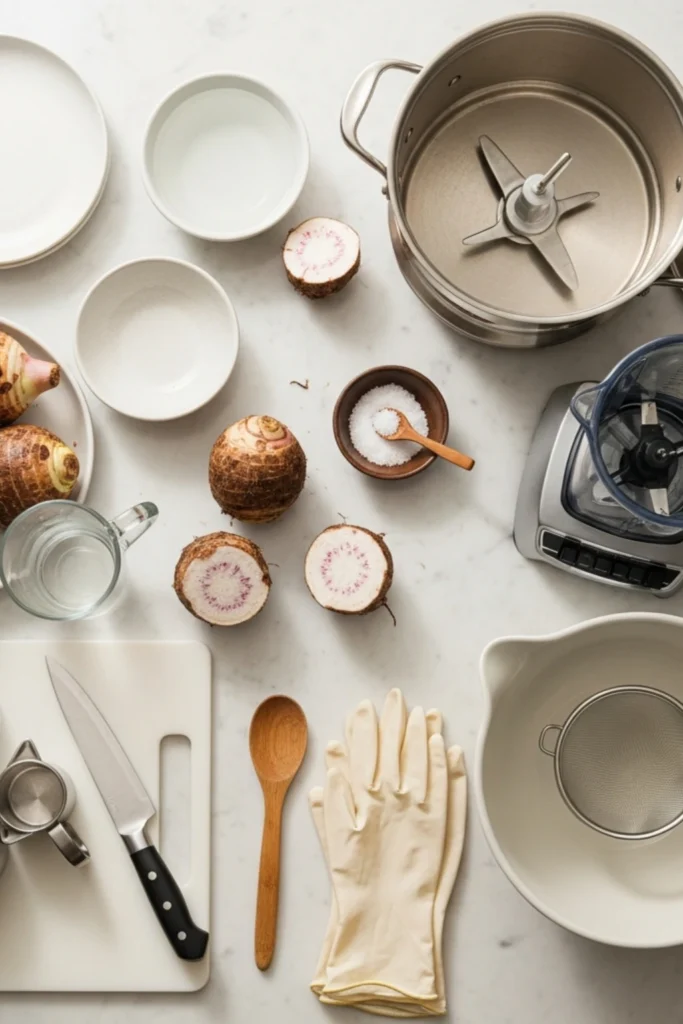
Tools You’ll Need:
- Large pot
- Steamer basket or steamer insert
- High-powered blender or food processor (or a traditional Hawaiian poi pounder if you want to go full authentic 🪨)
- Fine mesh strainer (optional, for ultra-smooth poi)
- Large mixing bowl
- Wooden spoon
- Measuring cups
- Sharp knife and cutting board
How to Make Poi
Serves: 4 to 6 Prep Time: 15 minutes Cook Time: 45 to 60 minutes Total Time: About 1 hour 15 minutes
Step 1: Prep your taro
Wear gloves when peeling raw taro. The sap contains calcium oxalate crystals that can irritate your skin. Once peeled, cut the taro into 2-inch cubes and rinse under cold water.
Step 2: Steam the taro
Place the cubed taro into your steamer basket over boiling water. Cover and steam for 45 to 60 minutes, until a fork slides through with zero resistance. You want it completely soft, almost falling apart.
Don’t rush this step. Undercooked taro has a bitter, starchy taste that doesn’t blend well.
Step 3: Blend
Transfer the hot steamed taro to your blender or food processor. Start blending on low and slowly add cold water, a little at a time. Blend until smooth.
The texture you’re going for depends on your preference:
- Thin (one-finger poi): Add more water, runnier consistency
- Thick (three-finger poi): Less water, scooped with three fingers traditionally
Step 4: Season and taste
Add a pinch of sea salt if you’d like. Traditional poi is unsalted, but a tiny bit of salt brings out the earthiness beautifully.
Step 5: Let it rest or eat fresh
Fresh poi is mild and starchy. If you want that slightly tangy, fermented flavor Hawaiians love, cover the bowl with a cloth and leave it at room temperature for 1 to 3 days.
Pro Tips
These are the things that actually make a difference:
- Always wear gloves when handling raw taro. The oxalate crystals in raw taro can cause a burning, itchy sensation on your hands. Once it’s cooked, you’re totally fine.
- Steam, don’t boil. Boiling taro makes it waterlogged and dilutes the flavor. Steaming keeps it dense and full-flavored, which gives your poi a better consistency.
- Add water slowly. You can always add more water, but you can’t take it back. Start with ½ cup and add gradually until you hit your preferred texture.
- Taste it fresh, then taste it again the next day. The difference is genuinely surprising. Day-old poi develops a slight tang from natural fermentation that makes it taste more complex and interesting.
- Buy taro from an Asian or Pacific Islander grocery store if you can. It’s fresher, cheaper, and the staff will usually know exactly what you’re looking for.
Substitutions and Variations
- No fresh taro? Frozen taro root works well. Thaw completely and steam just like fresh.
- Taro powder: This is a shortcut option — mix taro powder with water. The flavor won’t be as deep, but it works in a pinch.
- Purple sweet potato poi: Not traditional, but gives a similar color and a sweeter flavor profile. Great as a dessert poi.
- Coconut milk poi: Swap some of the water for coconut milk for a richer, creamier version that pairs beautifully with fresh fish.
Nutritional Breakdown
Poi is genuinely a nutritional powerhouse. Here’s a rough breakdown per serving (about ½ cup):
| Nutrient | Amount |
|---|---|
| Calories | ~115 |
| Carbohydrates | ~27g |
| Protein | ~1.5g |
| Fat | ~0.2g |
| Fiber | ~3g |
| Potassium | ~400mg |
| Vitamin C | ~5mg |
Taro root is also a great source of manganese, magnesium, and vitamin B6. It’s naturally gluten-free, nut-free, and dairy-free, making it one of the most allergy-friendly traditional foods around.
Diet-friendly notes:
- ✅ Vegan and plant-based
- ✅ Gluten-free
- ✅ Nut-free
- ✅ Grain-free
- ❌ Not keto (high in carbs)
Meal Pairing Suggestions
Poi is a side dish at its core, but it pairs with a lot more than you’d think:
- Kalua pig — the most classic Hawaiian pairing, smoky pork with creamy poi
- Lomi salmon — salted salmon with tomato and green onion
- Haupia — coconut pudding for a full Hawaiian plate
- Grilled fish — the earthiness of poi balances the brightness of fresh fish
- Simply with butter and a pinch of salt — surprisingly good, very comforting
Make Ahead Tips
Poi is actually better made ahead.
If you want fresh poi: make it same-day and serve within a few hours.
If you want fermented poi: make it 1 to 3 days ahead, cover with a cloth at room temperature, and let it ferment naturally. The flavor develops beautifully.
Store in the refrigerator after you’ve reached your desired fermentation level to slow the process.
Leftovers and Storage
- Refrigerator: Store in an airtight container for up to 5 days. The poi will continue to ferment and get more tangy over time, which many people prefer.
- Freezer: Poi freezes well. Freeze in individual portions for up to 3 months. Thaw overnight in the fridge and stir well before serving.
- To revive: If it thickens up in the fridge, just stir in a splash of cold water until you reach your preferred consistency.
FAQ
Does poi taste good?
That depends on who you ask! Fresh poi is mild and starchy, almost like a neutral paste. Fermented poi has a slight sour tang that grows on you fast. Most people who try it with the right food pairings (like kalua pig or lomi salmon) end up really enjoying it.
Why is poi purple?
Taro root has natural purple-pigmented flesh from anthocyanins, the same compounds found in blueberries and red cabbage. The color deepens when cooked and blended.
Is poi good for you?
Yes! It’s low in fat, naturally gluten-free, and packed with fiber, potassium, and vitamins. It’s also easier to digest than most starchy foods, which is part of why it was historically fed to babies in Hawaii.
Can I eat taro root raw?
No. Raw taro contains calcium oxalate crystals that cause burning and irritation in the mouth and throat. Always cook it fully before eating.
How many fingers does it take to eat poi?
This is a real thing! Hawaiians traditionally categorize poi by thickness: one-finger poi is thin enough to scoop with one finger, two-finger is medium, and three-finger is thick. The thicker the poi, the more fingers you need to get a good scoop.
Where can I buy taro root?
Check your local Asian grocery store, Pacific Islander market, Whole Foods, or international foods section of larger supermarkets. You can also find it frozen at many Asian grocery stores.
Wrapping Up
Poi is one of those foods that surprises you every time.
It looks simple. It is simple. But there’s something deeply satisfying about making a dish that’s been eaten in Hawaii for over a thousand years, right in your own kitchen.
Make it fresh and mild, or let it ferment for a day and taste the difference. Serve it with grilled fish, kalua-style pork, or just eat it straight from the bowl. No wrong answers here.
Give it a try and come back to tell me how it went! Did you go fresh or fermented? Did you pair it with anything interesting? Leave a comment below with your experience and any questions. I genuinely love hearing how these recipes turn out for you.