Beef ribs don’t get enough love.
Everyone’s obsessed with pork ribs, but beef ribs? They’re on another level entirely. Bigger, meatier, and when you nail the technique, they deliver this deep, smoky flavor that pork can’t touch.
I’m talking about ribs so tender the meat slides right off the bone. The kind that leaves your hands sticky and your mouth watering for one more bite.
And here’s what nobody tells you: making restaurant-quality beef ribs at home is easier than you think.
You don’t need a $2,000 smoker (though if you’ve got one, amazing). You don’t need to apprentice under a Texas pitmaster. You just need good ribs, a handful of pantry staples, and the willingness to wait a few hours while your oven works its magic.
This isn’t one of those recipes where you need seventeen ingredients you’ll never use again. This is straightforward, tested-in-real-kitchens cooking that actually works.
What You’ll Need
| Category | Ingredients | Quantity |
|---|---|---|
| Main | Beef short ribs (bone-in) | 4-5 lbs |
| Dry Rub | Kosher salt | 2 tablespoons |
| Coarse black pepper | 2 tablespoons | |
| Garlic powder | 1 tablespoon | |
| Onion powder | 1 tablespoon | |
| Smoked paprika | 1 tablespoon | |
| Cayenne pepper (optional) | 1 teaspoon | |
| Brown sugar | 1 teaspoon | |
| Glaze (Optional) | BBQ sauce | 1 cup |
| Apple cider vinegar | 2 tablespoons | |
| Honey | 1 tablespoon | |
| Worcestershire sauce | 1 teaspoon |
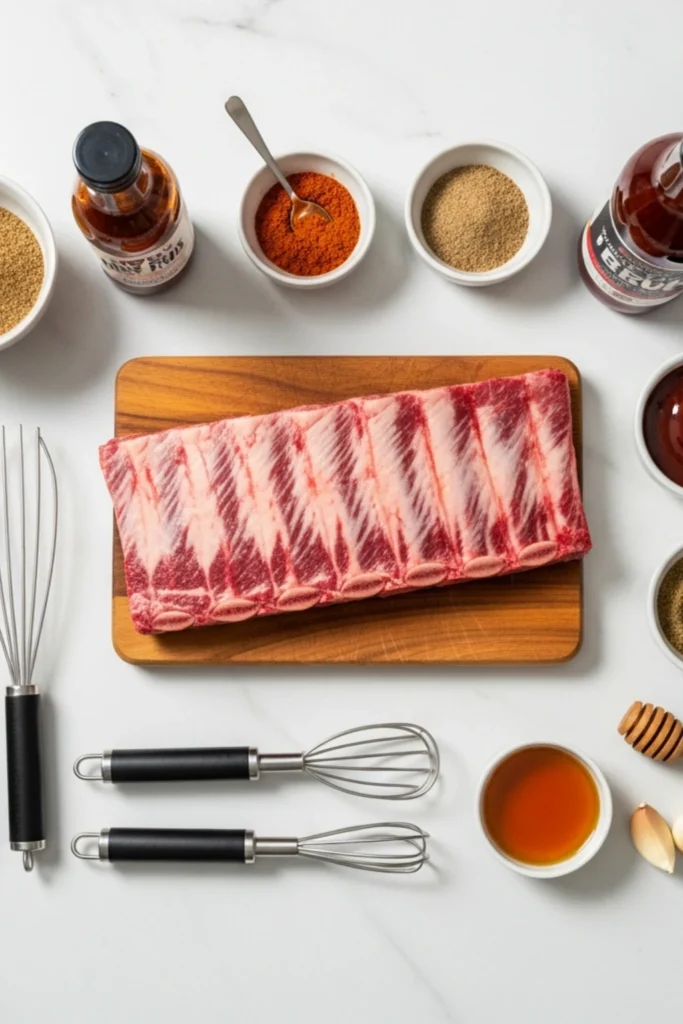
Kitchen Tools
- Large roasting pan or rimmed baking sheet
- Heavy-duty aluminum foil
- Instant-read meat thermometer
- Basting brush (if glazing)
- Sharp chef’s knife
- Small mixing bowl
Pro Tips
Fat is your friend here. Don’t go crazy trimming these ribs. You want a decent fat cap because that’s where all the flavor lives. Just remove any huge chunks or loose flaps, but leave a solid layer intact. During cooking, that fat renders down and bastes the meat from the inside out.
Overnight seasoning changes everything. If you can plan ahead even a little, season your beef ribs the night before. The salt draws moisture to the surface, which then gets reabsorbed along with all those spices. You end up with flavor that penetrates deep into the meat instead of just sitting on top.
275°F is the magic number. This is the sweet spot. Go hotter and the exterior burns before the collagen breaks down. Go cooler and you’ll be waiting until midnight. At 275°F, you get fall-apart tender meat in about 3 hours.
The Texas crutch isn’t cheating. After 90 minutes, wrap those ribs tight in foil. This traps steam, which speeds up cooking and keeps everything moist. Purists might argue, but your dinner guests won’t care when they’re licking their fingers.
Rest them or regret it. I know you want to dive in immediately. Don’t. Give those ribs 15 minutes to rest after cooking. The juices redistribute throughout the meat, and you get a much better bite. Rush it and all those precious juices end up on your cutting board instead of in your mouth.
Substitutions and Variations
Different cut of ribs? Beef back ribs work too, though they’re leaner and smaller. Reduce your cooking time by about 30 minutes and watch them closely.
Got a smoker? Set it to 225-250°F and plan for 5-6 hours. Wrap at the 3-hour mark. Oak, hickory, or mesquite wood all work beautifully with beef ribs.
Spice lover? Add a tablespoon of chili powder or chipotle powder to your rub. Or swap the cayenne for ancho chile powder for a deeper, earthier heat.
Asian twist? Skip the BBQ sauce entirely. Instead, brush the ribs with a mixture of soy sauce, rice vinegar, honey, sesame oil, and fresh grated ginger during the last 30 minutes of cooking.
Memphis-style purist? Use only the dry rub with no sauce whatsoever. Serve with extra rub on the side for sprinkling.
No oven space? Sear the ribs first in a hot pan, then transfer to a slow cooker on low for 6-7 hours. Not quite the same bark, but still incredibly tender.
Make Ahead Tips
Season your ribs up to 24 hours ahead and store them covered in the refrigerator. The longer they marinate, the better they taste.
You can also cook the beef ribs completely, cool them down, and refrigerate for up to 3 days. When you’re ready to eat, reheat them wrapped in foil at 300°F for about 45 minutes. Finish under the broiler for 2-3 minutes to crisp up the exterior.
If you’re meal prepping, these ribs freeze beautifully for up to 3 months.
How to Make Beef Ribs
Remove ribs from the fridge 30 minutes before cooking. This brings them closer to room temperature, which means more even cooking. Pat them completely dry with paper towels. Dry meat = better browning and better rub adhesion.
Mix your spice rub. Combine salt, black pepper, garlic powder, onion powder, smoked paprika, cayenne, and brown sugar in a small bowl. Mix thoroughly so the spices are evenly distributed.
Season the ribs generously. Coat every surface of the ribs with your spice mixture. Don’t be timid. Press the rub into the meat so it actually sticks. Get in between the bones too.
Preheat your oven to 275°F. Position your rack in the center of the oven for the most even heat.
Start cooking uncovered. Place the ribs bone-side down on your roasting pan. Slide them into the oven and set a timer for 90 minutes. This initial uncovered period lets the exterior develop a nice crusty bark.
Wrap and continue cooking. Pull the ribs out and wrap them completely in heavy-duty foil. You want a tight seal with no gaps. Return them to the oven for another 90-120 minutes. The beef ribs are done when the meat pulls away from the bone easily and an instant-read thermometer reads 203-205°F.
Optional glaze step. If you want sticky, saucy ribs, unwrap them during the last 20 minutes. Mix your BBQ sauce with vinegar, honey, and Worcestershire. Brush the ribs generously and return them to the oven uncovered. The sauce will caramelize into a beautiful glaze.
Rest before cutting. This is non-negotiable. Remove the ribs from the oven and let them sit for 15 minutes. Cover loosely with foil if you want to keep them warm.
Slice and serve. Use a sharp knife to cut between the bones. The meat should be so tender it barely requires pressure. Serve immediately with extra sauce on the side.
Nutrition Information
Per Serving (based on 6 servings): Calories: 520 | Protein: 38g | Fat: 38g | Carbohydrates: 6g | Fiber: 1g | Sugar: 4g | Sodium: 1,240mg
Note: Nutritional values are approximate and will vary based on the specific cut of ribs and whether you use the optional glaze.
Leftovers and Storage
Store leftover beef ribs in an airtight container in the refrigerator for up to 4 days. They actually taste even better the next day once all the flavors have melded together.
To reheat, wrap in foil and warm at 300°F for about 20 minutes. You can also shred the meat off the bone, toss it in BBQ sauce, and make incredible rib sandwiches or nachos.
For longer storage, wrap cooked ribs tightly in plastic wrap, then foil, and freeze for up to 3 months. Thaw overnight in the refrigerator before reheating.
What to Serve With Beef Ribs
Beef ribs are rich and intensely flavorful, so you need sides that can either match that intensity or provide contrast.
Coleslaw cuts through the richness perfectly. The crunch and acidity balance all that fat. Go for a vinegar-based slaw rather than mayo-heavy if you really want to cleanse your palate.
Mac and cheese doubles down on comfort. Make it from scratch with sharp white cheddar and a breadcrumb topping if you want to impress.
Cornbread is non-negotiable in my house. Sweet, crumbly, and perfect for soaking up any pan juices or sauce.
Roasted vegetables add freshness without being boring. Try Brussels sprouts with balsamic, roasted carrots with honey, or charred broccoli with lemon.
Baked beans are a BBQ staple for a reason. Go for the molasses-heavy kind with bacon bits if you can find them.
Potato salad rounds everything out nicely. Both creamy and vinegar-based versions work, so pick your favorite.
And don’t sleep on pickles. Pickled jalapeños, pickled red onions, or just regular dill pickles all provide that sharp, tangy bite you need after a few rich bites of beef.
FAQ
What’s the difference between beef short ribs and back ribs?
Short ribs come from the plate or chuck section and have significantly more meat. They’re thicker, fattier, and more flavorful. Back ribs come from the same area as prime rib and are much leaner with less meat clinging to the bone. For this recipe, you definitely want short ribs.
Do I need to remove the membrane from beef ribs?
Beef ribs don’t always have the tough membrane that pork ribs do. If you spot a thin, silvery layer on the bone side, you can remove it, but it’s not as critical as it is with pork. It won’t ruin your ribs if you leave it.
Can I make these on the grill?
Absolutely. Set up indirect heat (coals or burners on one side, ribs on the other). Maintain around 275°F and follow the same timing and wrapping instructions. Keep the lid closed to maintain consistent temperature.
Why did my ribs turn out tough?
You didn’t cook them long enough. Beef ribs need extended time for all that collagen to break down into gelatin. Keep cooking until they reach 203-205°F internally and the meat jiggles when you shake the pan. If they’re tough, they need more time.
Can I use a different spice rub?
Yes. Any BBQ rub works here. Just make sure it has a good balance of salt, pepper, and complementary spices. If your premade rub already contains salt, reduce the additional salt you add.
Sauce or no sauce?
Completely personal preference. I like starting with a dry rub to build that crusty bark, then adding sauce at the end if I’m feeling it. You get the best of both worlds that way. Some people are purists and never sauce their ribs. Do what makes you happy.
How do I know when they’re done?
Three indicators: the meat pulls back from the bones by about a quarter inch, an instant-read thermometer reads 203-205°F, and when you pick up the rack with tongs, it bends easily in the middle. Hit all three and you’re golden.
Common Mistakes to Avoid
❌ Cooking at too high a temperature. Patience is everything with beef ribs. High heat toughens the meat before the connective tissue has time to break down.
❌ Not seasoning enough. These are big, thick pieces of meat. They need aggressive seasoning. Don’t be shy with that rub.
❌ Skipping the rest period. Cutting into ribs immediately causes all the juices to run out. Wait 15 minutes and you’ll be rewarded with much juicier meat.
❌ Using thin aluminum foil. Regular foil tears too easily and doesn’t seal properly. Spring for heavy-duty foil when you wrap.
❌ Overcrowding the pan. Give your ribs room to breathe. If they’re packed too tightly, they’ll steam instead of roast and you won’t get that nice exterior.
Expert Insights
“The key to exceptional beef ribs is understanding that you’re not just cooking meat—you’re transforming collagen. That transformation happens in a very specific temperature range, which is why low and slow isn’t just a slogan, it’s science.” — According to Texas A&M’s Meat Science department, the collagen-to-gelatin conversion that makes ribs tender occurs most efficiently between 160-205°F.
Wrapping Up
These beef ribs are about to become your new favorite thing to make.
They’re rich, they’re ridiculously satisfying, and once you nail the technique, they’re actually pretty foolproof.
The first time you pull a rack out of the oven and watch the meat slide off the bone with barely any pressure, you’ll understand why people get obsessed with BBQ. This is the kind of food that makes you want to text photos to your friends and invite people over just to show off.
So grab some ribs this weekend. Mix up that spice rub. Let your oven do what it does best.
Then come back and tell me how they turned out. Did you go with the glaze or keep them dry? Any tweaks you made to the rub?
Drop a comment below. I’m here for all the rib talk. 🥩