Fry bread, a beloved Native American flatbread from tribal communities across North America, creates golden, pillowy rounds that shatter at the edges and pull apart in steamy layers.
I first tried authentic fry bread at a powwow in New Mexico, standing in line behind what felt like half the county. The woman running the stand had arms dusted white with flour and hands that moved like they’d made ten thousand pieces before lunch.
One bite and I got it.
Crispy edges that shattered. A soft, pillowy center that pulled apart in steamy layers. Just enough chew to make you slow down and appreciate it.
Fry bread carries weight beyond its ingredients. Born from resilience during one of the darkest chapters in Native American history, it transformed government rations into something communities could gather around. Today, it’s served at celebrations, family gatherings, and roadside stands across Indian Country.
Some folks top it with honey and powdered sugar. Others pile on seasoned meat, beans, lettuce, and cheese for Navajo tacos (also called Indian tacos). Either way, you’re in for something special.
The dough itself? Shockingly straightforward. Flour, salt, baking powder, and warm water or milk. That’s it.
But here’s the thing about this fry bread recipe: the technique matters more than fancy ingredients. The temperature of your oil, how you handle the dough, when you flip it – these little details separate the dense, greasy disappointments from the cloud-like beauties that make people fight over the last piece.
I’ve made this recipe at least fifty times, tweaking and testing until I could nail it consistently in my own kitchen. No powwow required, though the spirit of gathering and sharing remains the same.
What You’ll Need for This Fry Bread Recipe
| Ingredient Category | Items | Purpose |
|---|---|---|
| Dry Ingredients | 3 cups all-purpose flour | Creates structure |
| 1 tablespoon baking powder | Makes it puff and rise | |
| 1 teaspoon salt | Enhances flavor | |
| 1 tablespoon sugar (optional) | Adds subtle sweetness | |
| Wet Ingredients | 1¼ cups warm water or milk (110°F) | Hydrates the dough |
| 2 tablespoons melted butter or shortening (optional) | Creates tender texture | |
| For Frying | Vegetable oil, canola oil, or shortening | For cooking the bread |
Sweet Topping Options
- Honey
- Powdered sugar
- Cinnamon sugar
- Butter
Savory Topping Options (Indian Tacos)
- Seasoned ground beef or shredded chicken
- Pinto beans or refried beans
- Shredded lettuce
- Diced tomatoes
- Shredded cheese
- Sour cream
- Salsa
- Diced onions
- Jalapeños
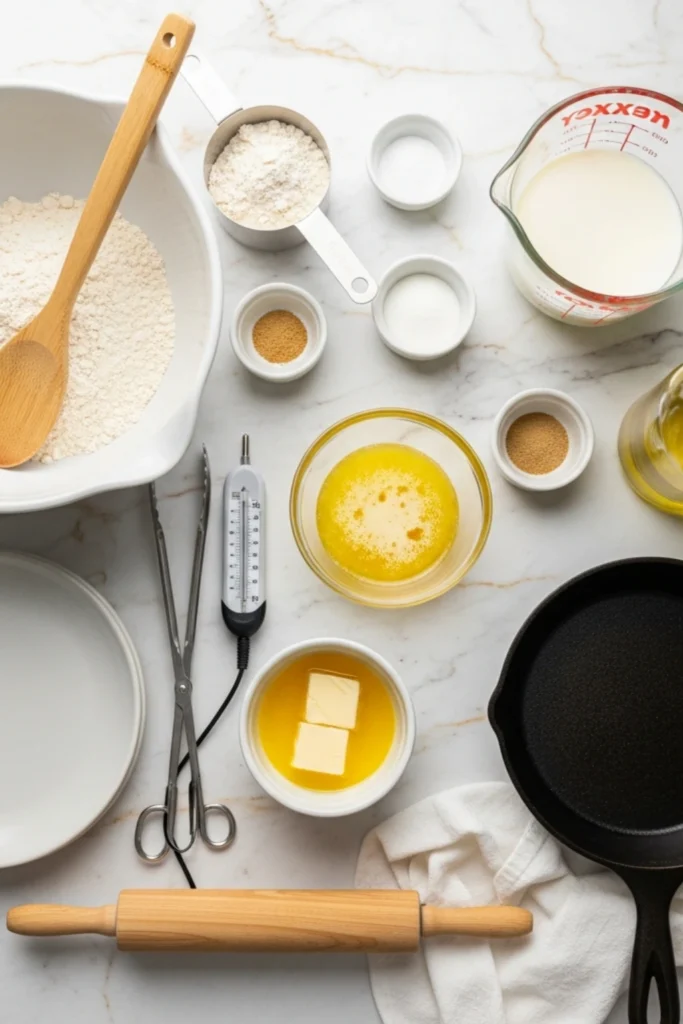
Essential Tools for Making Fry Bread
| Tool | Why You Need It |
|---|---|
| Large mixing bowl | Combines ingredients |
| Wooden spoon or sturdy spatula | Mixes dough without overworking |
| Clean kitchen towel | Keeps dough from drying |
| Rolling pin (optional) | Flattens dough evenly |
| Heavy-bottomed pot or deep skillet | Holds steady heat (cast iron is ideal) |
| Long-handled tongs or slotted spoon | Safe flipping and removal |
| Candy or deep-fry thermometer | Ensures perfect oil temperature |
| Paper towel-lined plate or cooling rack | Drains excess oil |
| Bench scraper (optional) | Divides dough cleanly |
Pro Tips for Perfect Fry Bread
Temperature is everything. Keep your oil between 350-375°F. Too hot and the outside burns before the inside cooks. Too cool and you get greasy, heavy bread. I clip a thermometer to my pot and glance at it constantly.
Don’t overwork the dough.
Mix until just combined. When you knead, keep it gentle and brief. Tough, overworked dough = tough, chewy fry bread. You want to see a few shaggy bits in the bowl before you turn it out.
The poke test never lies.
Before frying, poke a small hole in the center of each piece with your finger. This prevents giant air bubbles from forming and helps the bread cook evenly. Every fry bread maker I’ve met does this.
Fry one test piece first.
Your first piece is your guinea pig. It tells you if your oil temperature is right and if your thickness is spot-on. Adjust before you commit to the whole batch.
Serve immediately.
Fry bread is best within minutes of leaving the oil. The texture changes as it sits. If you’re feeding a crowd, keep finished pieces in a 200°F oven while you finish frying, but honestly, they rarely last that long.
How to Make Fry Bread: Step-by-Step Instructions
Step 1: Mix the Dry Ingredients
Grab your large bowl and whisk together the flour, baking powder, and salt. If you’re adding sugar, toss it in now.
Simple start. This creates even distribution so you don’t get random salty or bitter bites.
Step 2: Add the Liquid
Make a well in the center of your dry ingredients. Pour in the warm water or milk. If you’re using melted butter or shortening, add it now too.
Warm liquid helps everything come together smoothly. Cold water works but takes longer to hydrate the flour.
Step 3: Bring It Together
Using a wooden spoon or your hands, mix until a shaggy dough forms. It’ll look rough and uneven. That’s perfect.
Don’t aim for smooth. You’re not making bread dough for the county fair.
Step 4: Knead Briefly
Turn the dough onto a clean surface (no need to flour it yet). Knead for about 1-2 minutes, just until the dough becomes cohesive and slightly elastic.
You’ll feel it change under your hands. When it stops sticking aggressively and starts feeling alive, you’re done.
Step 5: Rest the Dough
Place the dough back in the bowl and cover with a damp kitchen towel. Let it rest for 30 minutes to 1 hour at room temperature.
This rest time is non-negotiable. It allows the gluten to relax and the flour to fully hydrate. Skip it and your fry bread will fight you at every step.
Step 6: Heat Your Oil
Pour oil into your heavy pot until it’s 2-3 inches deep. Heat over medium-high heat until it reaches 350-375°F.
Cast iron holds temperature beautifully, but any heavy pot works. Thin pots create hot spots that burn your bread.
Step 7: Divide the Dough
After resting, divide your dough into 8-10 equal pieces. I use a bench scraper but a knife works fine.
Roll each piece into a ball. Keep them covered with your damp towel so they don’t dry out.
Step 8: Shape the Fry Bread
Take one dough ball and flatten it with your hands on a lightly floured surface. You can use a rolling pin, but I prefer hands – you get better feel for thickness.
Aim for about ¼ inch thick and roughly 6-8 inches in diameter. Circles, ovals, whatever shape happens. Rustic looks authentic.
Step 9: Poke a Hole
Use your finger to poke a small hole right in the center. This is your insurance against giant bubbles.
Step 10: Fry the First Side
Carefully slide the dough into the hot oil. It should sizzle immediately and start puffing within seconds.
Fry for 1-2 minutes until golden brown on the bottom. You’ll see the edges start to look cooked and slightly translucent.
Step 11: Flip It
Use your tongs or slotted spoon to flip the bread. The second side usually cooks faster, about 1 minute.
Both sides should be golden brown with darker spots where bubbles formed. That’s your badge of honor.
Step 12: Drain and Repeat
Transfer to your paper towel-lined plate. The bread should feel light when you lift it, not heavy with oil.
Repeat with remaining dough, checking your oil temperature between batches.
Fry Bread Recipe Substitutions and Variations
| Original Ingredient | Substitute | Result |
|---|---|---|
| All-purpose flour | Half whole wheat flour | Nuttier flavor, denser texture |
| All-purpose flour | Blue cornmeal mixed with flour | Southwestern twist |
| Water | Milk | Richer, more tender bread |
| Water | Buttermilk | Tangy flavor |
| Butter | Shortening | Flakier layers |
| Baking powder | ½ tsp baking soda + 1 tsp cream of tartar | Same leavening power |
| Vegetable oil (frying) | Vegetable shortening or lard | Incredibly crispy, traditional texture |
Creative Flavor Variations
Sweet version: Add 2 tablespoons sugar to the dough and brush finished bread with melted butter, then dust with cinnamon sugar.
Savory herbs: Knead in dried herbs like oregano, garlic powder, or even finely chopped green onions.
Honey-infused: Mix 1 tablespoon honey into the wet ingredients for subtle sweetness.
Make Ahead Tips for Fry Bread
Dough: You can make the dough up to 24 hours ahead. Store it tightly wrapped in the refrigerator. Bring to room temperature (about 30 minutes) before shaping and frying.
Shaped rounds: Shape your fry bread rounds and layer them between parchment paper. Cover and refrigerate for up to 4 hours. This actually helps them relax even more.
Freezing dough: Freeze shaped, uncooked rounds between parchment paper in a freezer bag for up to 3 months. Thaw in the refrigerator overnight, then bring to room temperature before frying.
I don’t recommend making fry bread completely ahead. The texture suffers. But prepping the dough saves serious time when you’re feeding a crowd.
Nutritional Breakdown
| Nutrient | Per Piece (Plain) |
|---|---|
| Calories | 245 |
| Total Fat | 9g |
| Saturated Fat | 1.5g |
| Cholesterol | 0mg (or 8mg with butter/milk) |
| Sodium | 385mg |
| Total Carbohydrates | 36g |
| Dietary Fiber | 1.5g |
| Sugars | 0g (or 2g with added sugar) |
| Protein | 5g |
These numbers vary based on exact size, toppings, and oil absorption. Fry bread is a treat, not everyday health food. Enjoy it for what it is.
Perfect Pairings: What to Serve with Fry Bread
Indian Tacos: The classic. Top your fry bread with seasoned ground beef, beans, lettuce, tomatoes, cheese, and sour cream. It’s a complete meal that feeds a crowd.
Breakfast spread: Serve with eggs, bacon, and hash browns for a stick-to-your-ribs breakfast. Or go sweet with fresh berries and whipped cream.
Soup night: Fry bread alongside a hearty stew, chili, or posole is absolute perfection. Use it to sop up every last drop.
BBQ: Serve at your next cookout alongside ribs, pulled pork, or brisket. It holds up better than regular bread and people go wild for it.
Dessert: Dust with powdered sugar and serve with ice cream and honey. Simple but everyone remembers it. 🍯
Storing and Reheating Your Fry Bread
| Storage Method | Duration | Best Reheating Method |
|---|---|---|
| Room temperature (airtight container) | Up to 2 days | Toaster oven at 350°F for 3-5 minutes |
| Refrigerator | Not recommended | Becomes tough and chewy |
| Freezer (with parchment between pieces) | Up to 2 months | Oven at 350°F for 8-10 minutes (straight from frozen) |
Pro tip: The toaster oven is your friend. Heat at 350°F for 3-5 minutes to crisp them back up. A regular oven works too. Microwaving makes them chewy and sad.
Leftover toppings: If you made Indian tacos, store the toppings separately. The bread gets soggy if stored assembled.
Honestly, I’ve never had fry bread last long enough to worry about storage. It disappears.
Fry Bread Recipe FAQ
Why is my fry bread greasy?
Your oil temperature is too low. Bread absorbs oil when it’s not hot enough to immediately seal the exterior. Use a thermometer and maintain 350-375°F.
Can I bake fry bread instead of frying?
You can, but it becomes a completely different bread. Bake at 450°F for about 8-10 minutes, but don’t expect the same crispy-yet-pillowy texture. Frying is what makes fry bread what it is.
Why didn’t my fry bread puff up?
Either your baking powder is old, your oil wasn’t hot enough, or you rolled the dough too thin. Fresh baking powder and proper temperature solve most puffing issues.
How do I know when to flip it?
When the edges look cooked and the bottom is golden brown. Peek underneath with your tongs. It usually takes 1-2 minutes for the first side.
Can I make this gluten-free?
Yes, but it’s tricky. Use a 1:1 gluten-free flour blend with xanthan gum. The texture will be different – slightly more crumbly and less stretchy. I’ve had decent success with Bob’s Red Mill 1:1 blend.
Is fry bread the same as sopapillas?
No. Sopapillas are typically made with a yeasted dough and are smaller, airier, and served primarily as dessert in New Mexican cuisine. Fry bread uses baking powder, is larger, and serves as both a base for meals and a sweet treat.
What’s the difference between Indian tacos and Navajo tacos?
Same thing, different names. Navajo tacos specifically reference the Navajo Nation, where this style of serving fry bread with taco toppings became popular. Indian tacos is the broader term used across many Native communities.
My dough is too sticky. Help?
Add flour, one tablespoon at a time, until manageable. But don’t go crazy. Slightly sticky dough makes tender fry bread. Too much flour makes it tough.
Can I add flavors to the dough?
Absolutely. Honey, cinnamon, vanilla extract, or even mashed sweet potato can be incorporated. Just don’t add so much moisture that you throw off the dough consistency.
Wrapping Up
Fry bread connects you to generations of resilience, adaptation, and community.
Every golden, puffy piece carries stories.
The beauty is how something so simple – flour, salt, baking powder, water – transforms into something that brings people together. Kids grabbing pieces hot from the oil. Adults piling on toppings. Everyone reaching for just one more.
Your first batch might not be perfect. Mine wasn’t.
But by your third or fourth attempt, you’ll find your rhythm. You’ll know exactly how the dough should feel. You’ll recognize the perfect sizzle when bread hits oil. You’ll flip with confidence instead of fear.
Make this fry bread recipe for your family. Serve it at your next gathering. Top it however feels right to you.
Then come back and tell me how it went. Did you go sweet or savory? Did your kids fight over the last piece? Did you burn your tongue because you couldn’t wait for it to cool?
Drop a comment below. Share your experience, your questions, your variations. Let’s keep this tradition alive, one perfectly fried piece at a time.