Geoduck (pronounced gooey-duck) — the Pacific Northwest’s giant burrowing clam — looks completely unhinged. And yet, it’s one of the most sweet, clean-flavored, and satisfying pieces of seafood you’ll ever eat.
Found in the tidal flats of Washington State, British Columbia, and Alaska, this massive clam has been prized in Japanese and Chinese kitchens for centuries. In Japan, it’s called mirugai and served as premium sashimi. In China, it goes by “elephant trunk clam” and stars in hot pots.
This geoduck recipe keeps it simple: thinly sliced siphon, quick-sautéed in butter, garlic, and lemon, done in under 30 minutes. It’s the kind of dish that feels fancy but honestly couldn’t be easier.
Stick around, because the prep process alone will make you raise an eyebrow.
Suggested Blog Titles (SEO-Optimized, 50–70 Characters)
Pick the one that fits your target best:
| # | Title | Chars | Region Focus |
|---|---|---|---|
| 1 | Buttery Geoduck Recipe Ready in 30 Min | 44 | USA/Canada |
| 2 | Easy Geoduck Clam Recipe – Pacific Northwest Style | 54 | USA/Canada |
| 3 | Tender Geoduck Recipe: High-Protein Seafood in 30 Min | 57 | USA/General |
| 4 | Chef-Approved Geoduck Recipe for Seafood Lovers | 51 | General |
| 5 | One-Pan Geoduck Recipe – Quick, Buttery & Delicious | 55 | USA |
What Is Geoduck (And Why Should You Care)?
According to NOAA Fisheries, geoduck is one of the longest-lived animals on the planet, with lifespans exceeding 100 years. The one on your plate could be older than your grandparents. 🤯
A single geoduck can weigh up to 7 pounds, with a shell measuring 6–8 inches and a siphon (neck) stretching up to 3 feet long — making it the world’s largest burrowing clam.
Fun Fact: The name “geoduck” comes from the Lushootseed Native American word gwe-duk, meaning “dig deep” — a nod to how far down they burrow into the seabed.
The flavor? Think the sweetness of a scallop, the brininess of a clam, and a satisfying crunch that’s unlike anything else in the seafood world. Once you try it, regular clams feel a little boring.
What You’ll Need
For the Geoduck Sauté
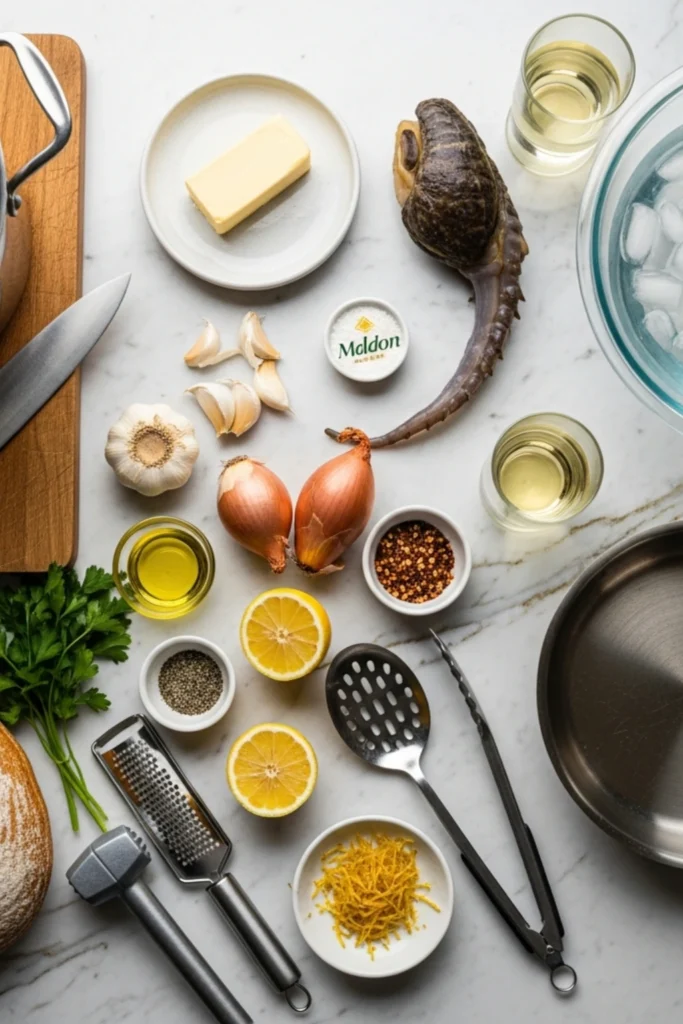
- 1 whole fresh geoduck (approx. 1.5–2 lbs)
- 3 tablespoons unsalted butter
- 4 cloves garlic, minced
- 1 shallot, finely diced
- Juice of 1 lemon + zest
- 1/4 cup dry white wine (Sauvignon Blanc or Pinot Grigio)
- 2 tablespoons fresh flat-leaf parsley, chopped
- 1/2 teaspoon red pepper flakes (optional)
- Flaky sea salt (Maldon) to taste
- Freshly cracked black pepper to taste
- 1 tablespoon olive oil
- Crusty sourdough bread, for serving
Tools You’ll Need
| Tool | Purpose |
|---|---|
| Large pot | Blanching the geoduck |
| Sharp chef’s knife | Cleaning and slicing |
| Cutting board | Prep surface |
| Medium sauté pan or skillet | Cooking the geoduck |
| Tongs | Handling during blanching |
| Meat mallet or rolling pin | Tenderizing the siphon |
| Slotted spoon | Removing from boiling water |
| Large bowl + ice | Ice bath after blanching |
| Microplane/zester | Lemon zest |
Pro Tips
1. Time the blanch exactly. 30 seconds in boiling water. That’s it. Any longer and you start cooking the meat, which ruins the texture. Set a timer — don’t eyeball this one.
2. Slice paper-thin and against the grain. Geoduck is naturally firm and crunchy. Slicing at 1/8 inch on a diagonal, then giving it a few gentle taps with a mallet, gives you that ideal tender-but-springy chew. Skip the mallet and it can turn rubbery.
3. High heat, fast cook — have everything prepped first. <cite>Cooking toughens geoduck meat rapidly</cite>, so a quick sauté of 45 seconds per side is your window. Mise en place isn’t optional here. Garlic, shallots, lemon, wine — all ready before the pan goes on.
4. Don’t toss the mantle. Most people only use the siphon (the long neck). The mantle (the softer body meat) is excellent in chowder or pasta. It’s a different texture but equally delicious.
5. Buy live, buy local if you can. Fresh geoduck smells clean and oceanic. If it smells “fishy,” put it down. This is a premium ingredient — freshness is everything.
How to Make the Geoduck Recipe
Step 1: Prepare Your Ice Bath
Fill a large bowl with cold water and plenty of ice. Place it right next to your stove before you do anything else. Speed matters in the next step.
Step 2: Blanch the Geoduck
Bring a large pot of water to a full rolling boil. Hold the geoduck by its shell and submerge it for exactly 30 seconds.
Pull it immediately with tongs and drop it straight into the ice bath. Let it sit for 1 minute.
Step 3: Remove the Shell and Skin
After the ice bath, the shell will come away easily by hand. The papery brown skin over the siphon will now peel off cleanly.
If it resists in spots, slide a knife tip under the edge and peel gently. Rinse both the siphon and the mantle under cold running water.
Step 4: Slice and Tenderize
Cut the siphon lengthwise down the middle to open it flat. Slice it on a diagonal into thin pieces, about 1/8 inch thick.
Place the slices between two sheets of plastic wrap and give them a few light taps with a meat mallet. Just enough to flatten slightly — don’t pound them.
Step 5: Season
Pat every slice completely dry with paper towels. Wet geoduck won’t sear, it’ll steam — and you want a proper sauté.
Season lightly with flaky salt and cracked pepper.
Step 6: Sauté
Get your skillet over high heat until it’s smoking hot. Add olive oil, then immediately follow with butter.
Add the shallot and garlic. Stir constantly for 60 seconds.
Add the geoduck slices in a single layer. Cook for 45 seconds per side. They’ll shift from translucent to just barely opaque — that’s your cue to move.
Step 7: Deglaze
Pour in the white wine and scrape up any browned bits. Let it reduce for 30 seconds.
Squeeze in lemon juice, add the zest, and toss everything together quickly.
Step 8: Finish and Serve
Scatter fresh parsley over the top. Add red pepper flakes if using.
Serve immediately over crusty sourdough. Geoduck waits for no one.
Substitutions & Variations
| Ingredient | Swap |
|---|---|
| Geoduck | Large surf clam or razor clam (closest texture) |
| White wine | Clam juice or seafood stock |
| Butter | Ghee or good olive oil (dairy-free) |
| Parsley | Fresh tarragon or chives |
| Sourdough | Steamed jasmine rice or rice noodles |
Variations Worth Trying
- Geoduck Sashimi — Raw, paper-thin slices with ponzu sauce, fresh ginger, and scallions. This is how Japanese restaurants serve it. No heat required.
- Geoduck Ceviche — Thin-sliced raw siphon marinated in lime juice, red onion, cilantro, and jalapeño for 10–15 minutes. Wildly good.
- Geoduck Chowder — Use the mantle meat in a creamy Pacific Northwest-style chowder with potatoes, bacon, and corn.
Make Ahead Tips
Geoduck is best eaten fresh, but here’s what works in advance:
- Clean and slice the geoduck up to 4 hours ahead. Store tightly wrapped in the refrigerator.
- Prep aromatics (garlic, shallot, parsley) the morning you plan to cook — this cuts active cooking time to under 5 minutes.
- Mantle meat can be cleaned, sliced, and frozen in an airtight container for up to 1 month.
Nutritional Breakdown
<cite>According to NOAA Fisheries, geoduck contains approximately 74 calories per 100g serving, with 12.77g protein and just 1g total fat.</cite>
| Nutrient | Per 100g (Raw) | Source |
|---|---|---|
| Calories | 74 kcal | NOAA Fisheries |
| Protein | 12.8g | NOAA Fisheries |
| Total Fat | 1g | NOAA Fisheries |
| Carbohydrates | 0g | NOAA Fisheries |
| Vitamin B12 | ~60% DV | Multiple sources |
| Iron | ~20% DV | Multiple sources |
| Omega-3 Fatty Acids | Present | Multiple sources |
Geoduck is naturally gluten-free, keto-friendly, paleo-compliant, and pescatarian. Zero modifications needed.
Meal Pairings
| Category | Pairing |
|---|---|
| Wine | Crisp Sauvignon Blanc or unoaked Chardonnay |
| Starter | Miso soup, cucumber salad with rice vinegar |
| Sides | Roasted asparagus, arugula salad, jasmine rice |
| For a spread | Pacific NW seafood platter with oysters and shrimp |
Leftovers & Storage
Cooked geoduck is best the same day. That’s the honest answer.
If you have leftovers:
- Refrigerate in an airtight container for up to 1 day.
- Do not freeze cooked geoduck — the texture suffers.
- Repurpose leftovers: Chop and fold into fried rice, creamy seafood bisque, or pasta with olive oil and chili flakes.
FAQ
Where do I buy geoduck? Your best options are Asian grocery stores, specialty seafood markets, or high-end fish counters in Pacific Northwest cities. <cite>Washington State accounts for about half the world’s geoduck supply</cite>, so Pacific Northwest retailers tend to have the best access. Online overnight shipping from reputable seafood suppliers is also an option.
Is geoduck safe to eat raw? Yes, when it’s fresh and from a reputable source. Geoduck sashimi is a prized preparation in Japanese cuisine. Always confirm sashimi-grade quality with your fishmonger before eating it raw.
Why is it called “gooey-duck”? <cite>The name comes from the Lushootseed language of the Coast Salish people, meaning “dig deep”</cite> — a reference to how far they burrow into the seabed. Nothing to do with actual ducks.
What does geoduck taste like? Sweet, clean, lightly briny, with a firm and satisfying crunch. If you’ve had high-quality surf clam at a sushi bar, geoduck is in that neighborhood — but more refined. It’s comparable to a mix of clam and scallop.
Can I cook geoduck from frozen? Fresh is strongly preferred. Frozen works for chowder or slow-cooked dishes where texture is less critical, but it’s not ideal for a fast sauté like this recipe.
How do I know if geoduck is fresh? It should smell like clean ocean air, not “fishy.” Live geoduck will retract when you touch the siphon. If it smells off or doesn’t react, pass on it.
Is geoduck expensive? Yes. Expect to pay $20–$50 per pound depending on your location and sourcing. It’s a special-occasion ingredient — but absolutely worth it.
Is geoduck sustainable? <cite>According to NOAA Fisheries, U.S. farmed geoducks are a smart seafood choice, sustainably grown and harvested under state and federal regulations.</cite> Wild harvest is also carefully managed.
Wrapping Up
Geoduck might look completely ridiculous. That’s honestly part of the charm.
But get past the first impression, slice it thin, hit it with high heat, garlic, butter, and lemon — and you have one of the most genuinely surprising and delicious seafood dishes you’ll ever put on your table.
Fast. Impressive. Unforgettable.
Make it once and you’ll be talking about it for months. Drop a comment below and tell me how it went, what you served it with, or how your family reacted when you brought a three-foot clam home from the fish market.