Kansas City BBQ burnt ends are the caramelized, crispy cubes cut from smoked brisket point that originated in Missouri’s legendary BBQ scene.
I used to think burnt ends were just overcooked brisket scraps.
Then I had them in Kansas City.
The crispy exterior. The tender inside. That sticky glaze that makes your fingers a mess worth licking clean.
Pitmasters there guard their recipes like family secrets. But after talking to enough of them and burning through several briskets, I figured it out.
These aren’t leftovers. They’re the main event.
The smell alone will have your neighbors asking what you’re cooking. The taste will have them asking when you’re cooking it again.
What You’ll Need
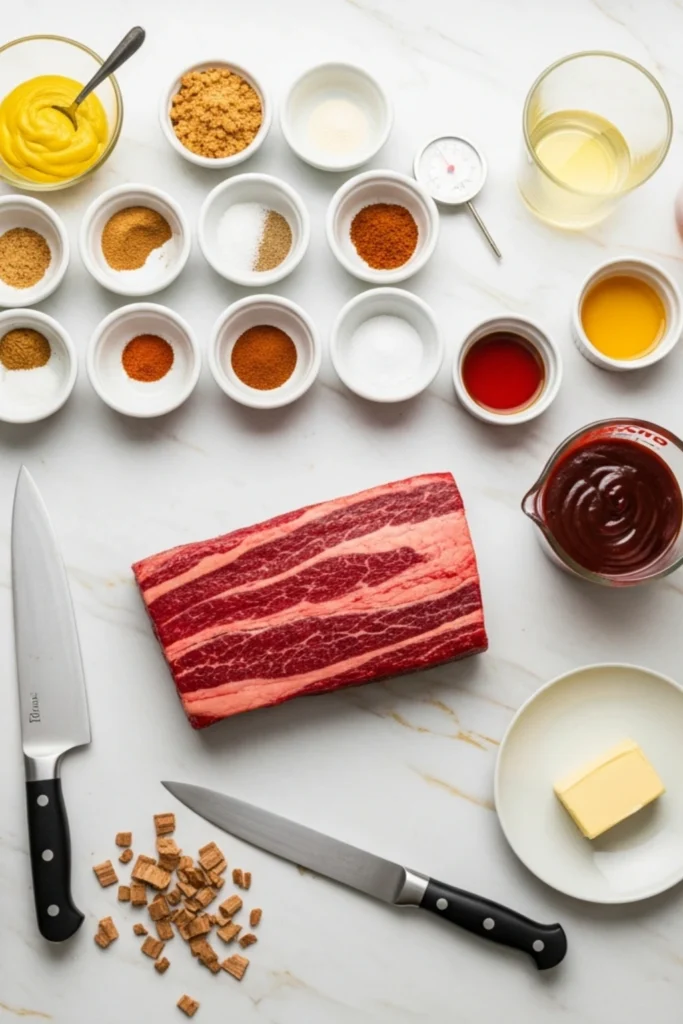
For the Brisket Point
| Ingredient | Amount | Notes |
|---|---|---|
| Beef brisket point | 5-6 lbs | The fatty, triangular portion |
| Yellow mustard | 2 tbsp | Acts as binder for rub |
For the Kansas City BBQ Burnt Ends Dry Rub
| Ingredient | Amount |
|---|---|
| Brown sugar | ¼ cup |
| Paprika | 2 tbsp |
| Coarse black pepper | 2 tbsp |
| Kosher salt | 1 tbsp |
| Garlic powder | 1 tbsp |
| Onion powder | 1 tbsp |
| Chili powder | 2 tsp |
| Cayenne pepper | 1 tsp |
| Cumin | 1 tsp |
For the Sauce & Glaze
| Ingredient | Amount | Purpose |
|---|---|---|
| Kansas City style BBQ sauce | 1 cup | Thick and sweet |
| Honey | ¼ cup | Extra caramelization |
| Butter | 2 tbsp | Richness |
| Apple cider vinegar | 1 tbsp | Cuts sweetness |
| Beef broth | ½ cup | Braising liquid |
Tools Required
- Smoker or grill with smoke box
- Hickory or oak wood chips
- Aluminum foil pan (9×13 works great)
- Digital meat thermometer
- Sharp chef’s knife
- Cutting board
- Small mixing bowl for rub
- Small saucepan
Pro Tips for Perfect Kansas City BBQ Burnt Ends
Keep the fat cap intact. Most of that fat will render during the smoke and keep everything juicy. Only trim off hard pieces or silver skin that won’t break down.
Trust the temperature, not the clock. Every brisket point is different. Some hit 200°F in 6 hours, others take 8. Use your thermometer and look for that butter-soft texture when you probe it.
Cube size directly affects moisture. Cut 1.5-inch cubes minimum. Smaller pieces dry out during that second cook. You need enough fat in each piece to stay tender.
The braising step is non-negotiable. This transforms good BBQ into Kansas City BBQ burnt ends. That butter and sauce bath creates the sticky, caramelized crust everyone talks about.
Steady heat beats expensive gear. A basic smoker that holds 250°F consistently will outperform a fancy one that swings 40 degrees. Get a good thermometer and watch it.
How to Make Kansas City BBQ Burnt Ends
Prep the Brisket Point (30 minutes before smoking)
Pull your brisket point from the fridge an hour early.
Cold meat resists the rub.
Pat it bone dry with paper towels. Any wetness creates steam instead of bark.
Slather the entire point with yellow mustard. The flavor disappears during the smoke but it helps that rub stick like glue.
Mix all your dry rub ingredients in a bowl. Coat the brisket point on every side, pressing it into the meat.
Let it sit while you prep the smoker. The salt needs time to penetrate.
Fire Up Your Smoker (Getting to 250°F)
Get your smoker to 250°F and hold it there.
Add hickory or oak chips. Hickory gives you that classic Kansas City smoke flavor. Oak is milder if you want the beef to shine through.
You want thin blue smoke, not thick white clouds that make everything taste like an ashtray.
Pitmaster Secret: The color of your smoke matters as much as the wood type. Blue smoke = clean flavor. White smoke = bitter flavor.
First Smoke: Building the Bark (6-8 hours)
Place the brisket point fat side up in your smoker.
Close the lid. Stop peeking. Every time you open it, you add 15 minutes to the cook.
After 4 hours, start checking internal temp. You’re waiting for 195-203°F.
The bark should be dark mahogany and crusty. Your thermometer should slide through like the meat isn’t even there.
What you’re looking for:
- Internal temp: 195-203°F
- Bark: Dark and set
- Probe test: Slides in with zero resistance
- Color: Deep reddish-brown
Rest and Cube (Critical step – don’t skip)
Pull the brisket point when it hits temp.
Let it rest on your cutting board for 30 minutes minimum. This keeps all those juices inside instead of running all over your counter.
Cut into 1.5-inch cubes using a sharp knife. Some pieces will be fattier. That’s exactly what you want.
Don’t worry if they look a little dry on the outside. The sauce bath fixes that.
The Kansas City BBQ Burnt Ends Sauce Bath
Heat your BBQ sauce, honey, butter, and apple cider vinegar in a small pot until the butter melts. Whisk it together.
Place your cubed burnt ends in an aluminum pan.
Pour the beef broth over first. It keeps the bottom from burning.
Drizzle half your sauce mixture over everything. Toss gently to coat each piece.
| Layer | Ingredient | Purpose |
|---|---|---|
| Bottom | Beef broth | Prevents burning |
| Middle | Burnt end cubes | The star |
| Top | Sauce mixture | Flavor + glaze |
Second Smoke: Creating Meat Candy (2 hours)
Return the pan to your smoker at 250°F.
Every 30 minutes, give the pan a gentle shake and add more sauce.
The cubes get darker and stickier each time. The edges caramelize. The sauce reduces into this thick glaze.
After 2 hours, they should look almost black in spots with a glossy finish.
Final Glaze and Serve
Pull the pan from the smoker.
Drizzle any remaining sauce over the top.
Let them cool for 5 minutes. Any longer and people start hovering with forks.
Serve with:
- Dill pickle chips
- White bread or Hawaiian rolls
- Extra BBQ sauce for dipping
- Cold beer 🍺
Substitutions and Variations
No brisket point? Chuck roast works as a backup. It’s got enough marbling to stay moist but won’t be identical. Cook to the same internal temp.
Skip the smoker? Use your oven at 275°F. Mix ½ tsp liquid smoke with the mustard binder. You lose the smoke ring but keep the flavor.
Dial down the heat? Cut cayenne to ½ tsp or skip it. The BBQ sauce adds plenty of sweetness to balance.
Try different wood? Apple or cherry create a sweeter, fruitier smoke. Mesquite is intense so use it sparingly.
Spice it up? Add 1 tbsp hot sauce to the braising liquid or use a spicy Kansas City BBQ sauce.
Make it keto-friendly? Replace brown sugar with erythritol and use sugar-free BBQ sauce. The texture stays the same.
Make Ahead Tips
Smoke the brisket point a day ahead if you want.
After that first smoke, let it cool completely. Store it whole in the fridge wrapped tight.
Next day, cube it cold (way cleaner cuts), then jump straight to the sauce bath and second smoke.
This actually deepens the flavors. The rub has more time to work its magic overnight.
Mix your dry rub weeks in advance. Store it in an airtight jar and you’re ready whenever the craving hits.
Nutritional Information
Per 4 oz serving (approximately 6 cubes):
| Nutrient | Amount |
|---|---|
| Calories | 380 |
| Protein | 28g |
| Fat | 24g |
| Carbs | 16g |
| Fiber | 1g |
| Sugar | 14g |
| Sodium | 680mg |
Note: Values vary based on brisket fat content and sauce amount
Pairing Suggestions for Kansas City BBQ Burnt Ends
Classic Kansas City sides make this meal complete.
Creamy coleslaw cuts through the richness. That cool, tangy crunch between bites is exactly what you need.
Baked beans with bacon and molasses double down on sweet and smoky. No complaints here.
Cornbread soaks up that extra sauce like it was designed for this exact purpose.
Mac and cheese brings pure comfort to the table.
Potato salad keeps things light and fresh.
For drinks, sweet tea is traditional across Missouri. Cold lager or pale ale works if you want beer. Something crisp to cut through all that sticky, savory goodness.
Leftovers and Storage
Store leftover Kansas City BBQ burnt ends in an airtight container for up to 4 days in the fridge.
Reheat in a 300°F oven for 15 minutes. Splash some beef broth in the pan to keep them from drying out.
Freeze for up to 3 months. Thaw overnight in the fridge before reheating.
They never last that long at my house.
Creative Ways to Use Leftover Burnt Ends
- Burnt end tacos: Warm tortillas, pickled onions, cilantro, lime
- Ultimate mac and cheese: Chop and stir into your favorite recipe
- Loaded nachos: Cheese sauce, jalapeños, sour cream
- BBQ baked beans: Mix chopped burnt ends right in
- Breakfast hash: Potatoes, peppers, onions, fried eggs on top
- Grilled cheese upgrade: Add them to your sandwich before grilling
- Pizza topping: Because why not
FAQ About Kansas City BBQ Burnt Ends
Why are they called burnt ends if nothing’s actually burnt?
The name comes from those crispy, dark edges that form during the long smoke. Old pitmasters would cut off these “burnt” pieces from the brisket point for themselves. They’re caramelized and deeply flavored, not charred or ruined.
Can I use brisket flat instead of point?
You can try but it won’t match the real thing. The point has serious marbling and fat that keeps burnt ends juicy through that long cook. The flat is too lean and dries out. Stick with the point.
Do I really need to smoke them twice?
Yes. The first smoke cooks the meat and builds the bark. The second smoke in that sauce bath creates the sticky, caramelized exterior that defines Kansas City BBQ burnt ends. Skip it and you just have chopped brisket.
My burnt ends turned out dry. What went wrong?
Usually the internal temp climbed too high during the first smoke, the cubes were cut too small, or you didn’t use enough braising liquid. Keep that smoker at 250°F, cube bigger than you think, and make sure there’s liquid in the pan.
Can I use different BBQ sauce?
Sure, but Kansas City style gives you that thick, sweet glaze that’s traditional. Vinegar-based Carolina sauce or mustard-based sauce will taste completely different. Not bad, just not Kansas City burnt ends anymore.
How do I know when they’re actually done?
They should look dark and sticky with crispy edges. When you pick one up, it’s firm outside but gives slightly when squeezed. The sauce should cling thick to each piece, not run off.
What’s the difference between burnt ends and chopped brisket?
Burnt ends get that second cook in the sauce bath which caramelizes the exterior. Chopped brisket is just smoked meat cut up. The texture and flavor are completely different.
Wrapping Up
Kansas City BBQ burnt ends aren’t a quick Tuesday dinner.
They take time. Patience. A Saturday when you can tend the smoker and resist the urge to rush.
But when you pull that pan out and see those dark, sticky, perfectly glazed cubes, you get it. Every minute was worth it.
The first bite makes everything clear. The crispy exterior gives way to tender, juicy meat that’s been bathing in smoke and sauce for hours.
Make them for your next cookout. Bring them to a potluck and watch the pan empty in minutes. Smoke a batch on Sunday and reinvent them all week.
Just save some before everyone else shows up.
Learn more about Kansas City’s BBQ history and tradition to understand why this city is considered America’s BBQ capital.
Drop a comment below after you make these Kansas City BBQ burnt ends. Tell me if you went traditional or tried one of the variations. Got questions while smoking? Ask away.