Ever heard of a soup so creamy it makes you forget about chicken noodle?
Knoephla soup (pronounced kuh-NEP-fla) is a traditional German-Russian dish from North Dakota that’s been quietly stealing hearts in the Midwest for generations. I stumbled onto this creamy potato dumpling soup during a freezing January in Fargo, and I’ve been making it on repeat ever since.
Those soft, pillowy dumplings swimming in velvety broth with chunks of potato? Pure comfort in a bowl.
The crazy part is how simple it is. You’re making basic dumplings from scratch, tossing them into a pot with potatoes and cream, and ending up with something that tastes like you’ve been cooking all day.
No fancy ingredients. No complicated techniques. Just real food that warms you from the inside out.
What Makes Knoephla Soup Different
Most people assume it’s just another chicken soup variant.
Wrong.
This soup stands apart because of those little potato dumplings that give it substance without making it heavy. They’re soft but not mushy, filling but not brick-like.
| Feature | Knoephla Soup | Regular Chicken Soup |
|---|---|---|
| Base | Cream and butter | Clear broth |
| Main element | Potato dumplings | Noodles |
| Texture | Thick and velvety | Light and thin |
| Origin | German-Russian | Various |
| Best for | Cold weather comfort | Year-round |
The German-Russian immigrants who settled in North Dakota in the 1880s brought this recipe with them, and it’s been a staple in the region ever since. You’ll find it at church potlucks, family gatherings, and basically every restaurant menu in towns like Bismarck and Fargo.
What You’ll Need
For the Knoephla (Dumplings)
- 2 cups all-purpose flour
- 1 large egg
- ½ cup whole milk
- ½ teaspoon salt
- ¼ teaspoon black pepper
For the Soup Base
- 4 tablespoons butter (salted or unsalted)
- 1 medium yellow onion, diced
- 2 celery stalks, diced
- 3 medium russet potatoes, peeled and cubed
- 6 cups chicken broth (low-sodium preferred)
- 2 cups whole milk
- 1 cup heavy cream
- 2 teaspoons salt
- 1 teaspoon black pepper
- ½ teaspoon garlic powder
- 2 tablespoons fresh parsley, chopped
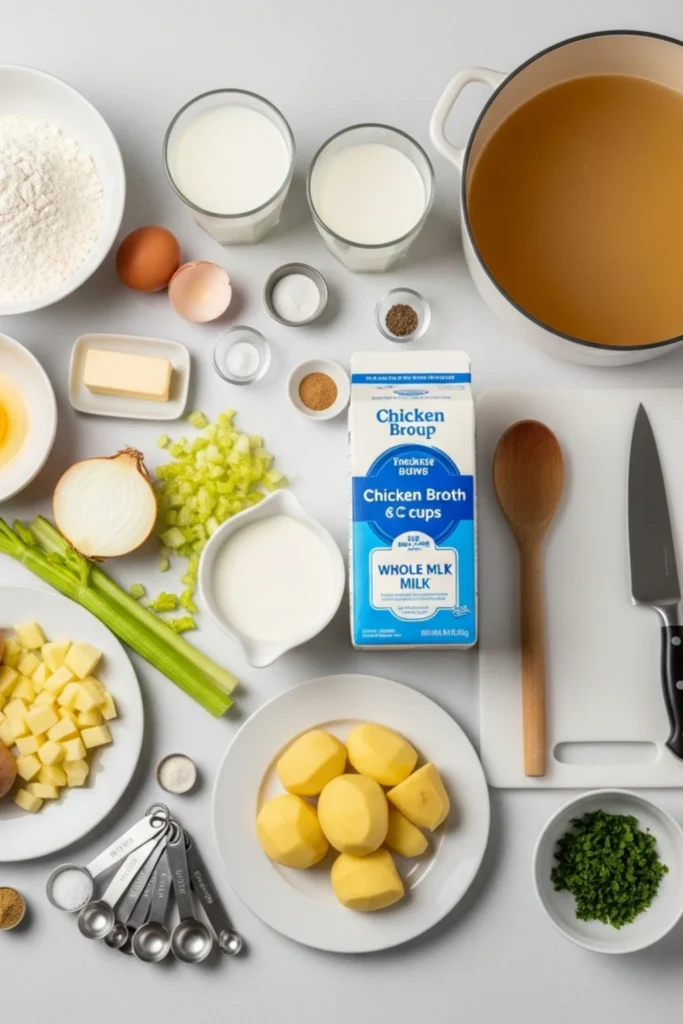
Tools Required
- Large soup pot or Dutch oven (6-quart minimum)
- Medium mixing bowl
- Sharp chef’s knife
- Wooden spoon
- Cutting board
- Measuring cups and spoons
- Ladle
Pro Tips
Let the dough rest. Give it 10-15 minutes after mixing. This relaxes the gluten and makes cutting way easier. Skip this and you’ll be fighting with sticky, uncooperative dough.
Size matters with dumplings. Cut them small (½-inch pieces max) because they puff up when they cook. I learned this the hard way when my first batch turned into giant dough balls that took over the entire pot. 😅
Russet potatoes are non-negotiable. Their starch breaks down slightly as they cook, naturally thickening the soup. Waxy potatoes like red or Yukon gold just sit there looking pretty but not doing the job.
Don’t boil after adding cream. Keep it at a gentle simmer once the dairy goes in. Boiling can cause the cream to separate and get grainy.
Taste before serving. This soup needs a generous amount of salt to bring out all the flavors, but every broth is different. Add gradually and adjust at the end.
How to Make Knoephla Soup
Step 1: Mix the Dumpling Dough
Combine flour and salt in your mixing bowl. Make a well in the center and crack in the egg. Pour in the milk.
Stir everything together until you get a soft, slightly sticky dough. It should hold together but not be dry.
Cover with a kitchen towel and let it rest for 10-15 minutes. Go scroll your phone or prep your vegetables.
Step 2: Prep Your Vegetables
Dice the onion and celery into small, uniform pieces (about ¼-inch).
Peel your potatoes and cut them into ½-inch cubes. Drop them in cold water if you’re not using them immediately so they don’t oxidize and turn brown.
Step 3: Build the Soup Base
Melt butter in your soup pot over medium heat. Add the diced onion and celery.
Cook for 5-6 minutes, stirring occasionally, until the vegetables soften and the onion turns translucent. Your kitchen should smell amazing right now.
Step 4: Add Potatoes and Broth
Drain your potato cubes and toss them into the pot. Pour in all 6 cups of chicken broth.
Crank the heat to high and bring everything to a boil. Once it’s bubbling, reduce to a simmer and cook for 10 minutes.
The potatoes should be starting to get tender but not completely cooked through yet.
Step 5: Shape and Cook the Dumplings
Turn your rested dough onto a lightly floured surface. Roll it into a log about ½-inch thick.
Use a sharp knife to cut the log into ½-inch pieces. Don’t stress about making them perfect – rustic is the vibe here.
Drop these little dumplings directly into your simmering soup. They’ll sink at first, then bob to the surface as they cook.
Key tip: Stir gently after adding the dumplings so they don’t stick to the bottom of the pot. Nobody wants burnt dough flavor in their soup.
Let them simmer for 10-12 minutes. They’re done when they float and look puffy.
Step 6: Add the Dairy
Lower your heat to medium-low. Pour in the milk and heavy cream.
Stir in the salt, pepper, and garlic powder. Let everything heat through for 5 minutes, stirring occasionally.
Do NOT let it boil. Just a gentle simmer to warm the dairy through.
Step 7: Final Touches
Taste your soup. Add more salt and pepper if needed (you probably will need a bit more salt).
Ladle into bowls and sprinkle with fresh parsley.
Serve immediately while it’s hot and creamy.
Substitutions and Variations
Make it lighter: Swap heavy cream for half-and-half or use all milk. You’ll lose some richness but save calories.
Add protein: Stir in 2 cups of shredded rotisserie chicken or 6 slices of cooked, crumbled bacon. Both are traditional additions in some North Dakota households.
Go vegetarian: Use vegetable broth instead of chicken broth. The flavor profile changes slightly but it’s still delicious.
Dairy-free version: Replace milk with unsweetened coconut milk and cream with full-fat coconut cream. The taste will be different but you’ll maintain that creamy texture.
Add more vegetables: Throw in a cup of diced carrots or frozen peas. Add them with the potatoes so they have time to cook.
Make it richer: Use all heavy cream instead of the milk/cream combo. Add an extra tablespoon of butter. Your taste buds will celebrate.
Make Ahead Tips
The dumpling dough can be made up to 24 hours in advance. Wrap it tightly in plastic wrap and refrigerate. Let it sit at room temperature for 15 minutes before cutting.
Dice all your vegetables the night before and store them in an airtight container in the fridge.
For the actual knoephla soup, I recommend making it the day you plan to eat it. The dumplings absorb liquid as they sit, making them mushy and the soup overly thick.
If you must make it ahead, prepare everything up to adding the dairy. Store the base in the fridge, then reheat gently and add the milk and cream when you’re ready to serve.
Nutrition Information
| Nutrient | Per Serving (1½ cups) |
|---|---|
| Calories | 385 |
| Fat | 18g |
| Saturated Fat | 11g |
| Carbohydrates | 44g |
| Fiber | 3g |
| Protein | 11g |
| Sodium | 890mg |
| Cholesterol | 85mg |
Note: Nutrition facts are estimates based on standard ingredients. Values may vary based on specific brands used.
What to Serve With Knoephla Soup
This soup is hearty enough to be a meal on its own, but here are some perfect pairings:
Bread options: Crusty sourdough, dinner rolls, or German rye bread for dipping
Salads: Simple green salad with vinaigrette, coleslaw, or German potato salad (if you want to go full Midwest)
Sides: Butter crackers, saltines, or pretzel bread
Drinks: Iced tea, lemonade, or a crisp white wine like Riesling
According to The Spruce Eats, German comfort foods pair best with simple, fresh sides that don’t compete with rich main dishes.
Leftovers and Storage
Store leftover knoephla soup in an airtight container in the fridge for up to 3 days.
When you reheat it, the soup will be much thicker (those dumplings are liquid sponges). Add ½ to 1 cup of milk or broth to thin it back out.
Heat gently on the stove over medium-low, stirring occasionally. Don’t microwave it unless you absolutely have to – the texture suffers.
Freezing: I don’t recommend it. The dairy separates when frozen and thawed, and the dumplings get weird and gummy. This is a make-and-eat situation.
If you have leftover dumpling dough, freeze that separately for up to 3 months. Thaw in the fridge overnight before using.
Troubleshooting Common Issues
| Problem | Solution |
|---|---|
| Dumplings are too dense | Dough was overworked or too dry – add a splash more milk next time |
| Soup is too thick | Add milk or broth ½ cup at a time until desired consistency |
| Dumplings fell apart | Dough was too wet – add flour 1 tablespoon at a time |
| Cream curdled | Heat was too high – keep at gentle simmer after adding dairy |
| Soup tastes bland | Needs more salt – add ½ teaspoon at a time and taste |
FAQ
What does Knoephla mean?
It’s the German word for the small potato dumplings in this soup. The name comes from German-Russian immigrants who settled in North Dakota in the late 1800s.
Can I use a different type of potato?
Stick with russets. Their high starch content helps thicken the soup naturally. Waxy potatoes like red or Yukon gold won’t give you the same creamy result.
Why is my knoephla soup so thick?
The dumplings absorb liquid as they sit. This is totally normal for leftovers. Just thin it out with milk or broth when reheating.
Can I make the dumplings ahead of time?
Make the dough ahead (up to 24 hours), but don’t cut and cook the dumplings until you’re ready to make the soup. Pre-cooked dumplings get gummy and weird.
Is this soup gluten-free?
Not as written, since the dumplings use all-purpose flour. You could experiment with a 1:1 gluten-free flour blend, but I haven’t tested it myself so I can’t guarantee results.
Can I add other vegetables?
Absolutely! Carrots, peas, and corn are popular additions. Add them when you add the potatoes so they have time to cook through.
What should I serve with knoephla soup?
A simple salad and crusty bread are perfect. The soup is rich and filling, so keep sides light and simple.
How do you pronounce Knoephla?
Kuh-NEP-fla. The “K” is pronounced, and the emphasis is on the second syllable.
Regional Variations Across North Dakota
Different areas of North Dakota put their own spin on this classic:
Bismarck style: Often includes bacon and uses ham hock for extra flavor in the broth
Fargo variation: Some cooks add a pinch of nutmeg to the dumplings for warmth
Rural farmhouse version: Uses leftover ham or chicken, making it a complete one-pot meal
Modern adaptations: Some restaurants add fresh dill or chives for a brighter flavor
The base recipe stays pretty consistent, but families have been tweaking it for generations based on what they have on hand.
Wrapping Up
Knoephla soup might not be as famous as chicken noodle or tomato, but it deserves a spot in your regular rotation.
It’s creamy without being heavy, filling without weighing you down, and those little dumplings are just fun to eat. Plus, it’s the kind of recipe that makes your whole house smell incredible while it’s cooking.
The next time you’re craving something warm and comforting that’s a little different from your usual soup lineup, give this North Dakota classic a try.
Make a batch, grab a bowl, and settle in for some serious comfort food. Then come back and drop a comment about how it turned out. Did you add bacon? Extra vegetables? More cream? I want to hear all about it!