Lexington BBQ sauce, also called Piedmont-style from North Carolina’s heartland, hits different than anything you’ve tried.
I’m talking about a tomato-vinegar sauce that’s been perfected over generations in tiny BBQ joints dotting the Piedmont region. It’s thinner than what most people expect from BBQ sauce, but that’s exactly why it works. Instead of sitting on top of your pulled pork like a thick blanket, it soaks in and flavors every single shred.
My first taste of authentic Lexington BBQ sauce happened at a roadside shack outside Winston-Salem. The owner had been making the same recipe since 1967. He poured it over pork shoulder that had been smoking since 4 AM, and I understood immediately why people drive hours for this stuff.
The crazy part? Making it at home takes 10 minutes and uses ingredients already sitting in your pantry.
No special equipment. No fancy techniques. Just a pot and some staples that combine into something way more interesting than the sum of their parts.
What Makes Lexington BBQ Sauce Different
Eastern Carolina uses straight vinegar with pepper. That’s it.
Lexington adds ketchup.
Sounds simple, but that one ingredient changes everything. You get sweetness to balance the acid. Body instead of just liquid. Complexity that makes you want another bite even when you’re full.
The sauce ratio is crucial: equal parts vinegar and ketchup, thinned with water, kicked up with brown sugar and spices. According to the North Carolina BBQ Society, this style emerged in the 1950s when Lexington pitmasters started experimenting with tomato-based additions to traditional vinegar sauces.
And here’s what surprised me most: it gets better after sitting in the fridge for 24 hours. The flavors marry together and mellow in all the right ways.
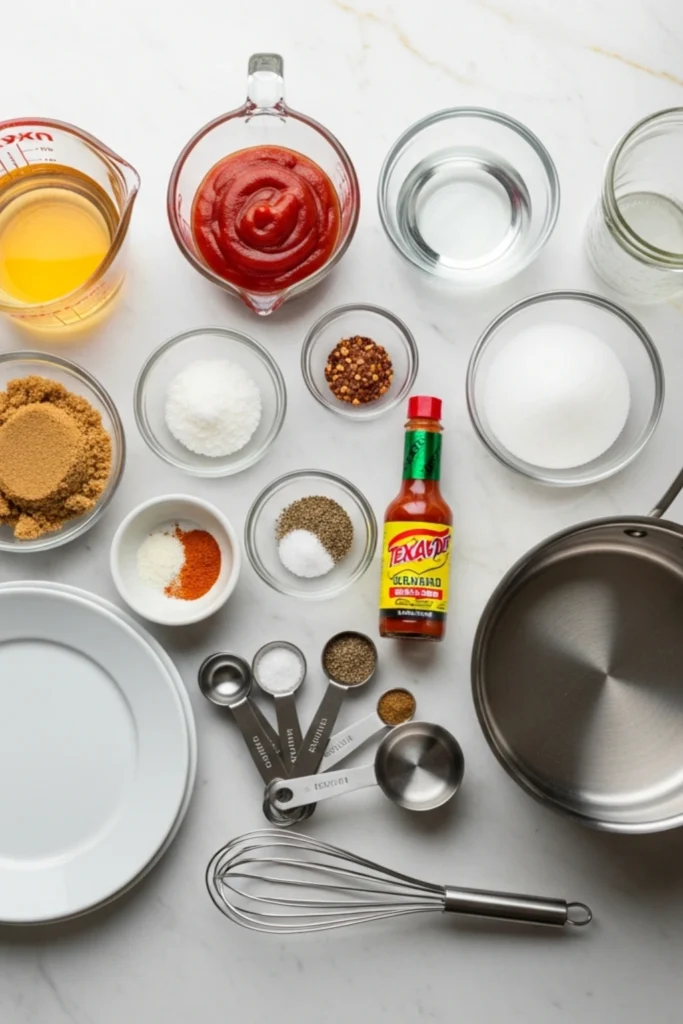
What You’ll Need
| Ingredient | Amount | Notes |
|---|---|---|
| Apple cider vinegar | 1 cup | White vinegar works but apple cider is traditional |
| Ketchup | 1 cup | The tomato base that makes this Lexington style |
| Water | ½ cup | Thins it to the right consistency |
| Brown sugar | ¼ cup packed | Adds molasses depth |
| White sugar | 2 tablespoons | Extra sweetness to balance vinegar |
| Crushed red pepper flakes | 1 tablespoon | Adjust based on heat preference |
| Hot sauce | 1 tablespoon | Texas Pete is traditional, Frank’s works too |
| Black pepper | 2 teaspoons | Fresh ground tastes best |
| Cayenne pepper | 1 teaspoon | Brings the heat |
| Salt | 1 teaspoon | Enhances everything |
| Garlic powder | ½ teaspoon | Savory backbone |
| Onion powder | ½ teaspoon | Rounds out the flavor |
Tools:
- Medium saucepan
- Whisk
- Measuring cups and spoons
- Glass jar or bottle for storage
Pro Tips
Wait before serving. Fresh sauce tastes fine. Sauce that’s rested 24 hours in the fridge tastes incredible. The vinegar mellows, the spices blend, everything harmonizes. Plan ahead if you can.
Control the heat level. This recipe brings medium spice. Too much for you? Cut cayenne in half and use mild hot sauce. Want more burn? Double the crushed red pepper and add diced jalapeño while it simmers.
Thin consistency is correct. If your sauce is thick enough to coat a spoon, add water by the tablespoon until it drizzles. Lexington BBQ sauce should be liquid, not syrupy. It needs to penetrate meat, not sit on top.
Serve it warm for pulled pork. Cold sauce works fine, but warming it first helps it soak into the meat instead of just coating the surface. 30 seconds in the microwave changes the whole experience.
Scale without limits. This makes about 2.5 cups. Double it, triple it, make a gallon if you’re feeding a crowd. It keeps for weeks in the fridge, so batch cooking actually makes sense here.
Substitutions and Variations
No ketchup on hand? Mix tomato sauce with an extra tablespoon of sugar. Not quite the same, but close enough in a pinch.
Vinegar alternatives: White vinegar substitutes fine for apple cider. Rice vinegar is too mild. Balsamic is wrong for this application.
Different sweeteners: Honey or maple syrup can replace white sugar. Don’t swap the brown sugar though – the molasses flavor matters.
Spicy version: Add one diced serrano pepper to the pot while simmering. Remove before storing for heat without the bits.
Smoky twist: Stir in 1 teaspoon smoked paprika or 3 drops liquid smoke. Gives you that pit flavor even when cooking indoors.
Vegetarian application: The Lexington BBQ sauce recipe itself contains no animal products. Use it on grilled portobello mushrooms, tempeh, or roasted cauliflower.
How to Make Lexington BBQ Sauce
Step 1: Combine ingredients
Pour vinegar, ketchup, water, both sugars, red pepper flakes, hot sauce, black pepper, cayenne, salt, garlic powder, and onion powder into your saucepan.
Don’t turn on heat yet. Whisk everything until completely smooth with no ketchup lumps visible.
Step 2: Heat to simmer
Set burner to medium. Bring sauce to a gentle simmer where tiny bubbles form around the edges but it’s not rolling hard.
Stir occasionally to prevent sticking.
Step 3: Simmer 10 minutes
Reduce heat to medium-low once simmering starts. Let it cook for exactly 10 minutes, stirring every 60 seconds.
The sauce will darken slightly. The sharp vinegar smell will soften. This is good.
Step 4: Taste and adjust
Remove from heat. Taste it.
Too spicy? Add more brown sugar.
Not spicy enough? More cayenne.
Too thick? Splash in water.
Too thin? Simmer another 3-4 minutes.
Make it work for your taste buds.
Step 5: Cool and store
Transfer to a glass jar or bottle. Let it reach room temperature on the counter.
Refrigerate once cooled. The flavor improves dramatically after the first 24 hours.
How to Use This Sauce
This is a finishing sauce, not a cooking sauce.
Don’t simmer it with meat for hours. Don’t brush it on ribs while grilling (the sugar burns). Don’t use it as a marinade (too much vinegar).
Instead:
✅ Toss with pulled pork right before serving
✅ Put bottles on the table for people to add their own
✅ Drizzle over smoked chicken
✅ Dip fried chicken into it
✅ Mix into coleslaw for extra tang
✅ Pour over grilled pork chops
The sauce soaks into warm meat better than cold, so if you’re serving pulled pork, mix the sauce in while everything’s still hot.
Make Ahead Tips
Cook the sauce up to 4 weeks before you need it. The flavor actually peaks around day 3-5 in the fridge.
For longer storage, freeze in ice cube trays. Pop frozen cubes into freezer bags. Each cube equals roughly 2 tablespoons, so you can thaw exactly what you need.
Bring to room temperature or warm gently before tossing with meat. Cold sauce doesn’t penetrate as well.
Nutritional Information
| Per 2 Tablespoons | Amount |
|---|---|
| Calories | 25 |
| Total Fat | 0g |
| Sodium | 180mg |
| Total Carbs | 6g |
| Sugars | 5g |
| Protein | 0g |
Note: This Lexington BBQ sauce is naturally low-fat and low-calorie compared to thick, tomato-based BBQ sauces.
Pairing Suggestions
Classic combo: Pulled pork shoulder + Lexington sauce + vinegar coleslaw + hush puppies
Modern twist: Grilled chicken thighs + Lexington sauce + roasted Brussels sprouts + cornbread
Weeknight version: Rotisserie chicken (shredded) + Lexington sauce + bagged coleslaw mix + store-bought rolls
Competition style: Smoked pork butt + Lexington sauce + homemade slaw + mac and cheese + baked beans
The sauce cuts through rich, fatty meats perfectly. That’s why it works so well with pork shoulder – all that rendered fat needs acid and spice to balance it out.
Leftovers and Storage
Refrigerator: 3-4 weeks in an airtight glass container. The vinegar acts as a preservative, so this stuff lasts.
Freezer: Up to 6 months. Use ice cube trays for portion control, or freeze in a jar with 1 inch of headspace for expansion.
Room temperature: No more than 2 hours. The water content means this needs refrigeration despite the vinegar.
Separation happens naturally. Just shake before using. If you see mold (you won’t, but if), toss the whole batch.
FAQ
What’s the actual difference between Lexington and Eastern Carolina BBQ sauce?
Eastern Carolina uses only vinegar, red pepper, and salt. Zero tomato. Lexington adds ketchup and brown sugar, making it sweeter, thicker, and more complex. Both are North Carolina traditions, just from different regions.
Can this work as a marinade?
Not recommended. The high acid content will break down meat texture if left too long, making it mushy. Lexington BBQ sauce works best as a finishing touch.
Why is my sauce too thick after cooling?
Ketchup thickens as it cools. Add water one tablespoon at a time until you get a drizzle-able consistency. It should flow, not glob.
How do I make this kid-friendly?
Cut cayenne pepper to ½ teaspoon, reduce red pepper flakes to 1 teaspoon, use mild hot sauce. You’ll keep flavor without overwhelming young taste buds.
Do I really need to refrigerate this?
Yes. The water dilutes the vinegar’s preservative properties, and ketchup needs cold storage once opened. Room temperature storage will cause spoilage.
What cut of pork works best with Lexington sauce?
Pork shoulder (also called pork butt) is traditional. The fatty meat needs the acid to cut through richness. Pork chops, ribs, and tenderloin also work well.
Can I process this for shelf-stable storage?
You can, but you’d need to follow proper canning procedures with sterilized jars and water bath processing. Easier to make small batches and keep refrigerated.
Is this recipe gluten-free?
Check your ketchup and hot sauce labels. Most brands are gluten-free, but some add wheat-based thickeners or flavorings. If those check out, the sauce is gluten-free.
Why does it taste better the next day?
Spices need time to fully hydrate and release their flavors. The acid mellows. The sweetness integrates. Chemical reactions that enhance flavor continue happening even in the fridge.
Can I use this on beef?
Absolutely. It’s non-traditional, but the sauce works beautifully on brisket, beef ribs, or even as a dipping sauce for steak. The acid cuts through beef fat just like it does with pork.
Wrapping Up
This Lexington BBQ sauce proves that simple ingredients can create something special when you get the ratios right.
Vinegar for tang. Ketchup for body. Sugar for balance. Spices for complexity. Nothing fancy, just North Carolina BBQ tradition in a jar.
Make a batch this weekend. Toss it with pulled pork or drizzle it over grilled chicken. Keep a bottle in the fridge for when you need to turn ordinary meat into something people remember.
Then come back and tell me what you think. Did you adjust the heat? Serve it warm or cold? Use it on something unexpected?
Drop a comment with your experience. I want to know how this Lexington BBQ sauce worked in your kitchen.