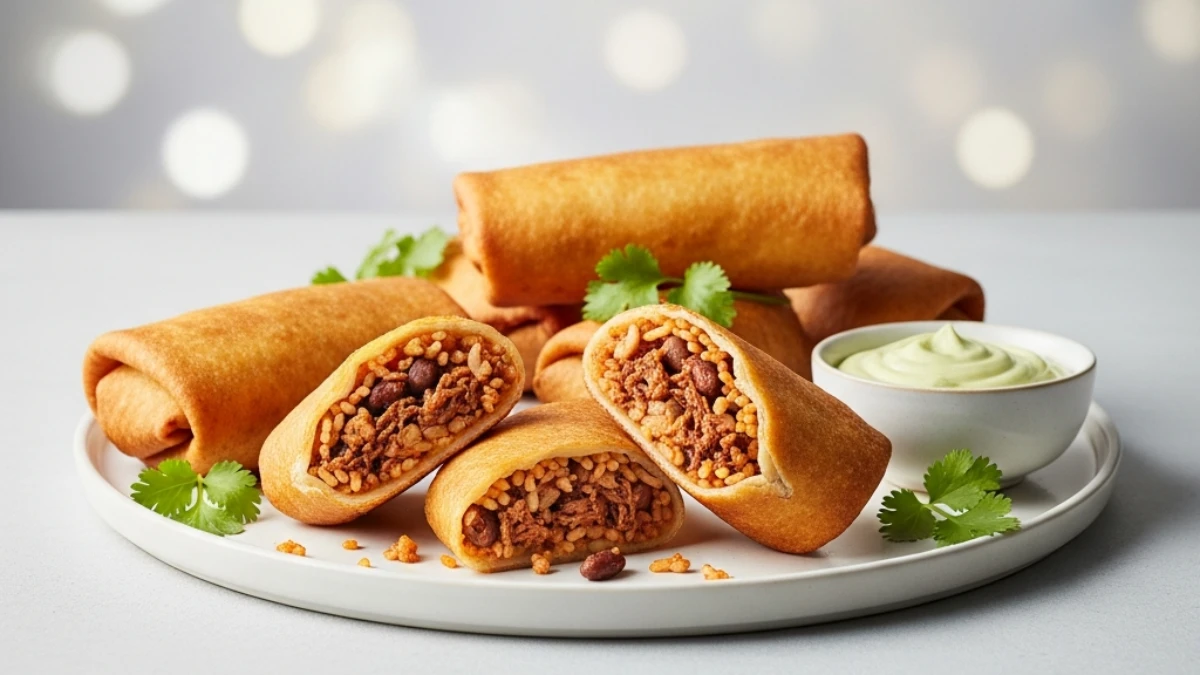
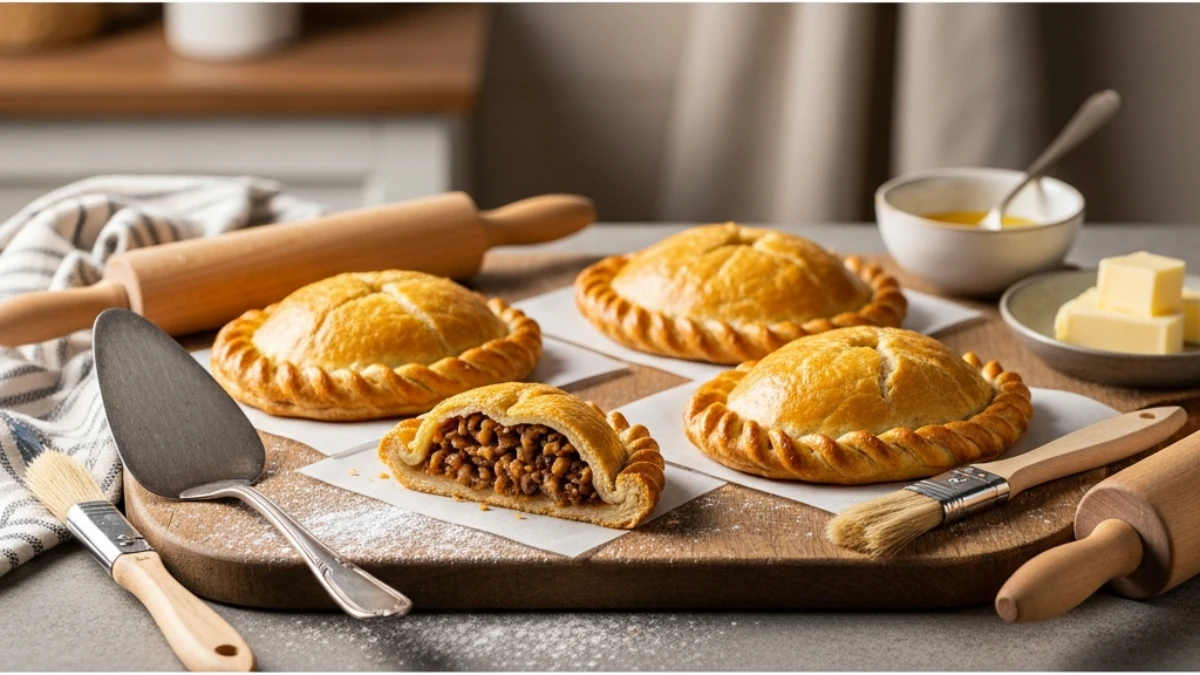
The Runza is Nebraska’s unofficial state food, a hearty beef and cabbage pocket wrapped in soft, golden dough that’s been warming Midwestern hearts since German-Russian immigrants brought it to the Great Plains in the 1800s.
You know that feeling when you bite into something and it just hits differently? That’s a Runza.
This isn’t your average handheld food. It’s a stuffed bread pocket from Nebraska that’s been making people happy since the 1940s, filled with seasoned ground beef, tender cabbage, and onions all wrapped in homemade dough that bakes up golden and soft.
If you’ve never had one, think of it as the Midwest’s answer to comfort food you can hold in your hand. And if you have had one, you already know why this runza recipe is about to become your new obsession.
The filling is savory and slightly sweet, the bread is pillowy soft with just a hint of chew, and the whole thing comes together way easier than you’d think.
Ready to make Nebraska proud? 🥟
What You’ll Need
For the Dough
- 1 cup whole milk, warmed to 110°F
- 2¼ teaspoons active dry yeast (1 packet)
- ¼ cup granulated sugar
- ⅓ cup unsalted butter, melted
- 1 teaspoon salt
- 1 large egg
- 3½ to 4 cups all-purpose flour
For the Filling
- 1½ pounds ground beef (80/20 works great)
- 1 medium yellow onion, diced
- 3 cups green cabbage, finely shredded
- 2 cloves garlic, minced
- 1 teaspoon salt
- ½ teaspoon black pepper
- ½ teaspoon onion powder
- ½ teaspoon garlic powder
- ¼ teaspoon paprika
For Finishing
- 2 tablespoons melted butter (for brushing)
Pro Tips for Making the Perfect Runza
Let your dough rest. After the first rise, don’t skip letting the dough rest for 5 minutes after punching it down. This makes it so much easier to roll out and prevents it from shrinking back on you.
Drain that beef really well. You don’t want soggy runzas. After browning the meat, drain off all the fat, and even press it with paper towels if it’s still greasy. Same goes for the cabbage if it releases too much moisture.
Seal those edges tight. When you’re pinching the dough closed, really press and crimp those seams. If there’s even a tiny gap, the filling will leak out while baking. I like to fold the edges over twice and press with a fork.
Cool the filling completely. Hot filling + dough = a sticky mess. Make your filling ahead and let it cool in the fridge, or spread it on a baking sheet to cool faster.
Freeze extras before or after baking. Runzas freeze beautifully. You can freeze them unbaked (add 10 minutes to bake time) or baked (just reheat in the oven at 350°F for 15 minutes).

Tools You’ll Need
| Tool | Why You Need It |
|---|---|
| Large mixing bowl | For making the dough |
| Stand mixer with dough hook | Makes kneading easier (or mix by hand) |
| Large skillet | For cooking the beef and cabbage filling |
| Rolling pin | To roll out dough rectangles |
| Baking sheets | For baking your runzas |
| Parchment paper | Prevents sticking |
| Pastry brush | For brushing melted butter on top |
| Kitchen thermometer | Ensures milk is the right temperature for yeast |
Substitutions and Variations
Protein Swaps
Ground beef can be swapped for ground turkey, chicken, or even plant-based ground meat. Just know that leaner meats might need a tablespoon of oil in the pan.
Make it vegetarian by using sautéed mushrooms, lentils, or crumbled tempeh instead of beef. Add extra seasonings to compensate for the missing meat flavor.
Vegetable Options
Green cabbage is traditional, but you can use a mix of green and red cabbage for color, or try napa cabbage for a more delicate texture.
Flavor Boosters
Add cheese if you want. A handful of shredded cheddar or mozzarella mixed into the cooled filling takes these to the next level.
Spice it up with a pinch of cayenne, red pepper flakes, or a spoonful of your favorite hot sauce mixed into the filling.
Dough Alternatives
Whole wheat dough works if you want to make these a bit heartier. Swap half the all-purpose flour for whole wheat, but you might need a splash more milk.
Make Ahead Tips
The dough can be made a day ahead and kept in the fridge after the first rise. Just let it come to room temperature before shaping.
The filling can be cooked up to 2 days in advance. Store it in an airtight container in the fridge and it’ll be ready to go when you need it.
You can also assemble the runzas, place them on a baking sheet, cover tightly with plastic wrap, and refrigerate for up to 24 hours before baking. This is perfect for busy weeknights.
Nutrition Information (Per Runza)
| Nutrient | Amount |
|---|---|
| Calories | 420 |
| Protein | 22g |
| Carbohydrates | 45g |
| Fat | 16g |
| Fiber | 3g |
| Sodium | 580mg |
Based on making 8 runzas from this recipe
How to Make Runzas
Make the Dough
Warm your milk to 110°F (it should feel like a warm bath on your wrist). Pour it into a large bowl, sprinkle the yeast over top, and add a pinch of the sugar. Let it sit for 5 minutes until it gets foamy.
Add the remaining sugar, melted butter, salt, and egg to the yeast mixture. Stir everything together.
Start adding the flour, one cup at a time, mixing as you go. Once it gets too thick to stir, turn it out onto a floured surface and knead for 8-10 minutes until the dough is smooth and elastic. You want it soft but not sticky.
Place the dough in a greased bowl, cover with a damp towel, and let it rise in a warm spot for about 1 hour or until it doubles in size.
Cook the Runza Filling
While the dough is rising, heat a large skillet over medium-high heat. Add the ground beef and cook, breaking it up with a spoon, until it’s browned all the way through (about 6-8 minutes).
Drain off the fat really well. Like, really well.
Return the skillet to the stove and add the onion. Cook for 3-4 minutes until it starts to soften.
Toss in the shredded cabbage and garlic. Stir everything together and cook for another 8-10 minutes until the cabbage is tender and any liquid has cooked off.
Add the salt, pepper, onion powder, garlic powder, and paprika. Stir it all up and taste. Adjust the seasonings if you want more flavor.
Chef’s Note: The key to a great runza filling is making sure all the moisture has cooked off. Watery filling = soggy pockets. Keep cooking until the mixture looks dry but not burnt.
Transfer the filling to a bowl or baking sheet and let it cool completely. This is important.
Assemble the Runzas
Preheat your oven to 375°F and line two baking sheets with parchment paper.
Punch down your dough and let it rest for 5 minutes. Then divide it into 8 equal pieces.
Roll each piece into a rectangle about 6×8 inches. You don’t need to be perfect here.
Spoon about ½ cup of filling onto the center of each rectangle, leaving about an inch of space around the edges.
Fold the dough over the filling like you’re wrapping a present. Pinch all the edges together really tightly so nothing leaks out. Place the runza seam-side down on your prepared baking sheet.
Repeat with the rest of the dough and filling.
Bake
Brush the tops of each runza with melted butter. This gives them that gorgeous golden color.
Bake for 20-25 minutes until they’re golden brown on top and the dough is cooked through.
Let them cool for 5 minutes before digging in. The filling will be crazy hot right out of the oven.
What to Serve with Runzas
| Side Dish | Why It Works |
|---|---|
| French fries | Classic pairing, adds crunch |
| Coleslaw | Cool and creamy contrast |
| Dill pickles | Tangy bite cuts through richness |
| Simple green salad | Lightens up the meal |
| Tomato soup | Perfect for dipping |
Leftovers and Storage
Store baked runzas in an airtight container in the fridge for up to 4 days. Reheat them in the oven at 350°F for 10-15 minutes, or microwave for 1-2 minutes if you’re in a rush (though the oven keeps them way better).
For freezing, wrap each cooled runza individually in plastic wrap, then put them all in a freezer bag. They’ll keep for up to 3 months. Reheat from frozen in a 350°F oven for 25-30 minutes.
You can also freeze them unbaked. Just assemble, freeze on a baking sheet until solid, then transfer to a freezer bag. Bake from frozen at 375°F for 30-35 minutes.
FAQ About Making Runzas
Can I use frozen bread dough for this runza recipe?
Yep! If you want to skip making dough from scratch, a pound of frozen bread dough (thawed) works just fine. You’ll get about 6-8 runzas depending on how you divide it.
Why is my dough tough?
You probably over-kneaded it or added too much flour. The dough should be soft and a little tacky, not stiff. Start with less flour and add more only if it’s sticking to everything.
Can I make these smaller?
For sure. Divide the dough into 12 or 16 pieces instead of 8 for mini runzas. Just reduce the baking time to 15-18 minutes and use less filling in each one.
What should I serve with runzas?
They’re honestly great on their own, but if you want sides, try fries, coleslaw, pickles, or a simple green salad. Some people dip them in mustard or ketchup too.
My cabbage is watery. What do I do?
If your cabbage releases a lot of water while cooking, just keep cooking until it evaporates. You can also drain it in a colander and press out the excess liquid with paper towels before adding it to the beef.
Can I use store-bought dough?
Yes. Pizza dough, biscuit dough, or crescent roll dough all work in a pinch. Just know the texture will be different from the traditional soft bread dough.
How do I know when my runzas are done baking?
They should be golden brown on top and sound slightly hollow when you tap the bottom. The internal temperature should reach about 190°F if you want to be precise.
Can I air fry runzas?
You can! Brush them with butter and air fry at 350°F for 12-15 minutes, flipping halfway through. They won’t get quite as golden as oven-baked, but they’re still delicious.
The History Behind This Nebraska Classic
The runza has deep roots in the German-Russian immigrant communities that settled in Nebraska in the late 1800s. These families brought with them a tradition of stuffed bread pockets called “bierock” or “krautburger” depending on the region.
When Sally Everett opened the first Runza restaurant in Lincoln, Nebraska in 1949, she turned this homestyle comfort food into a state icon. Today, you’ll find Runza restaurants all over Nebraska, but the homemade version is still the best.
The name “runza” comes from the Low German word “runsa,” which roughly translates to “bun shaped like a stomach.” Not the most appetizing name, but these pockets are anything but unappetizing.
Wrapping Up
Runzas are one of those recipes that look intimidating but are actually pretty forgiving once you get the hang of them.
The first time you pull a batch out of the oven and bite into that soft, buttery bread with the savory beef and cabbage inside, you’ll get it. This is the kind of food that makes you want to cook.
Make a double batch and freeze half. Future you will be so grateful.
Now go make these, then come back and tell me how it went. Did you add cheese? Did you make them mini? Did you eat three in one sitting? (No judgment, I’ve been there.)
Drop a comment below 💬