Salmon fillets sizzling in garlic butter. That’s dinner sorted in less time than it takes to scroll through your phone.
I’m talking about perfectly cooked salmon with a golden crust and a center so tender it practically melts. No fancy chef skills required, just a hot pan and about 25 minutes from start to finish.
And here’s the thing nobody mentions: this exact method works for every salmon species you’ll find at the store. Sockeye, Coho, Atlantic, King… doesn’t matter. Same technique, same results, every single time.
You’re about to learn the one salmon recipe you’ll make on repeat for the rest of your life.
What You’ll Need
| Ingredient | Amount | Notes |
|---|---|---|
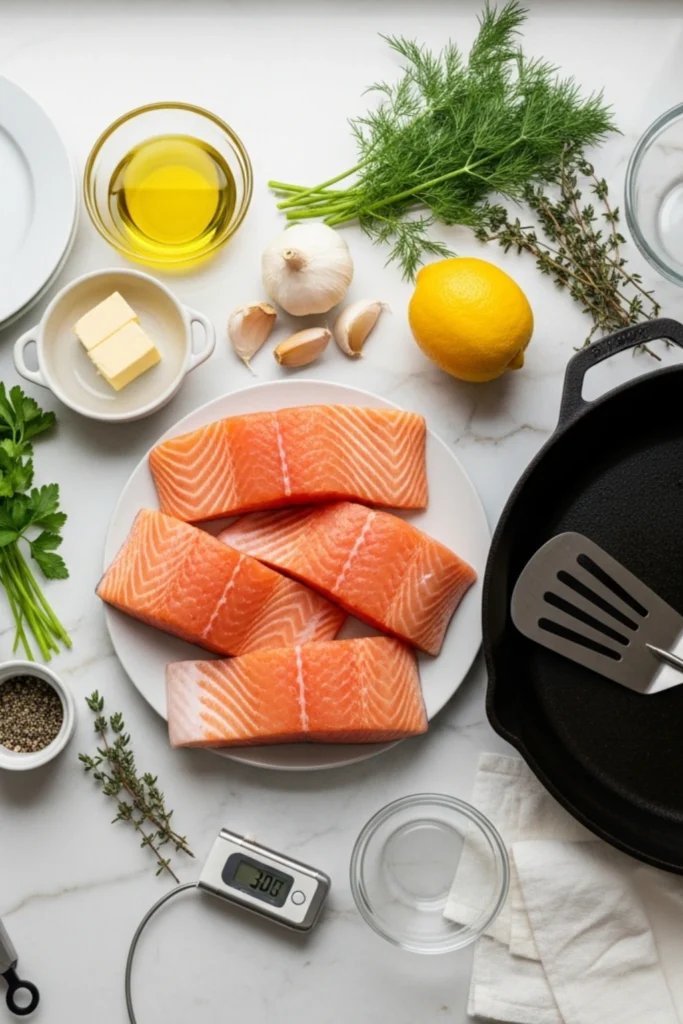
| Salmon fillets (any species) | 4 pieces (6 oz each) | Look for 1-1.5 inch thickness |
| Olive oil | 2 tablespoons | Extra virgin preferred |
| Butter | 1 tablespoon | Adds richness |
| Garlic cloves | 3, minced | Fresh only |
| Lemon | 1 whole | Juice + zest |
| Salt | To taste | Sea salt or kosher |
| Black pepper | To taste | Freshly ground |
| Fresh herbs | Small handful | Dill, parsley, or thyme |
Optional Flavor Boosters
- 1 teaspoon Dijon mustard (for tang)
- 1 tablespoon honey or maple syrup (for glaze)
- Red pepper flakes (for heat)
- Soy sauce (for umami depth)
Tools You’ll Need
Essential:
- Large oven-safe skillet (cast iron is ideal)
- Fish spatula or regular spatula
- Meat thermometer
- Tongs
- Paper towels
Nice to Have:
- Small prep bowl
- Basting spoon
- Instant-read thermometer
Pro Tips
Choose the Right Thickness
Aim for fillets that are 1 to 1.5 inches thick.
Thinner pieces cook too fast and dry out before you can blink. Thicker cuts give you control and that perfect medium-rare center that makes restaurant-quality salmon at home actually possible.
Room Temperature Changes Everything
Take your salmon out of the fridge 15-20 minutes before cooking.
Cold fish + hot pan = overcooked outside, raw inside. Room temperature fish = even cooking throughout. This one step prevents more kitchen disasters than you’d think.
Pat It Bone Dry
Moisture kills that crispy golden crust everyone loves.
Use paper towels to get every drop of water off those fillets before they go anywhere near the pan. Your future self will thank you when you’re biting into that perfectly seared surface.
Trust Your Thermometer, Not the Clock
Every fillet cooks differently. Pull your salmon at 120-125°F for medium-rare perfection. It keeps cooking as it rests and hits about 130°F, which is exactly where you want it 🎯
Skin Side Gets First Priority
If your fillets have skin, start them skin-side down. This protects the delicate flesh and creates that crispy texture people pay extra for at restaurants. Plus it’s way easier to flip when the skin has firmed up.
Different Salmon Species, Same Method
| Species | Flavor Profile | Fat Content | Cooking Adjustment |
|---|---|---|---|
| Sockeye | Intense, rich | Lean | Reduce time by 1-2 min |
| King (Chinook) | Buttery, mild | Highest fat | Can handle higher heat |
| Coho (Silver) | Medium flavor | Medium fat | Perfect for beginners |
| Atlantic | Mild, versatile | Medium-high | Most forgiving |
| Pink/Chum | Light, delicate | Lowest fat | Watch closely, cooks fast |
Quick Tip: Don’t stress about which species to buy. Ask your fishmonger what came in fresh that day and roll with it. Freshness beats species every time.
Substitutions and Variations
Make It Your Own
Asian-Inspired
Swap butter for sesame oil, add fresh ginger, use soy sauce and rice vinegar instead of lemon. Finish with sliced scallions and sesame seeds.
Mediterranean Style
Use oregano instead of dill, add sun-dried tomatoes and Kalamata olives to the pan. Top with crumbled feta before serving.
Cajun Spiced
Coat in paprika, cayenne, garlic powder, and thyme before searing. Skip the herbs, double down on the spice.
Maple Glazed
Mix maple syrup with Dijon mustard and brush on during the last 2 minutes of cooking. The glaze caramelizes into something special.
Diet Swaps
- Paleo/Whole30: Use ghee instead of butter
- Dairy-Free: Skip butter, use 3 tablespoons olive oil total
- Low-Sodium: Fresh herbs only, skip added salt
- Keto-Friendly: Already perfect as-is
Make Ahead Tips
Season your salmon fillets up to 4 hours ahead and keep them covered in the fridge. Just remember to bring them to room temp 15-20 minutes before cooking.
Prep your garlic, herbs, and lemon juice in advance. Store everything in a small container and you’ll cut your active cooking time in half.
Meal prep people, listen up: Cook a big batch on Sunday and you’ve got high-protein lunches sorted for half the week. Cooked salmon keeps for 3 days in the fridge without losing quality.
How to Make Perfect Pan-Seared Salmon
Step 1: Prep Your Fillets
Pat the salmon completely dry with paper towels. Both sides. Then season generously with salt and pepper.
Don’t be shy here. Fish needs more seasoning than you think it does. Get some on the sides too.
Step 2: Get the Pan Screaming Hot
Heat your skillet over medium-high heat for 2-3 minutes. Add the olive oil and let it shimmer.
You want it hot enough that the salmon sizzles immediately when it hits the pan, but not smoking. That’s your sweet spot.
Step 3: Sear the First Side
Place salmon in the pan skin-side down if it has skin, or presentation-side down if skinless.
Press down gently with your spatula for the first 30 seconds. This prevents curling and ensures even contact with the pan.
Let it cook undisturbed for 4-5 minutes. Resist the urge to peek or move it around. Just let it do its thing.
Step 4: Flip and Add the Good Stuff
Carefully flip the salmon using your fish spatula. Immediately add butter, minced garlic, and fresh herbs to the pan.
As the butter melts, tilt the pan slightly and use a spoon to baste the salmon with that garlicky butter. This is where the magic actually happens. Keep basting every 30 seconds or so.
Step 5: Finish to Perfection
Cook for another 3-4 minutes, continuing to baste. Insert your thermometer into the thickest part of the fillet.
Pull it at 120-125°F for medium-rare, or 130-135°F if you prefer it more cooked through. The salmon will keep cooking after you remove it from heat.
Step 6: Rest and Serve
Transfer salmon to plates. Squeeze fresh lemon juice over the top and drizzle with that beautiful pan butter.
Let it rest for 2-3 minutes. The fish finishes cooking and the juices redistribute. This step is non-negotiable if you want moist salmon.
Storage and Leftovers
Storing Cooked Salmon
Fridge: Store in an airtight container for up to 3 days. Keep it towards the back where the temperature stays most consistent.
Freezer: Cooked salmon freezes okay for up to 2 months, but the texture changes. Raw salmon actually freezes better if you’re planning ahead.
Reheating Without Ruining It
Don’t microwave unless you absolutely have to. The texture gets weird and rubbery.
Best method: Reheat gently in a 275°F oven for about 10 minutes. Or just eat it cold, honestly. Cold salmon is underrated.
Leftover Ideas That Actually Work
- Flake into pasta with cream sauce, peas, and parmesan
- Mix with Greek yogurt, dill, and cucumber for salmon salad sandwiches
- Top rice bowls with edamame, avocado, and sriracha mayo
- Stuff into tacos with cabbage slaw and lime crema
- Toss with mixed greens, cherry tomatoes, and balsamic vinaigrette
Meal Prep Hack: Cook your salmon, let it cool, then portion into containers with your sides already packed. Grab and go all week long.
Nutritional Breakdown
| Per Serving (6 oz) | Amount |
|---|---|
| Calories | 367 |
| Protein | 34g |
| Fat | 24g |
| Omega-3 Fatty Acids | 2.2g |
| Carbohydrates | 2g |
| Sodium | 180mg |
| Vitamin D | 570 IU |
Health benefits you’re getting: Omega-3s for heart and brain health, high-quality protein for muscle, vitamin D for bone strength, B vitamins for energy, selenium for immune function.
Salmon is legitimately one of the healthiest proteins you can eat. According to the American Heart Association, eating fatty fish like salmon twice a week can significantly reduce your risk of heart disease.
Perfect Pairings
Sides That Work
Quick Vegetables (20-25 min):
- Roasted asparagus with lemon and parmesan
- Garlic green beans with almonds
- Roasted Brussels sprouts with balsamic glaze
- Sautéed spinach with garlic
Starchy Sides:
- Garlic mashed potatoes or cauliflower mash
- Quinoa pilaf with fresh herbs
- Wild rice with mushrooms
- Simple buttered new potatoes
Salads:
- Arugula with olive oil and shaved parmesan
- Caesar salad (the anchovy plays nice with salmon)
- Cucumber and tomato salad with red onion
Wine Pairings
- Pinot Noir – Light reds work surprisingly well with salmon
- Chardonnay – Especially with richer, fattier species like King
- Sauvignon Blanc – Crisp and fresh, cuts through the richness
- Rosé – Perfect for summer evenings
Time-Saving Strategy
While your salmon cooks, throw vegetables in the oven at 425°F. They’ll finish around the same time. Or start rice in your rice cooker before you even take the salmon out of the fridge.
Everything hits the table at once with zero stress.
FAQ
How do I know which salmon species to buy?
Honestly, it depends on your budget and what’s freshest. Sockeye has the most intense flavor and deepest red color. King is the richest and most expensive. Coho and Atlantic are milder and more affordable. Just ask what came in that day and go with that.
Why does my salmon stick to the pan?
Two reasons: the pan wasn’t hot enough when you added the fish, or you tried to flip it too soon. When salmon is ready to flip, it releases naturally from the pan. If it’s sticking, give it another minute and it’ll let go.
Can I cook salmon from frozen?
You can, but it’s not ideal. The texture won’t be as good and it’s harder to season properly. If you must, rinse the frozen fillet under cold water, pat as dry as possible, and add about 5 extra minutes to the cooking time.
What’s that white stuff that comes out when I cook salmon?
That’s albumin, a harmless protein. It shows up more when you cook salmon at high heat or overcook it. Lower your heat slightly and don’t cook it past 135°F to minimize it. It’s totally safe to eat, just not pretty.
How do I get crispy skin?
Three non-negotiables: dry the skin completely with paper towels, use enough oil in the pan, and don’t move the fillet once it hits the heat. Press it down gently for the first 30 seconds, then hands off until flip time.
Is it safe to eat salmon medium-rare?
Yes. High-quality, fresh salmon can safely be eaten medium-rare (around 125-130°F internal temp). It’s actually how most restaurants serve it because it stays incredibly moist and tender. Just make sure you’re buying from a reputable source.
What if I don’t have a meat thermometer?
Press the thickest part gently with your finger. It should feel like the fleshy part of your palm below your thumb when you touch your thumb to your middle finger. That’s medium-rare. Or just cut into the thickest part and check – the center should be slightly translucent.
Can I use skin-on fillets for this recipe?
Absolutely. In fact, I prefer them. Start skin-side down and follow the exact same method. The skin protects the delicate flesh and gets beautifully crispy. You can eat it or remove it after cooking.
Wrapping Up
There you have it. One dead-simple method that works for every salmon species you’ll ever find at the grocery store.
No more standing at the fish counter feeling totally lost. No more dried out, overcooked disappointments. Just perfectly cooked, flavorful salmon you can make any night of the week without breaking a sweat.
The real beauty of this recipe? Once you nail the basic technique, you can riff on it forever. Different herbs, different glazes, different sides… it’s all fair game.
Try it out this week and let me know how it goes. Which salmon species did you use? Did you add your own spin to the recipe? Drop a comment below – I genuinely want to hear what you think.