Scrapple is a traditional Pennsylvania Dutch breakfast staple that’s been filling plates since the 1700s. This crispy-edged loaf from the Mid-Atlantic region transforms simple pork and cornmeal into pure breakfast gold.
People either love scrapple or they’ve never tried it.
There’s not much middle ground with this Pennsylvania Dutch breakfast favorite, and I get it. The first time I saw it on a diner menu, I wasn’t exactly jumping to order something that looked like mystery loaf.
Fast forward to actually trying it, and I was hooked. That crispy, golden-brown crust hiding a tender, savory center? Pure breakfast magic. And when you make scrapple at home, you get to control exactly what goes in it (spoiler: it’s way better than anything you’ll buy at the store).
Born from the Pennsylvania Dutch tradition of using every part of the pig, scrapple is basically cornmeal mush mixed with pork, herbs, and spices, then formed into a loaf, sliced, and fried until crispy. It’s been a staple in Mid-Atlantic kitchens for centuries.
If you’ve been curious about making scrapple from scratch or you’re just looking to recreate that crispy breakfast side you had at your favorite diner, this recipe is for you.
What You’ll Need
For the Scrapple Base
| Ingredient | Amount | Purpose |
|---|---|---|
| Pork shoulder | 2 lbs, cut into chunks | Creates the meaty base |
| Water | 4 cups | For cooking pork |
| Yellow cornmeal | 1 cup | Main binding agent |
| Buckwheat flour | 1 cup | Adds authentic earthy flavor |
| Onion | 1 medium, finely diced | Aromatics |
| Salt | 2 tsp | Seasoning |
| Black pepper | 1 tsp | Seasoning |
| Dried sage | 1 tsp | Traditional herb |
| Dried thyme | ½ tsp | Herbal notes |
| Ground allspice | ½ tsp | Warm spice |
| Cayenne pepper | ¼ tsp (optional) | Heat |
For Frying
- Butter or vegetable oil – 2 tbsp
- Extra salt and pepper – For finishing
Pro Tips
Get Your Loaf Pan Ready Early
Grease your loaf pan before you even start cooking. Once the scrapple mixture is ready, it sets fast, and you don’t want to be scrambling around looking for parchment paper while your mixture turns into cement in the pot.
Don’t Skip the Buckwheat
I know buckwheat flour sounds fancy, but it adds this earthy, nutty flavor that makes homemade scrapple taste authentic. You can use all cornmeal if you must, but the buckwheat really makes a difference. Look for it in the baking aisle or any health food store.
Low and Slow Wins the Race
When you’re adding the cornmeal mixture to the pork broth, keep the heat low and stir constantly. This stuff can bubble up and spit at you like a tiny volcano if you’re not careful.
Slice It Cold
After your scrapple has chilled overnight, use a sharp knife and slice it when it’s cold. Warm scrapple is basically impossible to cut cleanly. About ½-inch thick slices work perfectly for frying.
Get It Crispy
The whole point of scrapple is that crispy crust. Don’t rush the frying process. Let each side get deeply golden brown before flipping. Medium-high heat, patience, and enough fat in the pan are your friends here.
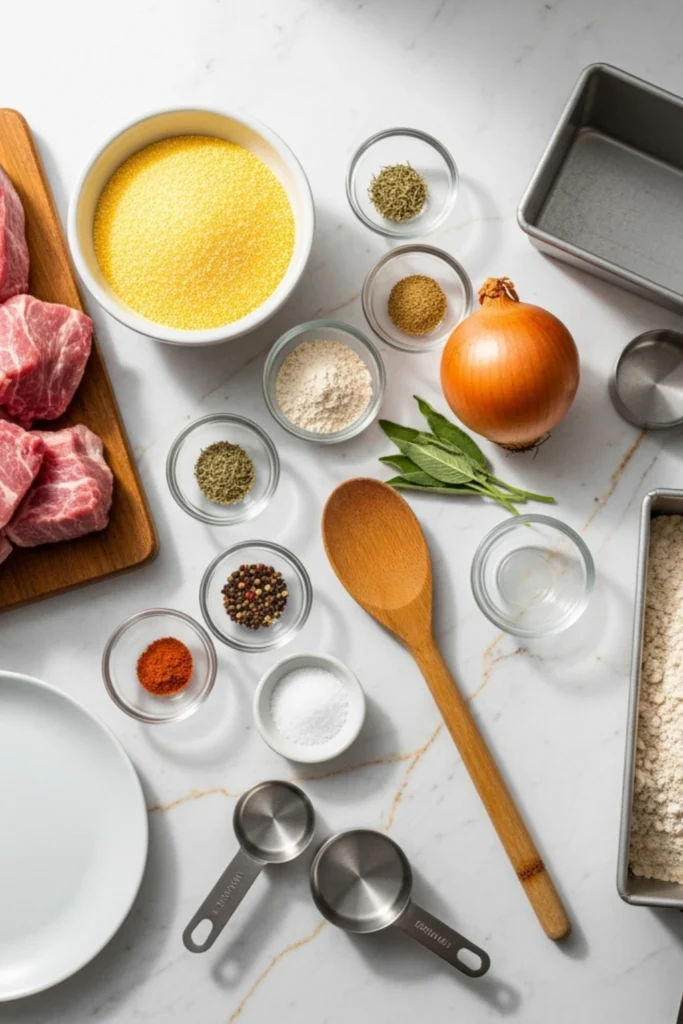
Tools You’ll Need
- Large stockpot or Dutch oven
- 9×5 inch loaf pan
- Wooden spoon or sturdy spatula for stirring
- Sharp knife for slicing
- Large skillet or griddle for frying
- Measuring cups and spoons
- Mixing bowl
- Fine mesh strainer
How to Make Scrapple
Step 1: Cook the Pork
Place your pork shoulder chunks in a large pot with 4 cups of water. Bring it to a boil, then reduce heat and let it simmer for about 90 minutes until the pork is fall-apart tender.
You want it so soft you can shred it with a fork.
Step 2: Shred and Strain
Remove the pork from the pot and shred it with two forks. Save that cooking liquid (it’s liquid gold for this scrapple recipe).
Strain the broth to remove any bits and measure out 3 cups. If you don’t have enough, just top it off with a little water.
Step 3: Mix Your Dry Ingredients
In a bowl, combine the cornmeal, buckwheat flour, and all your spices. Mix them together so everything is evenly distributed.
Step 4: Sauté the Onions
In the same pot you used for the pork (no need to dirty another dish), sauté your diced onion in a little oil until soft and translucent. About 5 minutes should do it.
Step 5: Bring Back the Broth
Pour that reserved pork broth back into the pot with the onions. Bring it to a simmer over medium heat.
Step 6: Add the Cornmeal Mixture
This is where things get real. Slowly whisk in your cornmeal mixture, stirring constantly to prevent lumps.
Keep stirring as it thickens, which will happen pretty quickly. The mixture should become thick and pull away from the sides of the pot.
Step 7: Add the Pork
Fold in your shredded pork until everything is well combined. The mixture should be thick but still stirrable.
Step 8: Form the Loaf
Pour everything into your greased loaf pan and smooth the top. Cover it with plastic wrap and refrigerate overnight, or at least 4-6 hours.
You need it to firm up completely before slicing.
Step 9: Slice and Fry
Once your scrapple is firm, slice it into ½-inch thick pieces. Heat butter or oil in a skillet over medium-high heat.
Fry each slice for about 4-5 minutes per side until deeply golden and crispy on both sides. Season with a little extra salt and pepper if you want.
Substitutions and Variations
Meat Options
| Original | Substitute | Notes |
|---|---|---|
| Pork shoulder | Pork butt | Works perfectly, just debone first |
| Pork shoulder | Bone-in pork chops | Remove bones before shredding |
| All pork | Pork + beef mix | Not traditional but some prefer it |
Flour Swaps
Skip the buckwheat and use all cornmeal for a simpler version. Some scrapple recipes use wheat flour instead, which makes it a bit denser but still tasty.
Spice It Up
The spices listed are traditional, but feel free to adjust them to your taste. More sage if you love that herby flavor, less allspice if you’re not into sweet spices with your pork.
Liver Addition
Traditional Pennsylvania Dutch scrapple sometimes includes pork liver. If you’re feeling adventurous, add ½ lb of cooked, chopped liver when you add the shredded pork.
Vegetarian Version
Use mushrooms instead of pork and vegetable broth. It won’t be authentic scrapple, but it’ll have a similar crispy-creamy texture situation going on.
Make Ahead Tips
Scrapple is actually the perfect make-ahead breakfast food.
The whole point is to make it in advance, so you’re already winning. Once you’ve formed your loaf and it’s set, you can keep it in the fridge for up to a week.
Just slice off what you need each morning and fry it up fresh.
Freezing Pre-Sliced Scrapple
Want to go further? Slice the entire loaf, lay the pieces on a baking sheet with parchment paper between each slice, and freeze.
Once frozen solid, transfer to a freezer bag. You can pull out individual slices and fry them straight from frozen (just add a minute or two to the cooking time).
Leftovers and Storage
Storage Guidelines
| Storage Method | Duration | Best Practices |
|---|---|---|
| Refrigerator (unsliced) | Up to 5 days | Wrap tightly in plastic |
| Refrigerator (fried) | 2-3 days | Airtight container |
| Freezer (uncooked) | Up to 3 months | Double wrap: plastic + foil |
| Freezer (pre-sliced) | Up to 3 months | Parchment between slices |
Reheating
If you have leftover fried scrapple, reheat it in a skillet over medium heat to crisp it back up. The microwave will make it soggy, so avoid that if you can.
How to Serve Scrapple
Scrapple is traditionally a breakfast side, and it’s perfect next to eggs, toast, and maybe some apple butter or maple syrup for dipping (yes, really).
But it also works great in a breakfast sandwich with a fried egg and cheese on a toasted English muffin. Some people eat it with ketchup, others with hot sauce. I’m in the maple syrup camp myself 🍁
You can also crumble fried scrapple over a salad for a crispy, savory element, or serve it alongside roasted vegetables for dinner.
Classic Serving Combinations
- Traditional Pennsylvania Style: Fried eggs, toast, apple butter
- Breakfast Sandwich: English muffin, fried egg, cheddar cheese, scrapple
- Sweet and Savory: Maple syrup drizzle over crispy scrapple slices
- Southern Twist: Hot sauce, grits, scrambled eggs
Nutritional Information
Per Serving (2 slices, approximately 4 oz)
| Nutrient | Amount |
|---|---|
| Calories | 285 |
| Protein | 18g |
| Fat | 15g |
| Carbohydrates | 18g |
| Fiber | 2g |
| Sodium | 450mg |
| Iron | 15% DV |
Note: Values are approximate and vary based on exact ingredients used
FAQ
What exactly is scrapple made of?
Traditionally, scrapple uses pork scraps, offal, and trimmings mixed with cornmeal and spices. Modern versions (including this one) usually stick to regular pork shoulder, which is easier to find and gives you more control over the texture and flavor.
Is scrapple the same as spam?
Not at all. Spam is canned, heavily processed meat. Scrapple is a regional specialty made with fresh pork, cornmeal, and spices, formed into a loaf and fried. The textures and flavors are completely different.
Why is my scrapple falling apart when I fry it?
Your scrapple probably didn’t set long enough in the fridge. It needs at least 4-6 hours (overnight is better) to firm up completely. Also, make sure you’re using enough cornmeal in the mixture to help it hold together.
Can I make scrapple without buckwheat flour?
Yep. Just use all cornmeal instead. The buckwheat adds a deeper, earthier flavor, but all-cornmeal scrapple is still delicious and completely traditional in some areas.
What’s the best way to get it really crispy?
Don’t overcrowd your pan, and don’t flip too early. Let each side get a deep golden-brown crust before turning. Using enough fat in the pan helps too. Cast iron works great for this.
How do I know when the pork is cooked enough?
The pork should be so tender it falls apart when you try to shred it with a fork. If it’s still tough or chewy, let it simmer longer. You want it completely tender for the best texture in your final scrapple.
Can kids eat scrapple?
Sure, as long as they’re okay with pork and cornmeal. It’s not spicy (unless you add extra cayenne), and the crispy texture usually goes over well with kids. Just keep in mind the traditional version has a rich, savory flavor that might be too intense for very young kids.
Where did scrapple originate?
Scrapple originated in Pennsylvania Dutch country in the 1700s. German immigrants brought similar recipes from their homeland and adapted them using locally available ingredients, creating what we now know as scrapple.
The History Behind Scrapple
Fun Fact: Scrapple was born from necessity. Pennsylvania Dutch farmers couldn’t afford to waste any part of the pig, so they created this dish to use up the scraps and trimmings after butchering. What started as frugal cooking became a beloved regional specialty.
The dish remained relatively unknown outside the Mid-Atlantic region for centuries. Even today, you’ll find the best scrapple in Pennsylvania, Delaware, Maryland, and parts of New Jersey.
Some diners and restaurants in these areas serve it year-round, while families pass down their own secret recipes through generations.
Wrapping Up
Scrapple might sound intimidating or weird if you’ve never had it, but trust me on this one.
It’s one of those humble, old-school recipes that deserves way more love than it gets. Once you nail that crispy-on-the-outside, creamy-on-the-inside situation, you’ll understand why people in Pennsylvania have been making this stuff for centuries.
The best part? This scrapple recipe is actually pretty forgiving. As long as you let it set properly and don’t rush the frying, you’re golden.
Give it a shot this weekend and let me know how it turns out. Did you go traditional with buckwheat flour or keep it simple with all cornmeal? Did you eat it with maple syrup or were you a ketchup person?
Drop a comment below and tell me about your scrapple experience 🍳