Upper Peninsula pasties (PASS-tees) from Michigan’s Keweenaw region are hand-held meat pies that miners carried into the copper mines back in the 1800s.
I stumbled into a tiny pasty shop in Calumet during a winter road trip through the UP, and one bite changed everything I thought I knew about hand pies. The woman behind the counter told me her grandmother brought this recipe from Cornwall, and it hadn’t changed in four generations.
That flaky, buttery crust crackled when I bit into it. Inside, chunks of beef mingled with potatoes, rutabaga, and onions in their own juices. No sauce, no frills. Just pure, working-class comfort.
These aren’t delicate. They’re meant to survive a lunch pail and still taste incredible hours later.
What You’ll Need
Pastry Dough
| Ingredient | Amount | Notes |
|---|---|---|
| All-purpose flour | 4 cups | Keep it cold |
| Salt | 1 teaspoon | For the dough |
| Cold unsalted butter | 1 cup | Cut into cubes |
| Cold shortening or lard | 1 cup | Lard is traditional |
| Ice water | ¾ to 1 cup | Add gradually |
Filling
| Ingredient | Amount | Notes |
|---|---|---|
| Beef chuck or sirloin | 1½ pounds | Diced into ¼-inch cubes |
| Russet potatoes | 3 medium | Peeled and diced |
| Rutabaga | 1 medium | Peeled and diced |
| Yellow onion | 1 medium | Finely diced |
| Salt | 2 teaspoons | Season generously |
| Black pepper | 1 teaspoon | Freshly ground |
| Cold butter | ¼ cup | Cut into pieces |
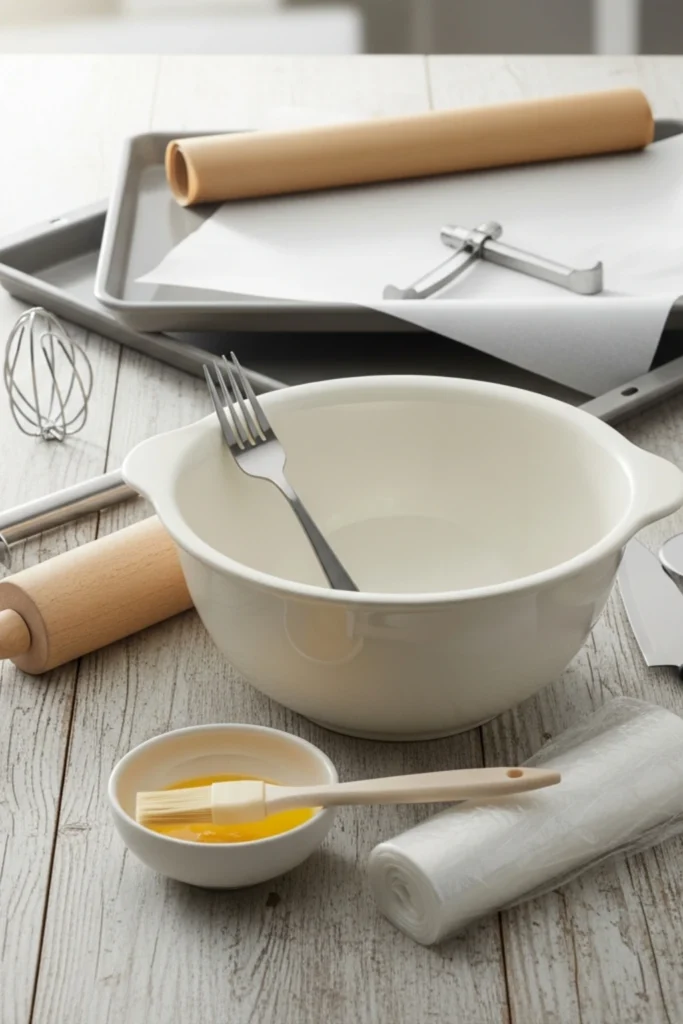
Tools Required
- Large mixing bowl
- Pastry cutter (or two forks)
- Rolling pin
- Sharp knife or pizza cutter
- Two baking sheets
- Parchment paper
- Small bowl for egg wash
- Pastry brush
- Plastic wrap
Assembly
- 1 egg, beaten
- 2 tablespoons water
Pro Tips
Keep your fats frozen until the last second. I actually freeze my butter cubes for 15 minutes before mixing. The colder everything stays, the flakier your crust gets.
Don’t pre-cook the filling. This threw me off the first time, but raw filling is traditional. Everything steams inside the pastry and creates this incredible gravy situation that you can’t replicate any other way.
That crimp isn’t decorative. Press it thick and tight. It’s your handle when you’re eating, and it seals in all those precious juices. A weak crimp means a soggy mess.
Size matters with your dice. Cut everything the same size (¼ inch) or some pieces will be mushy while others are still crunchy. Trust me on this.
Add butter before sealing. Those little pats on top of the filling melt down and keep everything moist. Don’t skip them.
Substitutions and Variations
Meat swaps: Ground beef works if you’re short on time, but the texture won’t be quite right. Venison is actually traditional in hunting families up north. Some folks use half pork shoulder, half beef.
No rutabaga? Use turnips or add more carrots. The flavor shifts slightly sweeter, but it still works. You can also try parsnips.
Dough alternatives: All-butter makes it richer but less flaky. All-lard (or shortening) makes it super flaky but less flavorful. The 50/50 split hits the sweet spot.
Vegetarian version: Double the root vegetables, add mushrooms, and swap the beef for lentils or skip protein entirely. Bump up the seasonings.
Cornish twist: Some UP families add a splash of beef broth to the filling before crimping. Others layer in thin gravy.
Make Ahead Tips
The dough actually improves if you make it a day ahead. Wrap those disks tight and refrigerate up to 48 hours.
You can assemble unbaked pasties and freeze them for up to 3 months. When you’re ready to bake, add 15-20 minutes to the cooking time. No thawing needed.
Prep the filling mixture 24 hours ahead, but wait to salt it until assembly time or your vegetables will weep and get soggy.
How to Make Upper Peninsula Pasties
Step 1: Mix the Dough
Whisk together flour and salt in your largest bowl.
Drop in the cold butter cubes and shortening pieces. Use a pastry cutter to work them into the flour until the mixture looks like coarse breadcrumbs with some pea-sized butter chunks still visible.
Drizzle in ice water, one tablespoon at a time, tossing with a fork after each addition. Stop when the dough just barely comes together. It should look shaggy, not smooth.
Divide into 6 equal pieces and shape each into a disk about 1 inch thick. Wrap in plastic and chill for at least 30 minutes (or up to 2 days).
Step 2: Prep the Filling
While the dough chills, dice your beef into ¼-inch cubes. I use kitchen scissors sometimes because it’s faster.
Peel and dice the potatoes, rutabaga, and onion to the same size. Consistency matters here.
Toss everything together in a bowl with salt and pepper. Mix well but don’t bruise the potatoes.
Keep this covered in the fridge until you’re ready to fill.
Step 3: Roll and Fill
Preheat your oven to 375°F. Line two baking sheets with parchment.
Pull one dough disk from the fridge. On a lightly floured surface, roll it into a circle about 8-9 inches across and ⅛ inch thick. Use a plate as a guide if you want them uniform.
Pile about 1½ cups of filling on one half of the circle, leaving a solid 1-inch border. Don’t overfill or you’ll regret it when the juices escape.
Drop a tablespoon of butter pieces on top of the filling.
Step 4: Create the Signature Crimp
Fold the empty half over the filling to make a half-moon shape. Press the edges together firmly.
Now for the crimp. Starting at one end, fold the edge over onto itself in small sections (about ½ inch at a time), pressing down hard to seal. Work your way around the entire edge.
The crimp should look like a thick rope. This is what separates a pasty from a regular hand pie. It needs to be substantial enough to hold when you’re eating it.
Cut 2-3 small slits in the top to let steam escape. Transfer to your prepared baking sheet.
Repeat with remaining dough and filling.
Step 5: Brush and Bake
Whisk the egg with 2 tablespoons water. Brush this over each pasty for that golden color.
Bake for 50-60 minutes until the crust is deep golden brown. If they’re browning too fast, tent loosely with foil after 40 minutes.
The filling should be bubbling (you might see steam or juice seeping from the vents). Insert a knife through a vent to check if the vegetables are tender.
Let them rest 10 minutes before eating. The filling is lava-hot straight from the oven.
Dietary Information
| Nutrient | Per Pasty |
|---|---|
| Calories | 680 |
| Protein | 28g |
| Carbohydrates | 62g |
| Fat | 35g |
| Fiber | 4g |
| Sodium | 890mg |
| Sugar | 3g |
| Saturated Fat | 16g |
Values are estimates based on standard ingredients. Actual nutrition varies by brands and modifications.
Pairing Suggestions
In the UP, ketchup is non-negotiable. I thought they were messing with me until I tried it. The tangy sweetness cuts through the richness perfectly.
Some families serve beef gravy on the side for dipping. Others go with:
Pickled beets – Sweet, tangy, cuts the fat
Coleslaw – Creamy crunch balances the pastry
Yellow mustard – Sharp and bright
Simple green salad – Keeps things from getting too heavy
These are a complete meal on their own, but if you want sides, keep them light and acidic.
Leftovers and Storage
Pasties keep in the fridge for 4 days, wrapped individually in foil or plastic.
Reheat at 350°F for 15-20 minutes until warmed through. The microwave works but makes the crust soft and sad.
Freeze baked pasties for up to 3 months. Thaw overnight in the fridge before reheating.
Here’s something wild: lots of people in the UP eat them cold or at room temperature. My first reaction was “absolutely not,” but then I tried it on day three and understood. The flavors meld differently when they’re not piping hot.
FAQ About Upper Peninsula Pasties
Why are they called pasties?
Cornish miners brought this recipe from Cornwall, England to Michigan’s copper country in the 1800s. “Pasty” comes from “paste,” referring to the dough. The pronunciation (PASS-tee) is important because calling them the other way gets you some looks.
Do I really not cook the filling first?
Nope. Raw filling is traditional and creates better texture. The vegetables steam inside the pastry, releasing their juices to create a natural gravy. Pre-cooked filling gets mushy and dry.
What makes this different from a regular hand pie?
Size, that thick crimped edge, and the raw filling. Regular hand pies are smaller with cooked fillings. Pasties were designed to survive being carried into mines and eaten hours later.
Can I use store-bought pie crust?
You can, but it won’t be authentic. Pasty dough is sturdier and meant to hold up. If you’re desperate for time, use two refrigerated pie crusts per pasty and press them together well.
Why does my filling leak everywhere?
Your crimp isn’t tight enough, or you overfilled them. The filling expands as it cooks, so it needs room. Make sure those steam vents are there too, or pressure builds and forces the seams open.
How do I know when they’re done?
Deep golden brown crust and bubbling filling. You should see steam or a little juice coming from the vents. Stick a knife through a vent to check if the vegetables are fork-tender.
Can I make mini pasties?
Sure, divide the dough into 12 pieces instead of 6. Reduce baking time to 35-40 minutes. They’re great for parties or meal prep.
Wrapping Up
Making Upper Peninsula pasties from scratch takes some time, but the process is straightforward and deeply satisfying.
They’re practical, portable, and taste even better the next day. Once you make them, you’ll understand why they’ve fed miners, loggers, and families in Michigan’s UP for over 150 years.
Give this recipe a try this weekend. Make the ketchup debate your own decision (but seriously, try it).
Drop a comment and let me know how yours turned out. Did you go traditional or switch things up? 🥧