Alabama white BBQ sauce for chicken isn’t your typical BBQ sauce.
I had no idea what I was missing until I tried this tangy, mayo-based sauce from Alabama. It completely flipped my understanding of what BBQ sauce could be.
Growing up, BBQ sauce meant one thing: thick, sweet, and red. But then someone handed me a piece of smoked chicken slathered in this pale, creamy sauce, and everything changed.
White BBQ sauce is different. It’s mayonnaise-based (I know, bear with me), tangy, with a kick of black pepper and just enough vinegar to cut through the richness. It turns ordinary grilled chicken into something you’ll think about all week.
And the crazy part? It’s stupid easy to make.
No cooking. No simmering. Just throw everything in a bowl, whisk, and you’re done in 5 minutes.
This sauce was invented in the 1920s at Big Bob Gibson Bar-B-Q in Decatur, Alabama. They’d dunk whole chickens in it right off the pit, and people went absolutely nuts for it. Almost 100 years later, it’s still one of Alabama’s most iconic food contributions.
Why White BBQ Sauce Works So Well
Most people look at me funny when I tell them about mayo-based BBQ sauce.
But here’s the thing: mayonnaise is just eggs and oil. When you add vinegar, lemon juice, and spices, it becomes this incredible creamy sauce that clings to chicken better than any red sauce ever could.
The acidity from the vinegar and lemon juice cuts through the richness. The horseradish adds bite. The black pepper gives it a kick. And when it hits hot, smoky chicken? Pure magic.
Traditional red BBQ sauces can burn on the grill because of the sugar content. White BBQ sauce doesn’t have that problem. You can baste it on throughout cooking without worrying about it turning bitter and black.
Plus, it stays creamy and fresh-tasting even after sitting on hot chicken. Red sauces can get sticky and caramelized (which is great sometimes), but white sauce keeps that bright, tangy flavor that makes you want another bite.
What You’ll Need
For the White BBQ Sauce:
| Ingredient | Amount | Notes |
|---|---|---|
| Mayonnaise | 1 cup | Full-fat works best |
| Apple cider vinegar | ¼ cup | Can’t skip this |
| Fresh lemon juice | 2 tablespoons | Bottled works too |
| Dijon mustard | 1 tablespoon | Adds tang + body |
| Prepared horseradish | 1 tablespoon | Secret weapon |
| Garlic powder | 2 teaspoons | Not garlic salt |
| Onion powder | 1 teaspoon | Adds depth |
| Black pepper (cracked) | 1 teaspoon | Fresh is better |
| Cayenne pepper | ½ teaspoon | Adjust to taste |
| Sugar | 1 teaspoon | Balances the acid |
| Salt | ½ teaspoon | Start here, adjust |
| Smoked paprika | ¼ teaspoon | Optional but good |
For the Chicken:
| Ingredient | Amount | Purpose |
|---|---|---|
| Chicken pieces | 3-4 pounds | Thighs, drumsticks, or breasts |
| Olive oil | 2 tablespoons | Helps seasoning stick |
| Paprika | 1 tablespoon | Color + flavor |
| Garlic powder | 1 teaspoon | Builds flavor base |
| Salt | 1 teaspoon | Essential |
| Black pepper | ½ teaspoon | Adds bite |
Pro Tips
Let it sit. The sauce tastes good right away, but it tastes incredible after sitting in the fridge for at least an hour. The flavors marry together and mellow out. I always make mine the night before.
Don’t skip the horseradish. I know it seems like a weird ingredient, but it adds this subtle bite that makes the sauce sing. If you leave it out, it’ll taste flat. Trust me on this one.
Chef’s Insight: “White BBQ sauce needs acid, fat, and heat to work together. The horseradish bridges all three elements and keeps the sauce from tasting one-dimensional.” – Big Bob Gibson Bar-B-Q tradition
Save some for serving. Set aside at least half your sauce before you start basting. Whatever touches raw chicken stays with the raw chicken. You want fresh, clean sauce to drizzle over the finished product.
Use it as a marinade too. Pour some white BBQ sauce over your chicken 2-4 hours before cooking. It’ll keep the meat insanely moist and pump flavor into every bite.
Taste as you go. Every mayo brand is different. Some are tangier, some are sweeter. Mix your sauce, taste it, and adjust. Need more tang? Add vinegar. Want more kick? More cayenne. Make it yours.
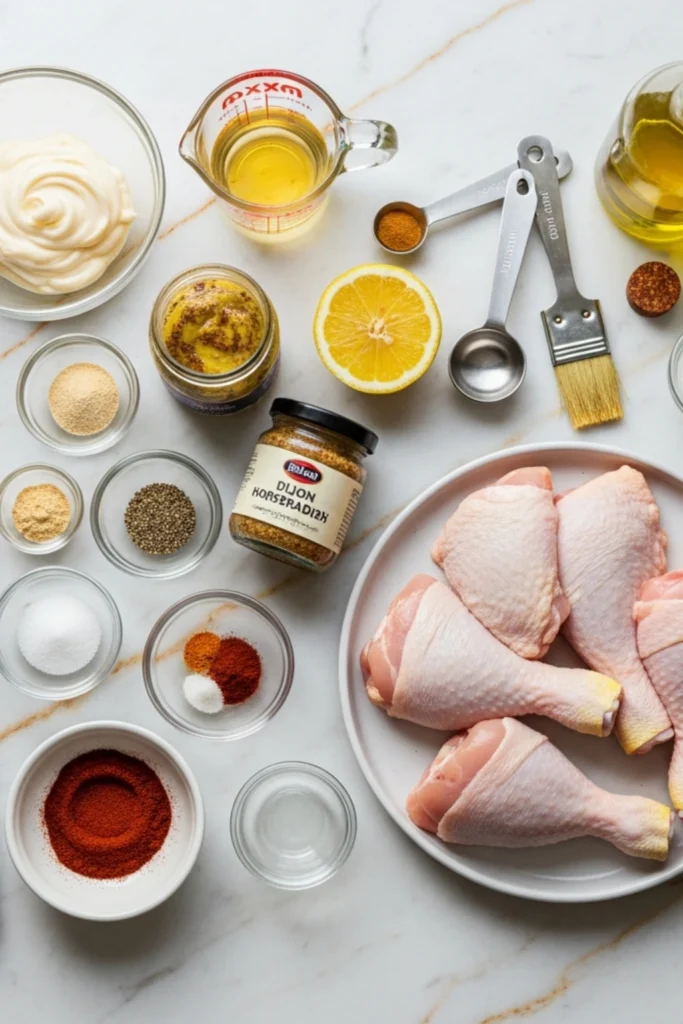
Tools You’ll Need
- Medium mixing bowl
- Whisk
- Measuring cups and spoons
- Grill or smoker (charcoal or gas)
- Meat thermometer 🌡️
- Basting brush
- Tongs
- Small jar with lid for storage
Substitutions and Variations
Dietary Swaps:
Lighter version: Replace half the mayo with Greek yogurt. It’ll be tangier and thinner, but still delicious. Cuts the calories without sacrificing flavor.
Dairy-free: Use vegan mayo. Follow the recipe exactly as written. You won’t taste a difference.
Keto-friendly: This sauce is already pretty low-carb. Just skip the sugar or use a sugar substitute.
Flavor Variations:
| Variation | What to Add | Result |
|---|---|---|
| Extra Spicy | Double cayenne + 1 tbsp hot sauce | Serious heat |
| Herb Garden | 2 tbsp fresh dill + 1 tbsp parsley | Fresh, bright |
| Buttermilk Ranch | Replace 2 tbsp mayo with buttermilk | Tangy, thinner |
| Smoky Heat | 1 tsp chipotle powder | Deep, smoky |
No horseradish? Use an extra teaspoon of Dijon mustard plus a tiny pinch of wasabi powder if you have it. Won’t be exactly the same, but close enough.
For pork or beef: This sauce isn’t just for chicken. It’s killer on pulled pork, ribs, or even as a steak topping. Try it on grilled vegetables too.
How to Make White BBQ Sauce and Chicken
Step 1: Make the Sauce
Grab your mixing bowl and add the mayo first. Then pour in the apple cider vinegar and lemon juice.
Whisk everything together until it’s smooth. No lumps.
Add the Dijon mustard, horseradish, garlic powder, onion powder, black pepper, cayenne, sugar, salt, and smoked paprika.
Whisk again until everything’s fully combined. It should look creamy and pale with little flecks of pepper throughout.
Taste it. This is critical. Adjust the seasoning if needed.
Want more tang? Splash in a little more vinegar or lemon juice.
Want more heat? Add cayenne.
More depth? Another shake of garlic powder.
Transfer half of the sauce to a separate container and stick it in the fridge. This is your serving sauce, and you don’t want to contaminate it by basting raw chicken with it.
The other half stays out for basting.
Step 2: Prep the Chicken
Pat your chicken pieces dry with paper towels. This helps the seasoning stick and gets you better browning on the grill.
Drizzle the olive oil over the chicken and rub it all over every piece.
Mix your paprika, garlic powder, salt, and black pepper in a small bowl. Sprinkle this seasoning mix over the chicken, coating all sides evenly.
Let the chicken sit at room temperature for about 15-20 minutes while you heat the grill. Cold chicken straight from the fridge cooks unevenly and takes longer.
Step 3: Set Up Your Grill
Fire up your grill to medium heat, around 350-375°F.
If you’re using charcoal, set it up for two-zone cooking. Push all the coals to one side so you have a hot side and a cooler side. This gives you control.
Gas grill? Just turn off one side.
Oil your grill grates. I like to dip a paper towel in oil, grab it with tongs, and rub it over the grates. Keeps the chicken from sticking and tearing.
Step 4: Grill the Chicken
Place your chicken skin-side down on the cooler side of the grill. Close the lid.
Let it cook for about 20-25 minutes, flipping once halfway through. You’re not trying to get color yet, just cooking it through slowly.
Temperature Check: Use your meat thermometer early and often. Dark meat (thighs, drumsticks) can handle slightly higher temps than white meat (breasts).
Once the internal temp hits around 155°F, move the chicken to the hot side of the grill. This is where you get that crispy, golden skin everyone fights over.
Now start basting. Brush on your white BBQ sauce generously, flip after a minute, baste the other side. Keep doing this for about 5-10 minutes.
You want the chicken to hit 165°F internal temp. Use your meat thermometer to check the thickest part of each piece.
Once it’s done, pull it off the grill and let it rest for 5 minutes. This keeps all the juices inside instead of running all over your cutting board.
Step 5: Serve
Drizzle that reserved sauce over the chicken. Be generous. This is the good stuff that makes people come back for more.
Garnish with some chopped parsley if you’re feeling fancy, but it’s not necessary.
Serve it hot and watch people go back for seconds. Then thirds. 🍗
Make Ahead Tips
The sauce keeps in the fridge for up to two weeks in an airtight container. I like to make a double batch so I always have some on hand for quick weeknight dinners.
You can also season your chicken up to 24 hours ahead. Just cover it and keep it refrigerated until you’re ready to grill.
If you want to meal prep, grill all your chicken at once, then store it in the fridge for up to 4 days. Reheat in the oven at 350°F for about 10 minutes, then add fresh sauce.
The sauce actually gets better after a day or two in the fridge. The flavors meld together and become more balanced.
Leftovers and Storage
| Storage Method | Duration | Best For |
|---|---|---|
| Fridge (chicken) | 3-4 days | Quick reheating |
| Fridge (sauce) | Up to 2 weeks | Multiple meals |
| Freezer (chicken only) | Up to 3 months | Long-term storage |
Store leftover chicken in an airtight container in the fridge for 3-4 days.
The sauce lasts longer, up to 2 weeks, as long as it hasn’t touched raw chicken.
Reheat chicken in the oven or on the stovetop. Microwaving works too, but it can dry it out. Add a splash of water or more sauce to keep it moist.
Freeze cooked chicken for up to 3 months. Thaw in the fridge overnight, then reheat gently.
Don’t freeze the sauce though. Mayo-based sauces get weird and separated when frozen. Just make it fresh when you need it.
Use leftover chicken in salads, wraps, or sandwiches. The white BBQ sauce makes an incredible chicken salad when you shred the meat and mix it all together with extra sauce.
What to Serve With White BBQ Chicken
This chicken pairs beautifully with classic Southern sides that complement the tangy, creamy sauce.
Coleslaw is the obvious choice. The crunch and freshness balance the rich sauce perfectly. Skip the mayo-based slaw and go for a vinegar-based one to avoid sauce overload.
Cornbread is another winner. Use it to soak up any extra sauce on your plate. The slight sweetness plays nicely with the tangy sauce.
Grilled vegetables like zucchini, bell peppers, or corn on the cob work great. They pick up char from the grill that echoes the smokiness of the chicken.
Other solid options:
- Potato salad
- Baked beans
- Mac and cheese
- Collard greens
- Cucumber tomato salad
If you want to keep it light, serve it over a fresh green salad. The sauce doubles as a killer salad dressing.
Common Mistakes to Avoid
Using low-fat mayo. It won’t be as rich and creamy. Full-fat mayo gives you the best texture and flavor. This isn’t the place to cut calories.
Adding too much vinegar at once. Start with the recipe amounts, then add more gradually. You can always add more acid, but you can’t take it away.
Not letting the sauce rest. Fresh-made sauce tastes harsh. Give it at least 30 minutes in the fridge for the flavors to settle.
Contaminating your serving sauce. Keep raw chicken sauce separate from finishing sauce. Food safety isn’t optional.
Overcooking the chicken. Use a thermometer. Guessing leads to dry, tough chicken that even the best sauce can’t save.
The Science Behind White BBQ Sauce
Mayo-based sauces work differently than tomato-based ones.
The emulsion in mayonnaise (oil suspended in egg yolk and acid) creates a stable base that won’t separate on the grill. The vinegar and lemon juice add acidity that breaks down proteins on the chicken’s surface, making it more tender.
According to Serious Eats, acidic marinades and sauces help meat retain moisture during cooking by changing its protein structure. The mayo acts as a barrier, keeping juices in while adding flavor.
The combination of fat (mayo), acid (vinegar/lemon), and heat (spices) hits all three flavor profiles your palate craves. That’s why one bite leads to another.
FAQ
Can I use this white BBQ sauce on other meats?
Absolutely. It’s fantastic on pork, turkey, fish, and even grilled vegetables. I’ve even used it as a dip for fries and it’s incredible on pulled pork sandwiches.
Is this sauce spicy?
Not really. It has a little kick from the cayenne and horseradish, but it’s more tangy than spicy. You can dial up the heat by adding more cayenne or hot sauce.
Can I make this white BBQ sauce ahead of time?
Yes, and you should. The flavors get better after sitting in the fridge for a few hours or overnight. Make it the day before if you can.
What if I don’t have a grill?
No problem. You can bake the chicken at 425°F for 35-40 minutes, basting halfway through. Or use a grill pan on the stovetop. You’ll miss the smoke flavor, but it’ll still be delicious.
Can I use low-fat mayo?
You can, but it won’t be as rich and creamy. Full-fat mayo gives you the best texture and flavor. If you’re watching calories, use half Greek yogurt instead.
Why is my sauce too thin?
You might have added too much vinegar or lemon juice. Start with the amounts in the recipe, then add more gradually to taste. If it’s already thin, whisk in a little more mayo.
Can kids eat this?
Most kids love it since it’s creamy and mild. If you’re worried about the horseradish or cayenne, just reduce or leave them out. The sauce will still taste great.
Does this taste like ranch dressing?
Kind of, but tangier and with more depth. If you like ranch, you’ll probably love this. It’s like ranch’s cooler, more sophisticated cousin.
How long does white BBQ sauce last in the fridge?
Up to two weeks in an airtight container, as long as it hasn’t touched raw meat. Always use a clean spoon when serving.
Can I freeze white BBQ sauce?
I don’t recommend it. Mayo-based sauces separate and get grainy when frozen. Just make it fresh. It only takes 5 minutes anyway.
Wrapping Up
White BBQ sauce isn’t just another condiment. It’s a whole experience.
Tangy, creamy, with just enough kick to keep things interesting. It turns plain grilled chicken into something people remember and ask you to make again.
And the fact that it takes 5 minutes to make? That’s just a bonus.
So fire up the grill, whip up a batch of this Alabama classic, and see what all the fuss is about. Your regular BBQ sauce is about to get very lonely in the fridge.
Try it this weekend and drop a comment below about how it turned out. Did you add your own twist? Did your family go nuts for it? I want to hear about it.